
 2 months ago
56
2 months ago
56
- The UK’s Financial Conduct Authority has warned football clubs about promoting unauthorized crypto companies.
- Regulators say supporters could be exposed to high-risk investments that lack proper consumer protections.
- The warning reflects growing scrutiny of crypto marketing as digital assets become more mainstream.
For years, crypto companies have treated professional sports as one of their favorite advertising channels. Logos appeared on jerseys, stadium signs, training grounds, and even naming rights deals. Football clubs gained lucrative sponsorship revenue, while crypto firms gained access to millions of loyal supporters.
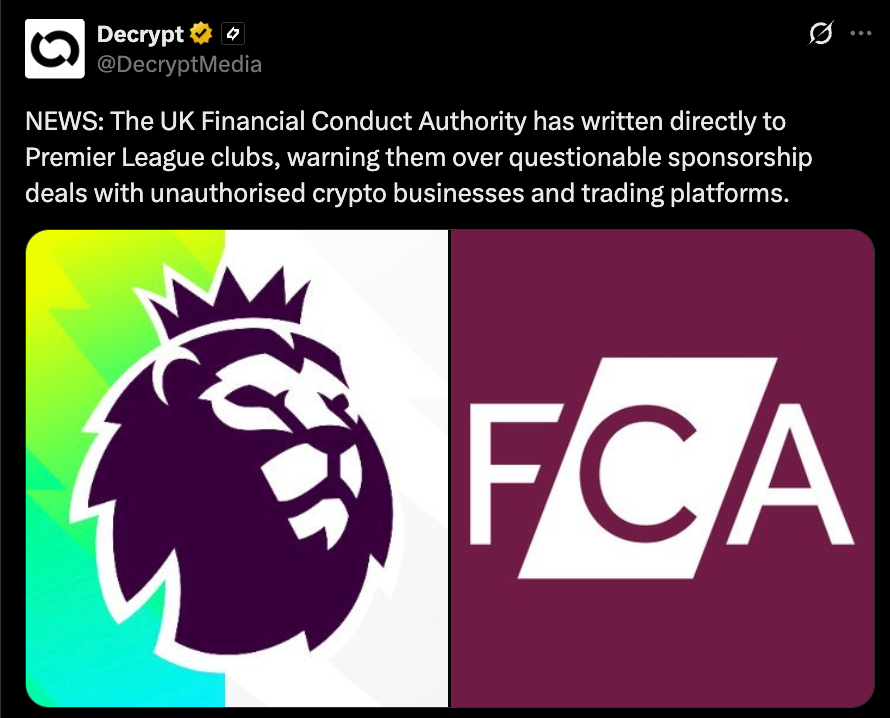
Now UK regulators are reminding clubs that sponsorship money does not automatically make a crypto company legitimate.
The Financial Conduct Authority (FCA) has issued a warning to football clubs regarding partnerships with unauthorized crypto businesses. According to the regulator, clubs that promote financial products or services from firms lacking proper authorization could expose fans to investments that fall outside established consumer protection frameworks.
In short, regulators want clubs to think carefully before putting a crypto logo on the front of a shirt.
Football And Crypto Became Natural Partners
The relationship between sports and crypto expanded rapidly during the last bull market.
Exchanges, token issuers, NFT platforms, and blockchain companies poured hundreds of millions of dollars into sponsorship agreements across football, Formula One, basketball, and other major sports. The strategy made sense. Sports audiences are global, highly engaged, and often younger than traditional financial audiences.
For crypto firms seeking mainstream visibility, few marketing channels offered comparable reach.
The problem is that fans may view sponsorships as endorsements. When a trusted club promotes a financial product, some supporters naturally assume a certain level of credibility and oversight exists behind the scenes.
Regulators Are Focusing On Consumer Protection
The FCA’s concern centers on unauthorized firms marketing financial products to British consumers.
Many crypto companies operate globally, but not all of them hold the registrations or approvals required to promote financial services within the United Kingdom. Regulators worry that supporters may not fully understand the risks associated with speculative investments, particularly when those products are presented alongside beloved sports brands.
A football fan buying tickets for a weekend match is not necessarily expecting to conduct due diligence on complex financial products.
That creates a responsibility regulators increasingly want clubs to acknowledge.
Crypto’s Advertising Problem Isn’t New
The latest warning is part of a broader regulatory trend.
Following the collapse of several high-profile crypto firms in recent years, authorities around the world have become more aggressive in monitoring how digital asset companies market themselves. Advertising campaigns, celebrity endorsements, sponsorship deals, and social media promotions have all faced increased scrutiny.
The goal is not necessarily to ban crypto advertising. Instead, regulators want promotions to meet the same standards applied to other financial products.

As crypto continues moving into mainstream markets, the expectation is that marketing practices will become more heavily regulated rather than less.
Growing Adoption Brings Greater Oversight
Interestingly, the FCA’s warning can be interpreted as evidence of crypto’s growing relevance.
Regulators rarely dedicate significant resources to industries they consider insignificant. The increased focus on crypto advertising reflects the reality that digital assets are becoming more integrated into traditional financial systems.
Institutional adoption continues expanding. Spot crypto ETFs have attracted billions of dollars. Stablecoins are increasingly being used for payments. Major banks and financial firms continue exploring blockchain technology.
As adoption grows, regulatory oversight naturally follows.
The Industry Is Becoming More Professional
The warning may ultimately benefit legitimate crypto businesses.
Companies that invest in licensing, compliance, and regulatory approvals often find themselves competing against firms willing to operate without the same obligations. Stronger enforcement helps create a more level playing field by encouraging higher standards across the industry.
For football clubs, it also creates greater incentive to partner with established and regulated firms rather than simply accepting the highest sponsorship offer.
That shift could improve trust among both regulators and consumers over time.
Crypto’s Future Comes With Rules
The FCA’s message is relatively straightforward: football clubs should carefully evaluate the crypto companies they promote, particularly when financial products are involved.
While some market participants may view additional regulation as restrictive, clearer standards could ultimately strengthen the industry’s long-term credibility. As crypto becomes increasingly intertwined with mainstream finance, oversight is becoming part of the package.
For investors, supporters, and clubs alike, the lesson is simple. A company may be able to afford a stadium sponsorship, but that does not automatically mean it meets the standards required to market financial products.
In crypto’s next phase of growth, compliance may prove just as important as visibility.
Disclaimer: BlockNews provides independent reporting on crypto, blockchain, and digital finance. All content is for informational purposes only and does not constitute financial advice. Readers should do their own research before making investment decisions. Some articles may use AI tools to assist in drafting, but every piece is reviewed and edited by our editorial team of experienced crypto writers and analysts before publication.








 English (US) ·