
 1 hour ago
16
1 hour ago
16
The US government is building a multi-pronged strategy to push dollar-backed stablecoins into global markets, treating the technology less like a crypto curiosity and more like a geopolitical tool. The effort ties together executive orders, federal legislation, and central bank rhetoric into a single thesis: if the world’s money is going digital, Washington wants to make sure it stays denominated in dollars.
Over 98% of the global stablecoin supply is already pegged to the greenback. The goal now is to make that dominance permanent, and to use it as a channel for funneling foreign capital into US Treasuries.
The regulatory scaffolding taking shape
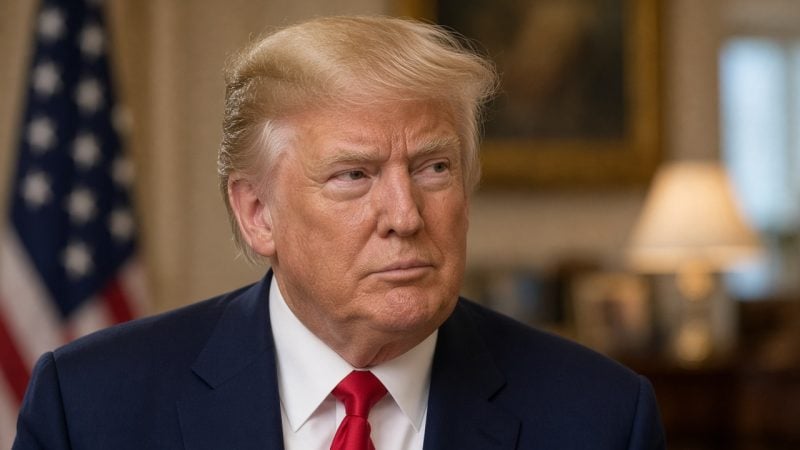
The groundwork started on January 23, 2025, when President Trump signed an executive order explicitly calling for the promotion of lawful dollar-backed stablecoins. The directive framed stablecoins not as a peripheral fintech product but as infrastructure critical to maintaining US dollar sovereignty in a rapidly digitizing global economy.
That executive order found its legislative counterpart in the GENIUS Act, signed into law on July 18, 2025. The bill created the first comprehensive federal regulatory structure for payment stablecoins, requiring issuers to maintain at least 1:1 backing with high-quality liquid assets.
The 1:1 backing requirement simultaneously creates structural demand for US government debt, since Treasury bills are the most obvious way for issuers to meet the liquid-asset requirement. Stablecoin issuers already hold tens of billions of dollars in US Treasuries.
The Fed’s strategic framing
Federal Reserve Governor Christopher Waller gave what may be the clearest articulation of the strategy on May 31, 2026. In his remarks, Waller argued that dollar-denominated stablecoins effectively extend US monetary policy conditions internationally, functioning in a manner analogous to fixed exchange rate regimes.
Institutional players are moving in
In September 2026, a consortium of 21 global banking institutions announced plans to launch a new dollar stablecoin in the first half of 2027. The involvement of traditional banks at that scale would have been unthinkable just a few years ago, when major financial institutions treated stablecoins as a reputational risk.
The Treasury Department is currently in the rulemaking phase to implement the GENIUS Act’s provisions, with the full regulatory framework expected to take shape through 2027 and into 2028. That timeline coincidentally, or not, aligns with the banking consortium’s planned launch.
What this means for the market
For emerging markets, dollar stablecoins are already serving as informal savings vehicles and payment rails, with adoption accelerating in regions where local currencies are volatile and banking infrastructure is thin.
For the US government itself, the math is straightforward. Every dollar held in stablecoin reserves is a dollar of demand for Treasuries at a time when the government’s borrowing needs show no signs of shrinking.
The risk is concentration. A financial system where a significant share of global payments runs on dollar stablecoins backed by Treasuries creates new vectors for contagion. A run on a major stablecoin issuer could force rapid liquidation of Treasury holdings. The GENIUS Act’s reserve requirements are designed to mitigate this, but the framework has yet to be tested under genuine market stress.
Disclosure: This article was edited by Editorial Team. For more information on how we create and review content, see our Editorial Policy.




 English (US) ·