
 4 months ago
48
4 months ago
48
- DOJ and CFTC sue Illinois over crypto-linked prediction markets
- Federal regulators claim exclusive authority under commodities law
- Case could redefine state vs federal control over crypto platforms
The US government has stepped into a growing legal conflict that could reshape how crypto-linked prediction markets operate nationwide. On April 2, the Department of Justice and the Commodity Futures Trading Commission filed a lawsuit against Illinois, aiming to block the state from applying its gambling laws to federally regulated platforms. At the center of the dispute is a simple but powerful question, who actually controls these markets?
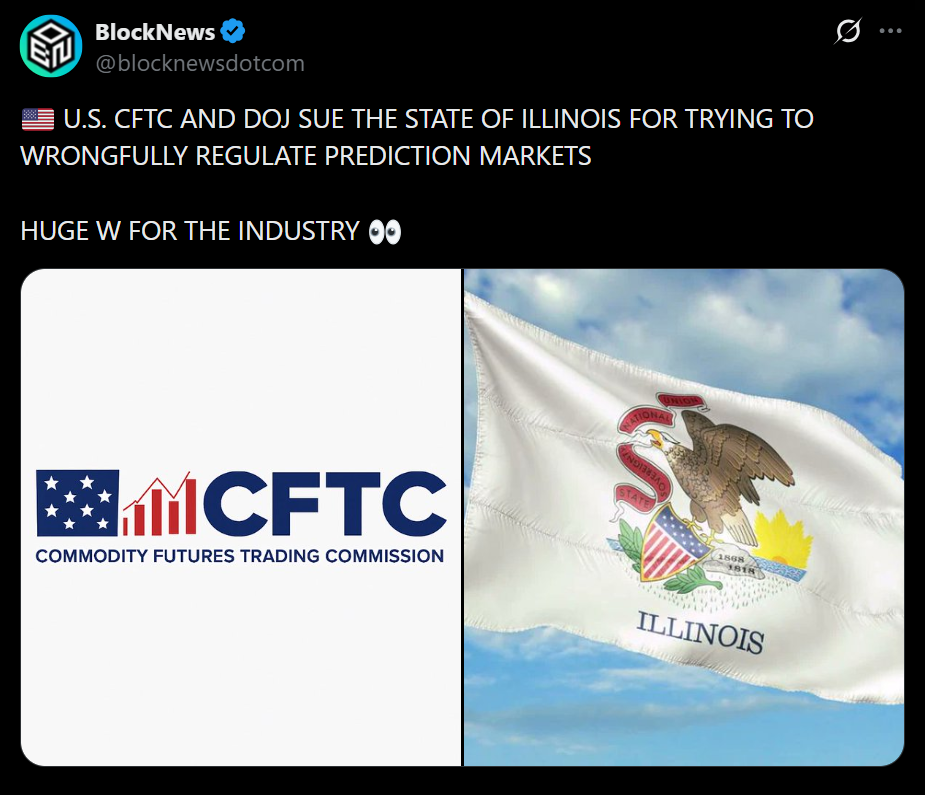
Illinois had been treating certain prediction platforms as unlicensed gambling operators, sending cease-and-desist letters and threatening penalties. But federal regulators argue that these platforms, when structured as event-based contracts, fall under commodities law, not state gambling rules. That difference might sound technical, but it carries major implications.
Federal Authority vs State Control
The core of the case revolves around federal preemption, a legal concept that gives federal law priority over conflicting state laws. The CFTC argues that the Commodity Exchange Act grants it exclusive jurisdiction over swaps and futures traded on regulated exchanges. In other words, once a platform is licensed at the federal level, states shouldn’t be able to override that authority.
The lawsuit traces this back to reforms in the 1970s, when Congress intentionally moved away from a fragmented, state-by-state regulatory system. Allowing Illinois to enforce its own gambling laws on these platforms, the CFTC argues, would bring that fragmentation back. And that could make it nearly impossible for companies to operate nationally.
What Sparked the Legal Fight
The conflict escalated after the Illinois Gaming Board issued cease-and-desist letters to several major platforms, including Kalshi, Crypto.com, Robinhood, and Polymarket. These firms were accused of offering unlicensed sports wagering products to residents in the state. The letters also warned of potential civil and criminal penalties if operations continued.

From the CFTC’s perspective, that framing is fundamentally flawed. Event contracts offered by these platforms are structured as derivatives, not bets, and therefore fall under federal commodities regulation. The distinction is critical, because it determines whether these platforms need state licenses at all.
A Defining Moment for Crypto Prediction Markets
The lawsuit doesn’t just seek to pause enforcement, it aims for a permanent resolution. Federal regulators are asking the court to declare key Illinois gambling laws unconstitutional when applied to federally licensed exchanges. If granted, it would set a strong precedent limiting how states can regulate similar platforms going forward.
At the same time, the CFTC is already working to refine its approach to prediction markets, including new guidance and proposed rulemaking. That suggests this case isn’t happening in isolation, it’s part of a broader effort to define how these markets fit within the US financial system. However it plays out, the outcome could shape the future of crypto-based prediction platforms for years.
Disclaimer: BlockNews provides independent reporting on crypto, blockchain, and digital finance. All content is for informational purposes only and does not constitute financial advice. Readers should do their own research before making investment decisions. Some articles may use AI tools to assist in drafting, but every piece is reviewed and edited by our editorial team of experienced crypto writers and analysts before publication.







 English (US) ·