
 2 months ago
65
2 months ago
65
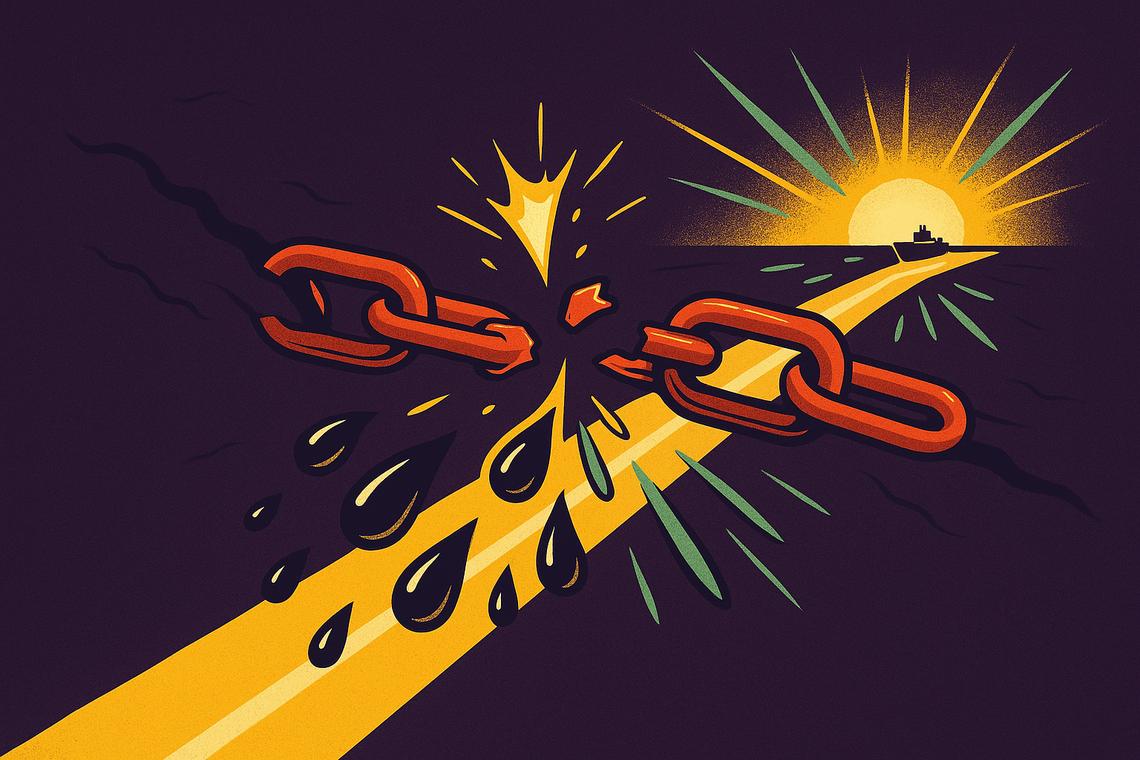
A peace deal between the USA and Iran has brought an abrupt end to nearly four months of armed conflict, sending shockwaves through global energy markets and lifting risk assets from oil-battered lows. The USA-Iran peace agreement, announced between June 14 and 15, 2026, sets out three core commitments: an immediate ceasefire, the lifting of the US naval blockade on Iranian ports, and the reopening of the Strait of Hormuz — the narrow waterway that carries roughly 20% of the world’s daily oil consumption.
Key takeaways
- The USA-Iran peace agreement provides for an immediate ceasefire, the lifting of the US naval blockade, and the reopening of the Strait of Hormuz, with a formal signing scheduled for June 19 in Switzerland.
- Oil prices dropped approximately 33%, falling from around $120 to $80 per barrel after the deal was announced.
- Bitcoin surged above $65,000, with intraday peaks between $65,500 and $65,800, reflecting improved investor risk appetite.
- German Chancellor Friedrich Merz expressed cautious optimism, warning that Lebanon’s stability is essential for the agreement to hold.
- Further nuclear negotiations and potential sanctions relief for Tehran are expected as the next phase of diplomacy.
US-Iran Peace Agreement Ends Four-Month Conflict
The conflict that began in late February 2026 had paralyzed global energy trade almost from the start. Naval operations disrupted shipping routes, mines slowed commercial passage, and the effective closure of the Strait of Hormuz sent oil prices surging toward $120 per barrel by early March. European economies felt the pressure almost immediately, with inflation creeping higher across major markets — America’s annual inflation rate hit 4.2% in May, its highest level in three years, according to CNBC.
Pakistani Prime Minister Shehbaz Sharif, whose country served as a mediator between Washington and Tehran, announced the breakthrough on Sunday. “Following intensive talks, we are pleased to announce that the Peace Deal between the United States of America and Islamic Republic of Iran has been REACHED,” Sharif wrote on X. US President Donald Trump confirmed the deal shortly after, writing on Truth Social: “The deal with the Islamic Republic of Iran is now complete.” Trump added that he was authorizing “the toll free opening of the Strait of Hormuz” and the “immediate removal of the United States Naval blockade.”
The official signing ceremony is set for Friday, June 19, in Switzerland.
Ceasefire and Lifting of the US Naval Blockade
Iran’s Supreme National Security Council confirmed that Tehran had finalized a memorandum of understanding, stating that all military operations on all fronts — including Lebanon — would cease “immediately and permanently.” The removal of the US naval blockade, which had strangled Iranian ports and restricted movement across the Persian Gulf, was confirmed as an immediate step under the deal, though Iranian officials noted that negotiations toward a final agreement would proceed only after Washington fulfilled its commitments under the memorandum first.
The deal did not come without internal friction. Iranian hardliners, including MP Kamran Ghazanfari and senior commentators aligned with the Paydari Front, mounted vocal opposition, arguing the agreement failed to guarantee sanctions relief, compensation, or Iranian control over the Strait of Hormuz. Mehdi Mohammadi, an adviser to the head of Iran’s negotiating team, pushed back in an audio message, insisting the deal ends the war on all fronts and that Tehran was not required to make new commitments on its nuclear programme. He also argued that the text’s reference to “Iranian arrangements” would allow Iran and Oman to charge fees for passage through the strait and would even bar Israeli commercial vessels.
Reopening of the Strait of Hormuz and Its Global Importance
The Strait of Hormuz is not just a regional chokepoint — it is effectively a pressure valve for the entire global economy. With approximately 20% of the world’s daily oil supply flowing through it, any disruption ripples outward almost instantly into energy prices, inflation, and industrial output. Trump said the strait would open on Friday, coinciding with the formal signing. “With the opening of the Strait upon the signing of the Deal on Friday, for purposes of mine removal, oil will flow on both ends again for the Region, and the World!” he wrote.
The blockade and naval mines had severely disrupted shipments not just of crude oil but also of natural gas and fertilizers, contributing to supply-side inflation pressures that policy makers across Europe and the United States struggled to contain.
Market Reactions: Oil Prices Plunge, Bitcoin Surges
Markets moved fast. The announcement triggered one of the sharpest single-event oil price drops in recent memory.
Oil Price Volatility and Market Impact
Crude oil fell by approximately 33% in the immediate aftermath of the deal, retreating from the conflict-era peak of around $120 per barrel back toward $80 per barrel. The scale of that decline reflects just how much of the premium baked into energy prices was geopolitical, not structural. US Vice President JD Vance, speaking on Fox News immediately after the deal was struck, said the agreement was “a great thing for the American people,” adding that the administration would be able to “drive down the cost of energy, not just now but for the long term.”
Still, markets are not treating this as a clean all-clear signal. Full implementation of the agreement has not yet occurred, and the conditions under which the Strait reopens — including mine clearance operations — add a layer of logistical uncertainty that could delay the full normalization of energy flows.
Bitcoin Price Surge Reflects Improved Risk Sentiment
Beyond oil, the deal sent a clear signal to crypto markets. Bitcoin climbed above $65,000, touching intraday highs between $65,500 and $65,800 as investors reacted to the easing of geopolitical pressure. The move fits a now well-established pattern: when macro fear recedes, risk appetite returns, and digital assets tend to benefit disproportionately.
The Bitcoin rally is analytically significant beyond the headline number. It suggests that institutional and retail investors alike read the USA-Iran deal not just as a ceasefire but as a broader shift in the risk environment — one that makes high-volatility assets more attractive relative to safe-haven alternatives. Whether that shift proves durable depends heavily on how the next phases of diplomacy unfold.
Political Responses and Regional Stability Concerns
Chancellor Friedrich Merz’s Cautious Optimism
Germany’s response underscored how carefully European leaders are reading the fine print. German Chancellor Friedrich Merz expressed cautious optimism about the agreement, welcoming it as a potential turning point while making clear that the diplomatic work is far from finished. His tone echoed a broader European posture: relief tempered by awareness of what remains unresolved.
European nations — including the UK, Germany, France, and Italy — signaled on Sunday that they were prepared to lift sanctions on Iran in exchange for meaningful steps on its nuclear programme. “Iran must never acquire a nuclear weapon. We stand ready to work with the US, Iran and the IAEA to this end,” the countries’ leaders said in a joint statement, according to Reuters.
Lebanon’s Stability Linked to Lasting Peace
Merz went further than most, emphasizing that Lebanon’s stability is a prerequisite for any durable peace. The concern is well-founded. The deal was nearly derailed earlier on Sunday when Hezbollah, the Iran-backed militant group, launched projectiles into Israel. Subsequent Israeli strikes in Beirut prompted a sharp warning from Trump, who urged both sides not to “blow it.” Iran’s Supreme National Security Council confirmed that the ceasefire covers Lebanon explicitly, but the situation on the ground remains volatile.
Qatar’s Foreign Ministry welcomed the agreement, describing it as “an important step towards consolidating sustainable peace and promoting economic growth regionally and internationally.” Prime Minister Sheikh Mohammed bin Abdulrahman Al Thani specifically highlighted measures to ensure freedom of navigation in the Strait of Hormuz as a core element of the deal’s value.
Future Diplomatic Steps and Investor Guidance
Anticipated Nuclear Negotiations and Sanctions Relief
The ceasefire and the Hormuz reopening are the opening chapter, not the conclusion. Further nuclear negotiations are expected in the coming weeks, with the potential for eased sanctions on Tehran as a central incentive for Iranian compliance. Mohammadi indicated that the means of disposing of Iran’s highly enriched uranium — including down-blending inside Iran — would be left to future discussions lasting 60 days. He also acknowledged that the release of roughly $12 billion of Iran’s frozen money held abroad had not yet been finalized, though he claimed Arab countries had pledged to cover it.
The European Central Bank’s quarter-point rate hike on Thursday — its first since 2023 — was decided against the backdrop of conflict-driven inflation. If energy prices genuinely stabilize near $80 per barrel, it changes the calculus for central banks that have been navigating between supply-shock inflation and slowing growth.
Monitoring Key Developments for Market Stability
For investors, the peace deal opens a more constructive macro environment, but three variables will determine whether that environment holds:
- The actual reopening of the Strait of Hormuz and the pace of mine clearance operations
- Progress — or stalling — in nuclear negotiations and the conditions attached to sanctions relief
- The stability of the Lebanon ceasefire, which remains the most immediate flashpoint capable of unraveling the broader accord
Financial analyst Lorenzo Marcek, who covers cryptocurrency and macro markets, notes that market caution remains warranted given that full implementation has not yet occurred. The signing ceremony on June 19 will be the next critical marker — the moment the memorandum of understanding becomes a formal, binding commitment. Until then, the gap between announcement and execution leaves room for volatility in both energy and crypto markets.
What happens in the 60-day nuclear discussion window may ultimately matter more than the ceasefire itself. A deal that ends the shooting but leaves the nuclear question unresolved is not a permanent settlement — it is a pause. How Washington, Tehran, and European capitals navigate that next phase will decide whether the $40-per-barrel relief in oil prices becomes a lasting structural shift, or just a brief reprieve before the next escalation.
FAQ
What are the main terms of the peace agreement between the USA and Iran?
The deal provides for a ceasefire, the reopening of the Strait of Hormuz, and the lifting of the US naval blockade on Iranian ports. The formal signing ceremony is scheduled for June 19, 2026, in Switzerland.
How has the agreement affected oil prices and Bitcoin?
Oil prices fell by approximately 33%, dropping from around $120 to $80 per barrel, while Bitcoin rose above $65,000 — reaching intraday highs between $65,500 and $65,800 — driven by improved market risk sentiment following the announcement.
Why does Chancellor Friedrich Merz highlight the importance of Lebanon in this agreement?
Merz believes lasting global peace depends on stabilizing Lebanon, where the ongoing conflict between Israel and Hezbollah — backed by Iran — nearly derailed the deal on the day it was announced and remains a live threat to the accord’s durability.
What should investors monitor after the announcement?
Investors should closely track the physical reopening of the Strait of Hormuz and the pace of mine clearance, progress on nuclear negotiations and the terms of any sanctions relief for Tehran, and whether the Lebanon ceasefire holds — all three are key indicators of whether the peace deal translates into sustained market stability.
Article produced with the assistance of artificial intelligence and reviewed by the editorial team.






 English (US) ·