
 2 months ago
71
2 months ago
71
TLDR
- Gold declined more than 0.6% on Thursday, reversing Tuesday’s impressive 2% surge
- June U.S. CPI data initially lifted gold after showing the first monthly decline since 2020
- Climbing crude oil prices are sparking renewed inflation concerns and supporting Fed hawkishness
- Market expectations now show approximately 58% odds of a September Fed rate increase, dropping from 76% before CPI release
- Federal Reserve Chair Kevin Warsh indicated additional policy tightening could occur if inflation continues
Precious metal prices retreated Thursday as escalating crude oil costs prompted market participants to reassess the timeline for potential Federal Reserve interest rate adjustments.
As of approximately 4:41 AM ET, spot gold prices declined 0.63% to $4,027.31 per ounce. Futures contracts for gold decreased 0.89% to $4,033.35.
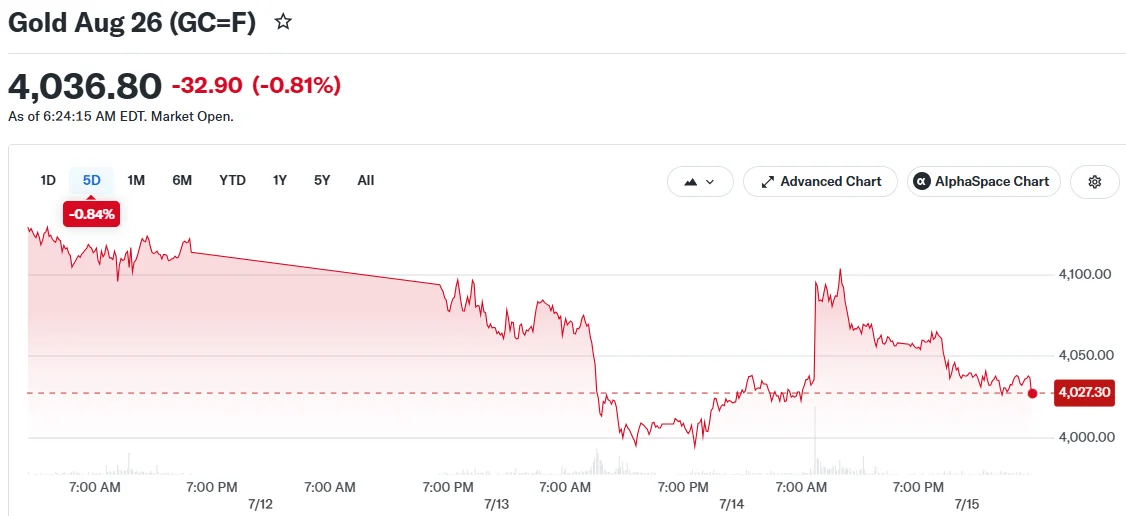 Gold Aug 26 (GC=F)
Silver experienced a 0.70% decline to $58.30 per ounce. Platinum managed modest gains, climbing 0.34% to reach $1,638.20.
Short-Lived Surge Quickly Evaporates
The yellow metal had experienced a robust rally exceeding 2% earlier in the week following the release of Consumer Price Index figures for June, which revealed the first monthly price decline in four years.
The more moderate inflation data encouraged traders to scale back expectations for imminent Federal Reserve rate hikes. Both Treasury yields and the dollar index weakened following the announcement.
However, the positive sentiment proved fleeting. Within days, market focus pivoted toward energy markets and the potential impact of elevated oil prices on the inflation outlook.
Crude prices advanced for the third consecutive trading session amid President Donald Trump’s continuation of a naval blockade targeting Iranian ports, accompanied by warnings of potential military escalation.
The persistent U.S.-Iran standoff has generated anxiety regarding worldwide energy availability. Analysts from MUFG observed that “renewed U.S.-Iran tensions and higher oil prices continue to pose upside risks to inflation.”
Central Bank Maintains Vigilant Stance
Federal Reserve Chair Kevin Warsh emphasized that additional monetary tightening measures remain a possibility should inflationary pressures persist.
Central bank officials expressed cautious optimism about the recent moderation in inflation but stressed the necessity for sustained evidence before concluding that price growth is definitively returning toward their 2% objective.
Elevated interest rates typically create headwinds for gold. Since the precious metal generates no income, rising bond yields diminish its relative appeal to market participants.
Analysts at ANZ suggested gold may trade within a confined range near-term, as lingering expectations for potential rate increases this year limit upward momentum.
They noted that purchasing activity could resurface during more significant price corrections, citing favorable long-term fundamentals supporting the metal.
Looking Ahead
Current market pricing indicates roughly 58% probability for a September interest rate increase, based on CME FedWatch indicators. This represents a decline from approximately 76% prior to Tuesday’s CPI report.
Traders are monitoring U.S. producer price statistics scheduled for release later Thursday to gain additional insight into inflation trajectory.
Decreased gasoline costs contributed to moderating pressure in June’s CPI reading, though any resurgence in energy expenses could rapidly alter the inflation narrative.
Currently, gold remains suspended between competing dynamics — encouraging inflation moderation on one hand and oil-fueled inflation anxieties on the other.
The post Why Gold’s Rally Just Collapsed — Oil Prices Are the Culprit appeared first on Blockonomi.



 English (US) ·