
 2 hours ago
19
2 hours ago
19
Wispr, the startup behind the popular AI dictation app Wispr Flow, has closed a $280 million Series B funding round at a $2 billion valuation, marking one of the biggest bets yet on voice-driven computing. The Wispr AI dictation funding round was led by Menlo Ventures, according to Fortune, and pushes the company’s total capital raised to date to $361 million. It’s a striking jump for a startup that raised its previous round less than a year ago, and it signals that investors see voice interfaces as far more than a niche typing shortcut.
Key takeaways
- Wispr raised $280 million in Series B funding at a $2 billion valuation, led by Menlo Ventures.
- Total funding to date now stands at $361 million, following a previous round closed less than a year earlier.
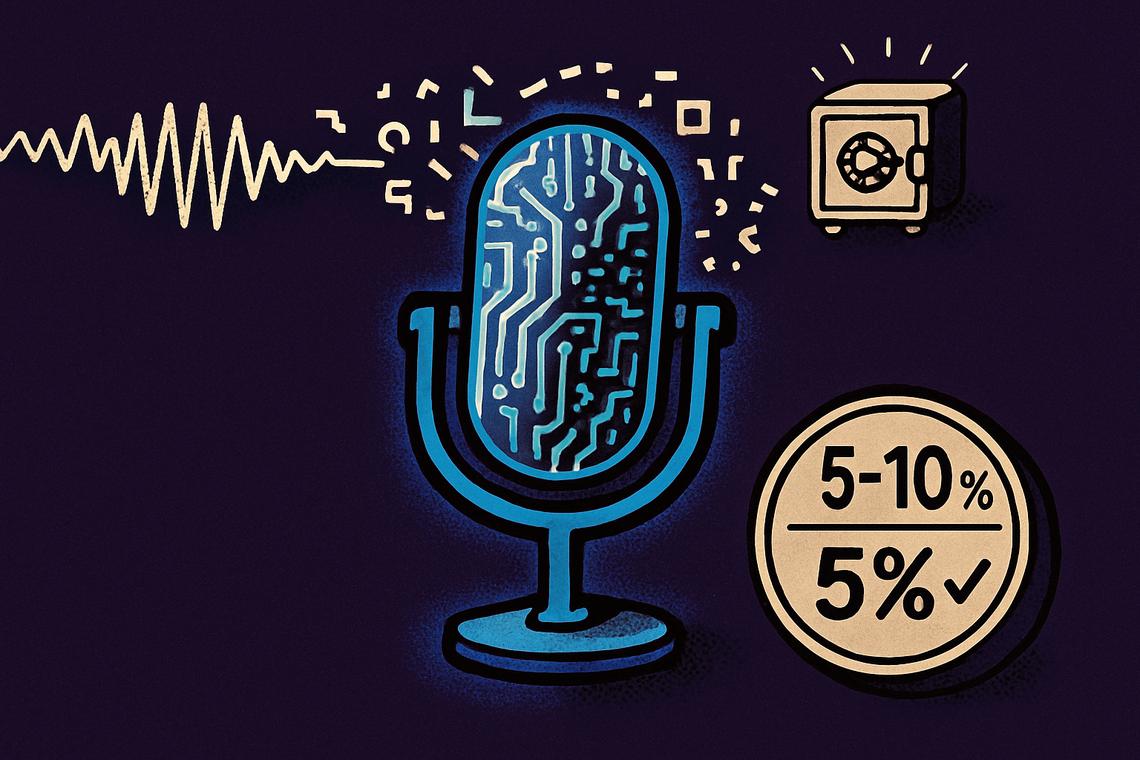
- The company previewed Canto, a proprietary speech model that cuts word error rates in noisy conditions from over 30% to between 5% and 10%.
- Wispr Flow users have written more than 60 billion words, with adoption across nearly all Fortune 500 companies and over 10,000 enterprises.
- New funds will fuel expansion beyond dictation into meeting transcription through the recently launched Notetaker tool.
Wispr secures $280 million Series B at a $2 billion valuation
The headline number here is simple: Wispr is now worth $2 billion, roughly ten months after its last funding round. Menlo Ventures, an existing backer, led the new Series B, according to both TechCrunch and Fortune. Existing investors including Notable Capital, NEA, Neo Ventures, 8VC, and MVP Ventures doubled down on their positions, while a wave of new investors joined the round.
New backers include Acrew, Forerunner, Goodwater, Peak XV, Together Fund, and PLUS Capital. The round also drew an unusual mix of individual investors: athletes, artists, and cultural figures such as Livvy Dunne, DK Metcalf, Shaun White, Joe Burrow, Dak Prescott, Kyle Hamilton, Alex Caruso, Domantas Sabonis, Aaron Gordon, Klay Thompson, Paul George, and Trae Young all put money into the company.
Three-time NBA All-Star Domantas Sabonis, who uses the product daily, explained his reasoning directly: “I use Flow every day. I grew up rotating between English, Spanish, and Lithuanian, and it keeps up with me no matter which one I’m speaking. So the opportunity to invest and support a product I use and believe in was a no brainer.”
Matt Kraning, a partner at Menlo Ventures, framed the investment thesis in broader terms, telling Fortune that dictation itself isn’t the real market. “Dictation is how you get in the door,” he said. “What people pay for is not having to type, which puts you up against workflow tools, meeting tools, and eventually the text box in front of every AI model. The labs have mostly solved intelligence. Nobody has solved how a normal person tells it what they want.”
From dictation app to broader productivity platform
Wispr Flow represents an AI-powered voice-to-text solution designed to transform verbal input into structured text within multiple applications, letting users draft messages, documents, and code by talking rather than typing. That single function has become the company’s foothold, but Wispr says it’s now pushing well past it.
The fresh capital will support expansion into new territory, particularly meeting transcription, following the recent launch of Wispr’s Notetaker tool. That move puts the company in direct competition with meeting-notes specialists like Granola, Fireflies, and Read AI, according to TechCrunch. Wispr’s Notetaker can already generate summaries and action items, and there’s room for it to eventually integrate with other software to draft documents or emails automatically.
Cofounders Tanay Kothari and Sahaj Garg, who met as Stanford freshmen and started the company in 2021, have described the long-term ambition in more sweeping terms. Kothari told Fortune the goal traces back to childhood fascination with a fictional AI assistant: a system that “just gets you,” staying present and useful without requiring constant instruction. Garg, for his part, emphasized that trust — not features — is the foundation the business depends on, since users are effectively granting the app ongoing access to how they speak and work.
Canto and the push for near-perfect transcription accuracy
Accuracy is where Wispr is making its most concrete technical claim. The company previewed Canto, its first proprietary speech model, which it says sharply reduces errors in difficult listening conditions. In noisy environments involving background noise, wind, accents, or music, Canto reportedly cuts word error rates from more than 30% down to between 5% and 10%.
Across everyday, less chaotic use, Wispr expects Canto to reduce the number of dictations requiring manual editing by 30% to 35%. The company measures this internally through what it calls a “zero edit rate” — the share of dictated speech that comes out correct on the first pass, with no correction needed.
That accuracy push isn’t happening in a vacuum. TechCrunch reported that in the weeks before the funding announcement, several users had publicly complained about a dip in dictation quality on the platform, suggesting Canto is partly a direct response to real user friction rather than a purely proactive upgrade. The stakes are real: the dictation space now includes rivals such as Willow, Monologue, Aqua, and Superwhisper, alongside a growing set of free or low-cost tools aimed at casual users, meaning accuracy gaps can quickly send users elsewhere.
To lead this technical work, Wispr has established the Wispr Advanced Interfaces Lab, headed by chief scientist Ariya Rastrow, a founding member of the original Amazon Alexa team. The company summed up its philosophy this way: “The whole reason to talk instead of type is to stay inside your own train of thought,” adding that it wants to build “systems that understand what you meant, hold the context of what you’re doing, and turn that into an outcome rather than a block of text.”
Scale, competition, and what happens next
The usage numbers help explain why investors moved fast on this round. Wispr says users have collectively written more than 60 billion words with Flow, and the app is now used by people at almost all Fortune 500 companies and more than 10,000 enterprises. Fortune separately reported that Wispr Flow is used by millions of consumers and roughly 100,000 businesses, with revenue climbing more than 150% for four straight quarters.
Why does this matter beyond Wispr itself? Because it signals that voice is being treated as serious infrastructure rather than a convenience feature — and that puts Wispr on a collision course with far bigger players. Fortune noted that Apple, Google, Microsoft, Anthropic, and OpenAI have all been chasing dictation and voice interaction in some form, meaning Wispr’s technical edge with Canto and its enterprise footprint may need to hold up against companies with vastly larger resources.
The company is also widening its footprint geographically and physically. Since last November, Wispr has shipped an Android version of its app and expanded its go-to-market teams into markets including India and the U.K. It’s also working with hardware partners, such as wearable maker Oasis, to let people dictate quietly without speaking aloud — a hint that Wispr sees voice computing extending beyond phones and laptops into wearable devices.
For now, the $2 billion valuation reflects investor confidence that talking to software, rather than typing at it, is becoming a durable habit rather than a passing convenience. Whether Canto’s accuracy gains and the Notetaker expansion are enough to hold off Big Tech’s own voice ambitions is the question the next funding cycle will likely answer.
FAQ
What recent funding has Wispr secured and what is its valuation?
Wispr raised $280 million in a Series B funding round led by Menlo Ventures, valuing the company at $2 billion.
What products does Wispr offer and plan to develop?
Wispr offers Wispr Flow, an AI-powered voice-to-text dictation app, and plans to expand into meeting transcription with its Notetaker tool.
How does Wispr’s new speech model, Canto, improve transcription accuracy?
Canto reduces word error rates in noisy conditions from over 30% to between 5% and 10%, and is expected to reduce editing needs by 30% to 35%.
Who uses Wispr’s technology?
Wispr Flow has been used to write over 60 billion words and is adopted by people at almost all Fortune 500 companies and more than 10,000 enterprises.
Article produced with the assistance of artificial intelligence and reviewed by the editorial team.





 English (US) ·