
 2 months ago
37
2 months ago
37
- Geopolitical tensions may accelerate interest in alternatives to dollar-based trade
- Analysts suggest shift is from fiat currencies entirely, not just away from USD
- XRP and similar assets could play a role due to speed, liquidity, and neutrality
What’s happening in the Strait of Hormuz right now isn’t just another geopolitical headline, it might be something a bit more structural, maybe even long-term. According to analyst Mickle, this moment could quietly show the world that the dollar isn’t the only way to settle global trade anymore. And that idea, if it sticks, could ripple much further than people expect.
He pointed out that situations like this force countries to rethink how they transact, especially when traditional systems feel constrained. If trade routes get disrupted and payments become harder to process, alternatives start to look more appealing, even if they seemed unlikely before. That’s where crypto, somewhat unexpectedly, enters the conversation.
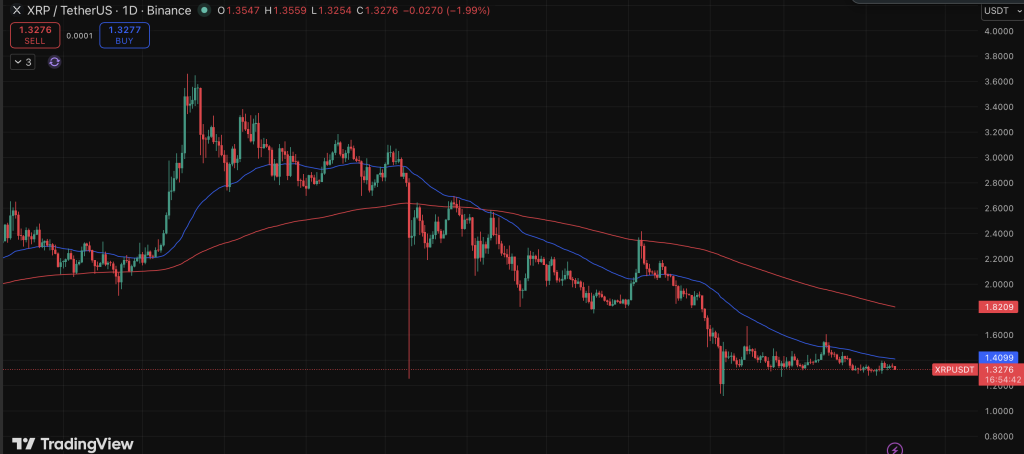
Shift Away From Traditional Currency Thinking
Mickle’s view leans heavily on Ray Dalio’s long-cycle theory, particularly the final phase where confidence in fiat currencies begins to break down. But instead of a simple switch from one dominant currency to another, say, from the dollar to the yuan, the idea now feels… different. It’s less about replacement, more about stepping outside the system entirely.
That’s the key shift. The narrative isn’t just “what replaces the dollar,” it’s whether anything replaces it at all. Mickle suggests that even Dalio’s thinking has evolved over time, moving away from traditional safe havens like gold toward a broader, more flexible concept. Digital assets, in that sense, act as an exit route, a way to move value without relying on centralized control.
Why XRP and Similar Assets Stand Out
When it comes to which assets could actually fill that role, Mickle doesn’t think the list is very long. The requirements are pretty strict, deep liquidity, fast settlement, global reach, and maybe most importantly, neutrality. That last part matters more than it sounds, because no country wants to rely on a system controlled by another.
XRP, in his view, checks a lot of those boxes. It’s designed for cross-border transfers, can move value quickly, and operates outside direct government control, at least structurally. Ethereum also gets mentioned, though for slightly different reasons. The point is, these assets aren’t just speculative anymore, they’re being looked at, at least hypothetically, as infrastructure.
Digital Assets vs Traditional Safe Havens
Gold used to be the obvious fallback in uncertain times, and in many ways, it still is. But Mickle raises a practical issue, gold isn’t exactly built for real-time settlement. You can’t easily move physical gold across borders instantly, especially not at the scale of global trade flows moving through critical routes like the Strait of Hormuz.
Digital assets, on the other hand, can. They’re not limited by physical constraints, and that changes the equation a bit. It doesn’t mean gold becomes irrelevant, but it does mean the conversation is expanding, maybe faster than expected.
Early Signs of a Larger Shift
Mickle is clear that this isn’t an overnight transformation. Dedollarization, deglobalization, these are slow-moving trends, the kind that take years, even decades to fully play out. But what’s different now is that the technology enabling alternatives is finally here, arriving just as these pressures start to build.
With tensions rising, trade routes under stress, and even reports of crypto being considered in real-world scenarios, the theory is starting to feel less abstract. It’s not fully real yet, not quite, but it’s being tested, piece by piece. And if this is the beginning, then the next phase could look very different from what markets are used to.
Disclaimer: BlockNews provides independent reporting on crypto, blockchain, and digital finance. All content is for informational purposes only and does not constitute financial advice. Readers should do their own research before making investment decisions. Some articles may use AI tools to assist in drafting, but every piece is reviewed and edited by our editorial team of experienced crypto writers and analysts before publication.






 English (US) ·