
 4 months ago
72
4 months ago
72
- XRP on-chain metrics like active accounts and transactions have declined
- Institutional activity and private DEX usage may not be reflected in public data
- Growth in tokenized assets signals a shift toward infrastructure-focused adoption
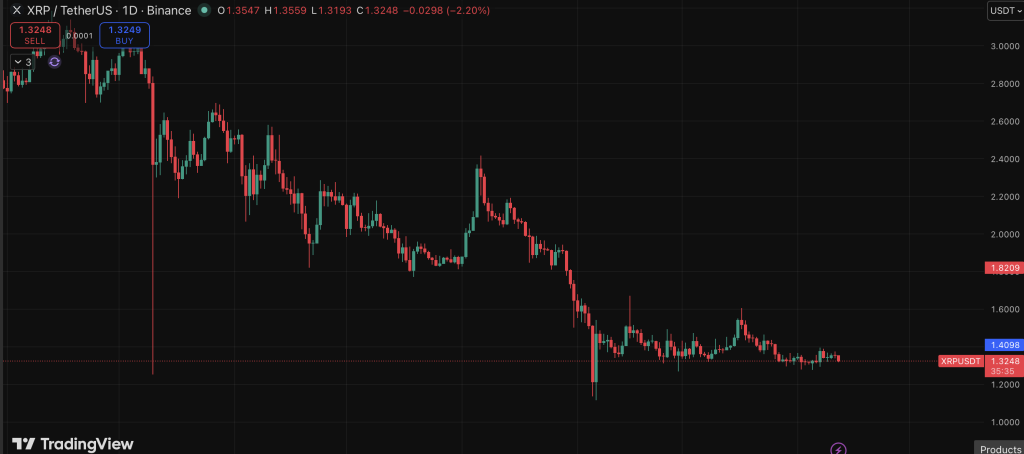
There’s something a bit uncomfortable happening beneath the surface of XRP right now. At first glance, price doesn’t tell the whole story, but when you look deeper, activity on the XRP Ledger has been slipping. Daily active accounts are down quite a bit compared to last year, and transaction volume between wallets has also taken a noticeable hit.
Even the amount of XRP being burned through fees has dropped sharply. That matters, because part of XRP’s long-term appeal was tied to usage increasing over time, which would slowly reduce supply. Right now though, those trends are moving in the opposite direction, and yeah… that raises questions.
The Three Pillars Start to Crack
For a long time, XRP’s investment case rested on three main ideas. First, that it would become a major bridge currency for cross-border payments. Second, that real usage would drive demand naturally. And third, that supply would shrink gradually through fee burns.
But looking at recent data, all three pillars seem a bit shaky. Active wallets have dropped from around 49,000 last year to under 16,000 now. Payment activity has declined too, falling from over a million daily transactions to somewhere closer to 700,000. And fee burns, once higher, have slowed significantly, which weakens that scarcity narrative.
It doesn’t necessarily mean everything is broken, but it does suggest the original thesis isn’t playing out exactly as expected, at least not right now.
A Shift Toward Institutional Use Changes the Picture
Here’s where things get more complicated, though. Some of these declining metrics might not tell the full story anymore. The XRP Ledger has been evolving, especially with the introduction of a permissioned DEX designed for regulated institutions.
This isn’t your typical open crypto activity. It’s more like a closed environment where banks and large players can transact with built-in compliance features like KYC and AML. And importantly, those transactions don’t show up in the same public metrics people usually track.
So it’s possible, maybe even likely, that some activity hasn’t disappeared, it’s just moved into quieter, more private channels.
Real-World Asset Growth Adds a New Layer
Another shift is happening around real-world asset tokenization. The XRP Ledger now hosts hundreds of millions of dollars worth of tokenized assets, up significantly from the previous year. That’s a big jump, and it points to a different kind of growth, one focused more on infrastructure than retail usage.
Institutions don’t need thousands of wallets to move large amounts of value. A few high-value transactions can replace a lot of smaller ones. That changes how growth looks, and it makes older metrics, like wallet activity, a bit less reliable as indicators.
The Bigger Question Still Remains
Even with these developments, there’s still a lingering question, how does all of this translate into value for XRP holders? Lower burn rates mean less pressure on supply, and if usage isn’t visibly increasing, it can be harder to justify price growth in the short term.
That doesn’t mean XRP is a lost cause, far from it. Ripple continues to build, expand, and push into institutional markets, which could pay off over time. But the narrative is shifting, and with that shift comes a bit more uncertainty.
A Balanced View Going Forward
For now, it’s probably not a moment to panic, but it’s also not one to ignore. XRP is evolving, and that evolution might take it in a different direction than originally expected. Whether that’s better or worse depends on how these new use cases develop.
Investors might need to adjust expectations a bit, focusing less on old metrics and more on where the network is heading. Because while XRP isn’t standing still, the way it grows, and how that growth shows up, is clearly changing.
Disclaimer: BlockNews provides independent reporting on crypto, blockchain, and digital finance. All content is for informational purposes only and does not constitute financial advice. Readers should do their own research before making investment decisions. Some articles may use AI tools to assist in drafting, but every piece is reviewed and edited by our editorial team of experienced crypto writers and analysts before publication.






 English (US) ·