
 3 months ago
82
3 months ago
82
- SoFi has become the first nationally chartered U.S. bank to support XRP deposits for its customers.
- The integration gives roughly 13.7 million users the ability to buy, sell, and hold XRP within a regulated banking platform.
- The move marks another major step toward mainstream XRP adoption and broader institutional acceptance.
For years, XRP supporters talked about a future where major banks would eventually integrate digital assets directly into their platforms. Critics often dismissed the idea as wishful thinking, arguing that regulatory hurdles and institutional caution would prevent widespread adoption. Now, one of the clearest examples of that vision becoming reality has arrived.
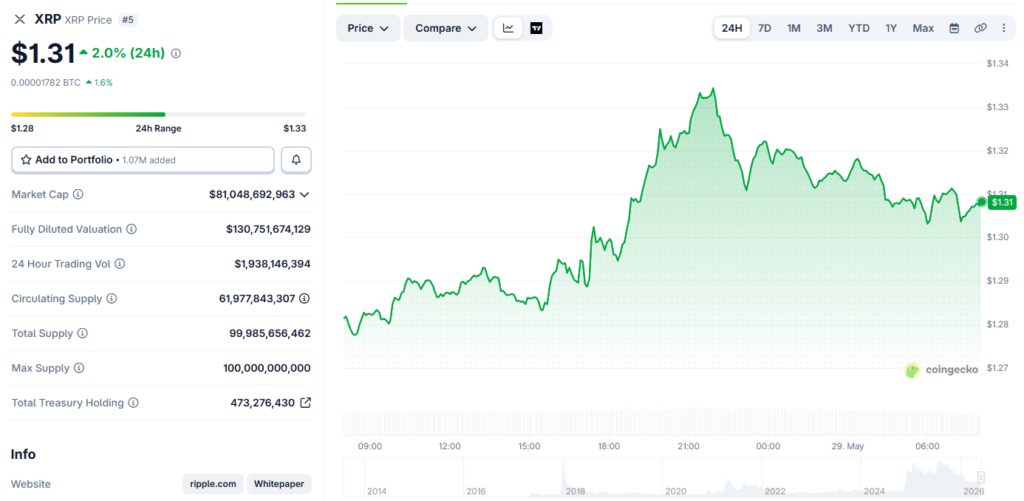
SoFi has officially added support for XRP deposits, allowing its approximately 13.7 million customers to buy, sell, and hold the cryptocurrency directly within the same application they already use for banking, savings, investing, and daily financial activities. Unlike crypto-native exchanges, SoFi operates as a nationally chartered U.S. bank regulated by the Office of the Comptroller of the Currency, making this development particularly significant for the broader digital asset industry.
XRP Enters Mainstream Banking Infrastructure
The announcement was made by SoFi on April 21 through its official social media channels. Alongside XRP, the platform supports deposits for Bitcoin, Ethereum, Solana, and several other digital assets. At the time of the rollout, SoFi offered support for 12 cryptocurrencies through deposits and 27 cryptocurrencies for trading across its platform.
What makes the move notable is accessibility. Millions of users who may never have created an account on a crypto exchange can now gain exposure to XRP through a banking application they already know and trust. That lowers one of the biggest barriers to adoption: convenience. For many consumers, navigating exchanges, wallets, and private keys remains intimidating. Integrating crypto directly into traditional banking platforms removes much of that friction.
Ripple and the XRP Community Respond
Ripple quickly acknowledged the announcement, highlighting the importance of expanding access to XRP. The company emphasized that broader availability allows more people to participate in the ecosystem, helping increase utility and adoption over time.
The XRP community reacted enthusiastically as well. Several commentators described the integration as a milestone many supporters had anticipated for years. The idea that millions of banking customers can now access XRP within the same application they use for salaries and savings was viewed by many as a major validation of the asset’s growing role within traditional finance.
Some users did note one limitation. While deposits, buying, and selling are currently available, transfers to external wallets have not yet been enabled. However, SoFi’s support team has indicated that withdrawal functionality is expected to arrive later, following a rollout strategy similar to what the platform previously used for Solana.
Institutional Momentum Continues to Build
The SoFi integration arrives at a time when institutional interest surrounding the XRP Ledger continues to expand. Recent discussions at the Digital Assets Forum 2026 highlighted the network’s growing role in tokenized assets and cross-border payments. According to industry participants, real-world asset activity on the XRP Ledger has surged significantly, with total tokenized value approaching billions of dollars.
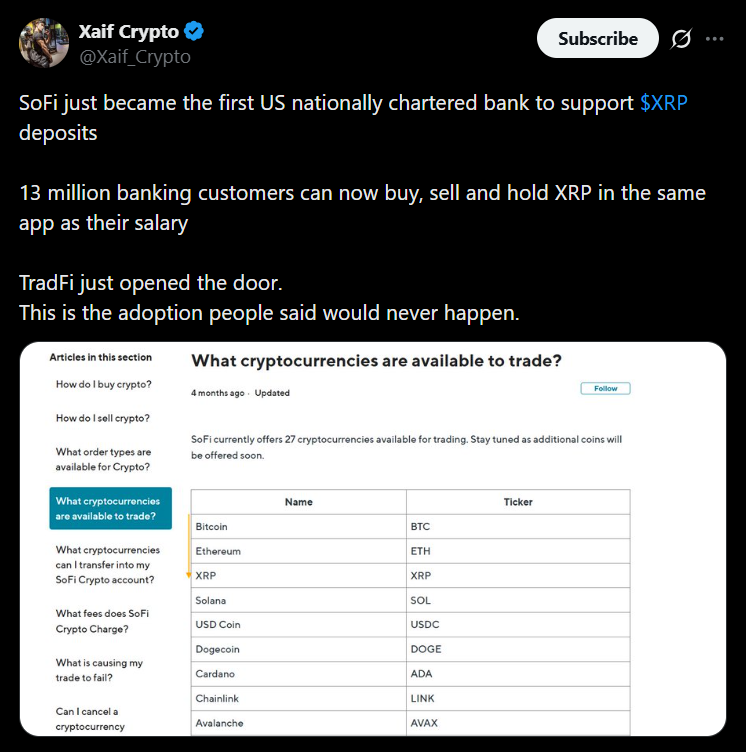
Major financial organizations have also shown increasing interest in blockchain infrastructure that can support transparent and efficient asset transfers. While the XRP Ledger continues competing with numerous blockchain networks, growing institutional attention suggests that the technology is gaining credibility among larger market participants.
A Significant Step for XRP Adoption
SoFi’s approach to crypto integration has been measured and deliberate. The bank first expanded support for Bitcoin and Ethereum before gradually adding additional assets such as Solana and now XRP. That careful rollout strategy makes the latest addition particularly noteworthy because it reflects growing confidence in the asset from a regulated financial institution.
For years, mainstream adoption discussions often centered on hypothetical future scenarios. Today, XRP is available through one of the largest regulated banking platforms in the United States. While broader adoption will still take time, this milestone demonstrates that the gap between traditional banking and digital assets continues to narrow. For XRP holders and supporters, that represents a meaningful step forward in the asset’s journey toward wider acceptance.
Disclaimer: BlockNews provides independent reporting on crypto, blockchain, and digital finance. All content is for informational purposes only and does not constitute financial advice. Readers should do their own research before making investment decisions. Some articles may use AI tools to assist in drafting, but every piece is reviewed and edited by our editorial team of experienced crypto writers and analysts before publication.






 English (US) ·