
 3 months ago
77
3 months ago
77
- Future XRP argued October 2026 may matter more than December SEC clearing deadlines
- The analysis focused on potential operational gaps in international settlement infrastructure
- Traders were told to watch infrastructure integration and settlement volume rather than headlines
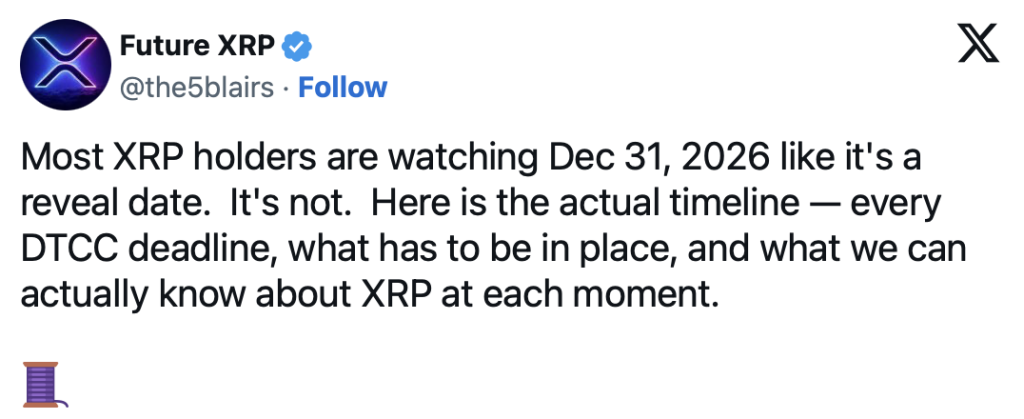
A new discussion surrounding XRP’s potential role in future institutional settlement systems has started gaining serious attention after crypto commentator Future XRP shared a detailed timeline analysis on X. According to the post, many XRP holders may actually be focusing on the wrong date entirely when talking about institutional adoption.
Instead of treating December 31, 2026 as some kind of major “XRP reveal moment,” Future XRP argued that the date is simply part of a much broader regulatory transition tied to SEC clearing mandates, DTCC infrastructure upgrades, and institutional testing windows.
The post didn’t claim XRP had officially been selected for anything either. Rather, it focused on how upcoming regulatory changes could gradually create operational gaps where blockchain-based liquidity solutions like XRP potentially become useful over time.
SEC Clearing Deadlines Could Reshape Settlement Flows
At the center of the discussion are two major SEC-related deadlines tied to Treasury market clearing requirements. The first arrives on December 31, 2026, when eligible cash Treasury transactions must begin clearing through the Fixed Income Clearing Corporation, better known as FICC.
The second deadline follows on June 30, 2027, when eligible repo transactions will also need to clear through FICC systems.
Future XRP emphasized repeatedly that these mandates do not specifically require XRP. But the argument is that the new framework may expose limitations in traditional cross-border settlement infrastructure, especially involving non-dollar transaction flows that fall outside systems like Fedwire.
The post highlighted examples such as yen-to-euro or sterling-to-won settlement legs, suggesting those international liquidity movements could eventually create demand for faster blockchain-based settlement tools if traditional systems struggle handling operational complexity efficiently.
Why October 2026 Could Be More Important
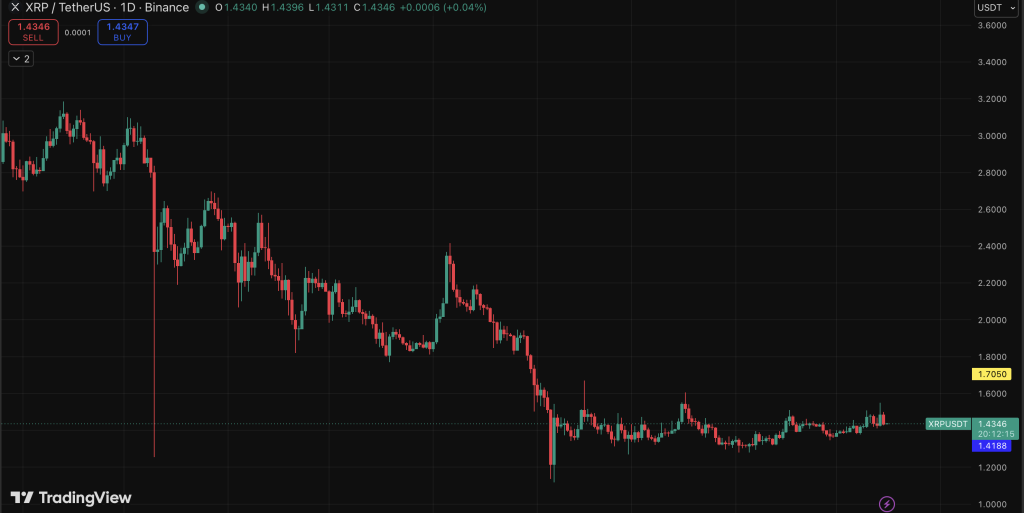
One of the biggest points raised in the analysis centered around timing. According to Future XRP, institutions rarely implement major infrastructure changes right before official deadlines arrive. Instead, they usually spend 60 to 90 days testing systems, running parallel operations, and finalizing workflows before launch.
Because of that, the commentator argued October 2026 may actually matter more than the December SEC mandate itself. By then, institutions would likely need to finalize operational decisions and complete settlement testing ahead of year-end implementation deadlines.
That timeline also overlaps with several tokenization initiatives currently being discussed across traditional finance infrastructure.
Future XRP pointed specifically toward DTCC-related tokenization pilots expected to launch during mid-2026 on the Canton Network. The post referenced a working group involving roughly 50 firms focused on tokenized Treasury securities, while also mentioning Ripple Prime as part of the broader ecosystem conversation.
XRP Holders Told to Watch Infrastructure, Not Headlines
Interestingly, the analysis argued that XRP investors should probably not expect a dramatic public announcement declaring XRP officially chosen by DTCC or regulators. Instead, Future XRP suggested the real signals would likely appear gradually through operational infrastructure changes rather than flashy headlines.
Several indicators were mentioned as important areas to monitor moving forward. These included possible XRPL AppChain connectivity documents, institutional settlement volume moving on-chain, Ripple Prime clearing disclosures, and margin-related decisions from futures commission merchants.
The post also connected the timeline to DTCC’s planned Collateral AppChain rollout expected around October 2026. According to the argument, that initiative could enable 24/7 tokenized collateral movement across blockchain systems using Chainlink-powered oracle connectivity.
Looking further into 2027, Future XRP suggested that once more standardized Treasury repo activity migrates into FICC infrastructure, remaining bilateral settlement markets could become increasingly international and operationally fragmented. If that happens, the demand for cross-border liquidity solutions may expand considerably.
Ultimately, the commentator concluded that XRP’s true institutional relevance likely won’t arrive through press releases or official announcements. Instead, it may emerge quietly through measurable settlement activity, infrastructure integration, and growing operational usage underneath the surface — something many traders probably aren’t fully watching yet.
Disclaimer: BlockNews provides independent reporting on crypto, blockchain, and digital finance. All content is for informational purposes only and does not constitute financial advice. Readers should do their own research before making investment decisions. Some articles may use AI tools to assist in drafting, but every piece is reviewed and edited by our editorial team of experienced crypto writers and analysts before publication.






 English (US) ·