
 1 month ago
70
1 month ago
70
Key Takeaways
- The moderate scenario projects XRP between $5 and $8 by 2031, driven by growing institutional integration
- In an optimistic scenario, XRP could climb to $15–$25 if it captures significant global settlement market share
- A pessimistic outlook places XRP at $1–$2 should adoption stall or competitive pressures mount
- Exchange-traded fund flows may constrain circulating supply while boosting retail and institutional accessibility
- Across weighted probability scenarios, XRP’s 2031 target centers around $7.90
For years, XRP has maintained its position as one of the cryptocurrency sector’s most debated digital assets. Its specialized focus on facilitating international payments and serving institutional clients distinguishes it from broader platforms like Bitcoin and Ethereum.
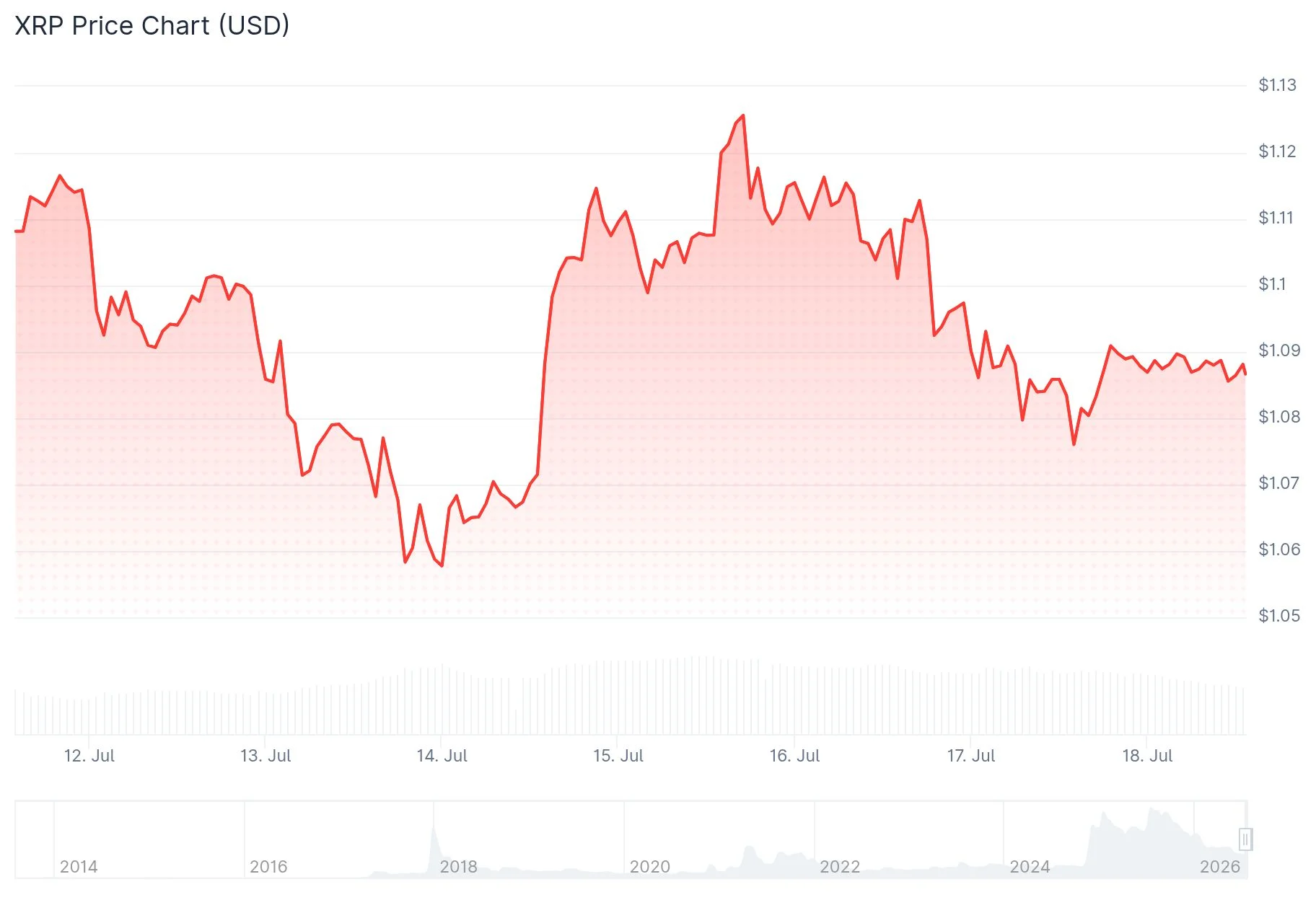 XRP Price
Following an extended period dominated by regulatory challenges, XRP has transitioned into a more promising chapter. Enhanced legal clarity, the introduction of regulated spot ETF products, and Ripple’s aggressive global partnership strategy have reignited attention from the investment community.
The central question facing investors today is straightforward: what price level could XRP realistically achieve by 2031?
For several years, Ripple has systematically developed relationships with financial institutions and payment service providers worldwide. Meanwhile, the XRP Ledger continues broadening its use cases beyond payments—venturing into tokenization of tangible assets, DeFi applications, and supporting the RLUSD stablecoin infrastructure.
Under moderate assumptions, XRP is projected to trade between $5 and $8 by the end of the decade. Such valuations would correspond to a total market capitalization spanning approximately $325 billion to $520 billion.
Optimistic Projection
The bullish forecast operates under the premise that XRP establishes itself as a dominant infrastructure layer for institutional transaction settlement and international money transfers.
The launch of XRP-based ETF products represents a critical growth driver in this scenario. These regulated investment vehicles have dramatically lowered barriers for traditional investors seeking exposure to the asset. Sustained inflows into these products could create supply constraints while simultaneously expanding demand channels.
Should the tokenized asset sector evolve into a multi-trillion-dollar market—and the XRP Ledger successfully captures a substantial portion of that activity—XRP’s total value could approach the $1 trillion threshold. Under these conditions, individual token prices would fall within the $15 to $25 range.
While this represents an aggressive projection, a growing number of long-term holders no longer consider it entirely implausible.
Pessimistic Projection
The primary vulnerability facing XRP centers on implementation challenges. Ripple’s payment infrastructure could achieve commercial success without necessarily translating into proportionate demand for the underlying XRP token.
Meanwhile, competitive pressure continues intensifying. Ethereum Layer 2 solutions, Solana’s payment rails, fiat-backed stablecoins, and emerging central bank digital currencies all represent viable alternatives for institutional payment settlement.
Under this less favorable scenario, XRP’s trading range could remain confined between $1 and $2 throughout the next half-decade.
XRP’s distinguishing characteristic remains its institutional orientation. Rather than positioning itself as a multipurpose blockchain platform, it’s strategically aligned as foundational infrastructure supporting the global financial system.
When factoring probability weights across bear, base, and bull scenarios, the blended price expectation for XRP by 2031 lands at approximately $7.90.
The post XRP Price Forecast 2031: Is $20 Within Reach? Breaking Down the Realistic Scenarios appeared first on Blockonomi.



 English (US) ·