
 3 months ago
46
3 months ago
46
- XRP is increasingly viewed through an institutional infrastructure lens rather than short-term price action
- Michael Arrington highlights XRP’s role in building long-term financial systems
- Market sentiment remains divided between long-term potential and current performance
The conversation around XRP is shifting, slowly but noticeably. It’s less about quick price moves now and more about whether it actually fits into the bigger picture of global finance, which… is a very different lens to look through. As institutions start shaping the crypto space more aggressively, the focus has drifted toward infrastructure, not hype, not short-term trades.
That shift picked up steam again after comments from venture capitalist Michael Arrington resurfaced, shared by John Squire. The takeaway wasn’t about price targets or quick gains, it was about positioning XRP and Ripple as long-term builders, something that feels a bit underappreciated in a market that usually chases momentum.

Early Conviction and a Different Perspective
Arrington, for context, has been around XRP for a while. He mentioned buying in back in 2017, when prices were, well, significantly lower, which hints at a level of conviction that goes beyond short-term thinking. For him, XRP wasn’t just another token to flip, it was tied to a broader idea of building financial infrastructure.
He described Ripple and XRP as mission-driven, which might sound a bit idealistic at first, but the point he was making is fairly grounded. The focus, according to him, isn’t speculation, it’s creating systems that could actually plug into real financial networks. That’s a longer game, and honestly, not as flashy.
He also touched on the old criticism, the “corporate coin” label that’s followed XRP for years. In his view, that narrative kind of misses the point. Instead of being a weakness, that corporate structure might actually help XRP integrate into regulated environments, where institutions tend to operate.
The Missing Piece in Crypto Infrastructure
One of the more interesting parts of Arrington’s argument is the gap he sees in crypto itself. Compared to traditional finance, the infrastructure just isn’t fully there yet, especially when it comes to services like prime brokerage, liquidity aggregation, and execution systems that institutions rely on.
That’s where Ripple, at least in theory, is trying to step in. Through expansion efforts and acquisitions like Hidden Road, the goal seems to be building out that missing layer, making it easier for large players to move capital efficiently. It’s not the kind of development that drives instant price spikes, but it does matter over time.
Within that framework, XRP acts as a liquidity bridge, helping facilitate cross-border transfers and settlements. So its value, according to this view, isn’t just tied to demand from retail traders, but to how deeply it becomes embedded in these systems.
Market Reaction Shows a Split Narrative
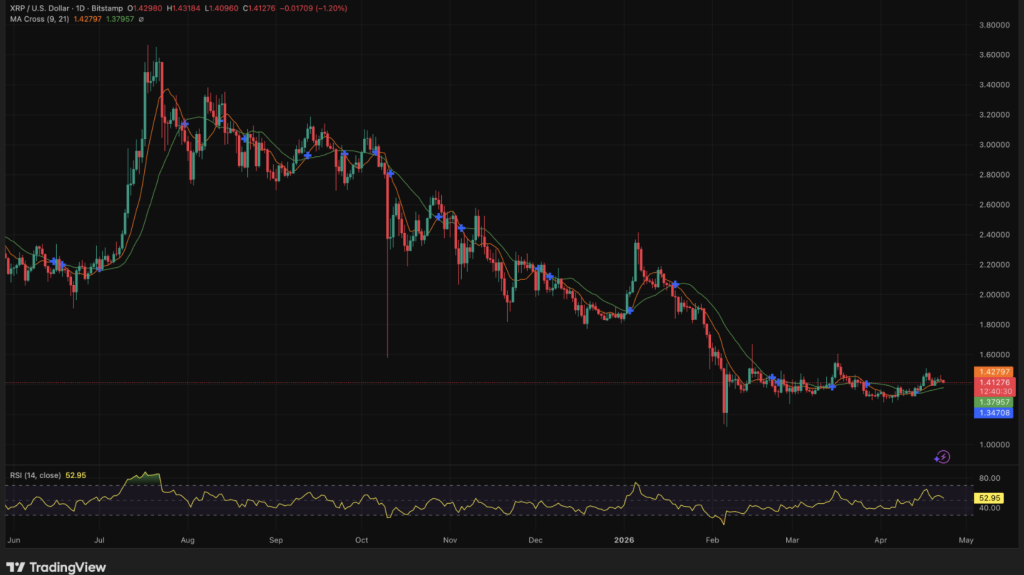
Not everyone is convinced, though. The reaction to these comments has been… mixed, to put it simply. Some investors see this as validation, a reason to keep holding and focusing on the long-term potential. Others are more skeptical, pointing out that despite all the infrastructure talk, XRP hasn’t exactly dominated the market the way some expected.
And that tension isn’t unique to XRP. It’s kind of a broader theme in crypto right now, the gap between future-focused narratives and current performance. People want to believe in long-term utility, but they also want to see results, and not years down the line.
Playing the Long Game in a Changing Market
Arrington’s perspective fits into a larger shift happening across the space. As crypto matures, there’s more emphasis on utility, compliance, and scalability, things that institutions actually care about. That naturally changes how assets like XRP are evaluated.
For now, XRP sits somewhere in the middle. It has a narrative built around infrastructure and institutional use, but it’s still waiting for that narrative to fully translate into market dominance. Whether that happens or not… probably depends on how the next phase of crypto adoption unfolds.
Disclaimer: BlockNews provides independent reporting on crypto, blockchain, and digital finance. All content is for informational purposes only and does not constitute financial advice. Readers should do their own research before making investment decisions. Some articles may use AI tools to assist in drafting, but every piece is reviewed and edited by our editorial team of experienced crypto writers and analysts before publication.







 English (US) ·