
 2 months ago
47
2 months ago
47
- Anthropic launched 10 AI finance agents already used by Goldman Sachs, JPMorgan, Citadel, and BMO
- Claude now works across Excel, PowerPoint, and Word without losing context between tasks
- The repetitive work behind 80-hour analyst weeks is increasingly being automated
Wall Street has spent years pretending junior analyst burnout was some kind of rite of passage. Endless pitch books, overnight revisions, financial model updates at 2AM, all framed as “paying your dues.” Anthropic just introduced a very uncomfortable alternative.
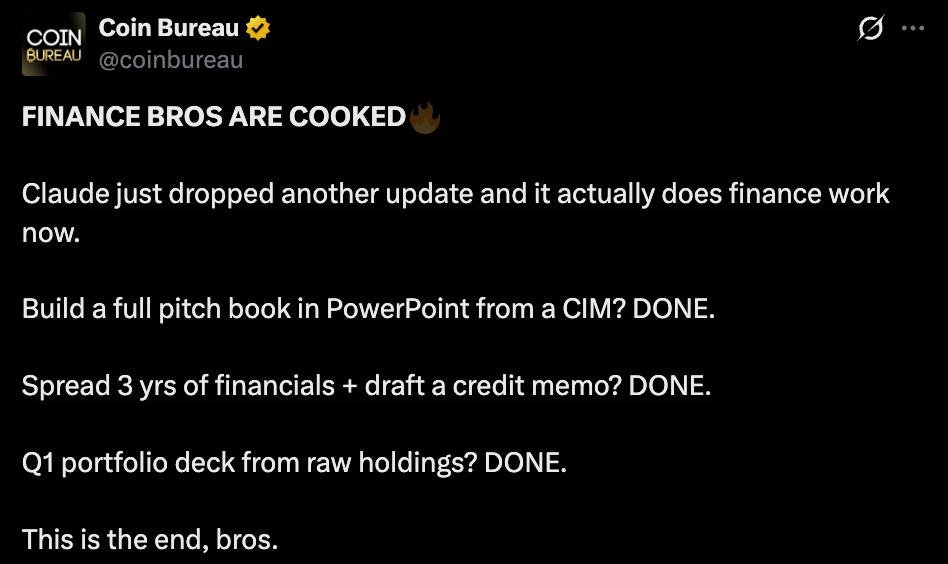
And unlike most AI announcements, this one isn’t hypothetical anymore.
AI Just Walked Into the Workflow
Anthropic unveiled 10 finance-focused AI agent templates this week aimed directly at investment banking and financial services work. Pitch books, KYC screening, valuation reviews, credit memos, financial audits, basically the exact tasks junior analysts spend most of their lives doing.
The awkward part is how naturally the system fits into existing workflows.
The Context Problem Is Gone
Claude now operates natively inside Excel, PowerPoint, and Word, carrying context automatically between applications. A model built in Excel can move directly into a presentation deck without manually rebuilding charts or re-explaining assumptions.
That may sound small until you realize entire analyst weekends historically disappeared solving exactly that problem.
The Clients Are What Matter
This isn’t some startup demo looking for attention. Goldman Sachs, JPMorgan, Citadel, and BMO are already deploying the tools, which signals the finance industry sees immediate operational value here.
And finance firms are not exactly known for adopting workflow changes casually. If they’re implementing this now, it’s because the efficiency gains are already meaningful.
The Benchmark Is Good Enough
Claude Opus 4.7 reportedly topped finance-focused AI benchmark testing with a score above 64%, which still leaves room for improvement, but honestly, it’s already operating at a level that rivals exhausted junior employees handling repetitive analytical work under pressure.

That’s the real shift. AI doesn’t need perfection to disrupt workflow economics. It just needs to become cheaper, faster, and “good enough” often enough.
The 100-Hour Week Gets Harder to Justify
None of this means finance careers disappear overnight. Relationship management, judgment, negotiation, and strategic thinking still matter enormously in high-level finance.
But the traditional apprenticeship model, where analysts survive years of repetitive execution work before moving up, suddenly looks a lot less structurally necessary than it did even two years ago.
Wall Street’s Incentives Are Obvious
The deeper reality is pretty simple. Once major financial firms realize smaller teams can produce similar output with AI-assisted workflows, they’re going to optimize around that aggressively. Wall Street has never been sentimental about labor costs.
The irony is that finance spent years funding AI infrastructure and automation companies, and now the same technology is circling back toward finance itself. Which, honestly, was probably inevitable.
Disclaimer: BlockNews provides independent reporting on crypto, blockchain, and digital finance. All content is for informational purposes only and does not constitute financial advice. Readers should do their own research before making investment decisions. Some articles may use AI tools to assist in drafting, but every piece is reviewed and edited by our editorial team of experienced crypto writers and analysts before publication.







 English (US) ·