
 7 hours ago
18
7 hours ago
18
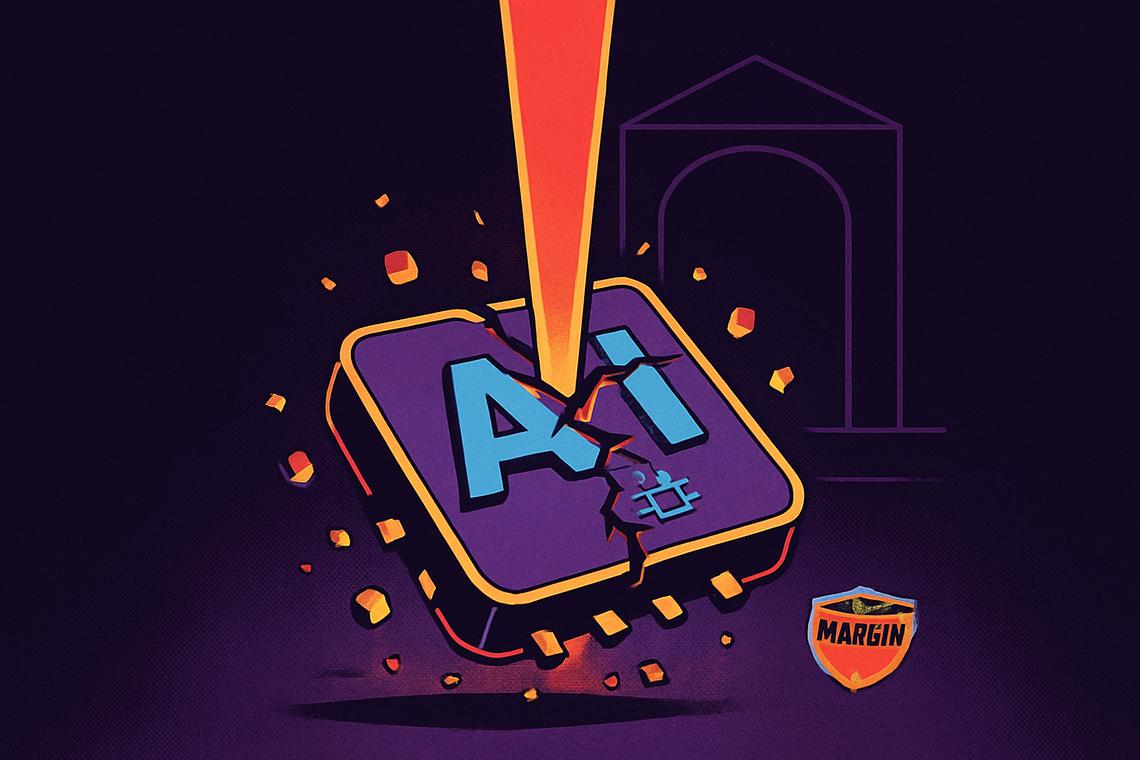
One of the most closely watched names in AI investing just blew up — and the fallout is already rippling through the sector. Leopold Aschenbrenner’s hedge fund, Situational Awareness LP, has been forced to unwind all of its public stock positions after sustaining steep losses, in what amounts to a dramatic reversal for a fund that had become synonymous with aggressive AI investment withdrawal from conventional market caution.
Key takeaways
- Situational Awareness LP, founded by former OpenAI researcher Leopold Aschenbrenner, grew to as large as $45 billion before suffering significant losses in recent weeks.
- Ken Griffin’s Citadel hedge fund stepped in to purchase the fund’s publicly traded stock portfolio.
- Losses stemmed from declines in AI infrastructure holdings such as SK Hynix, Nebius Group, Sandisk, Micron, and CoreWeave, compounded by short positions in software stocks like Adobe moving sharply against the fund.
- The fund had been negotiating the sale of its stake in Anthropic, though a spokesman for the firm stated that reports it was marketing that stake are “not accurate.”
- Prime brokers Bank of America, Goldman Sachs, and JPMorgan Chase were all involved in managing the unwind to meet margin requirements.
The fund that redefined AI infrastructure investing
Aschenbrenner, 25, built Situational Awareness around a single, high-conviction thesis: that increasingly powerful AI systems would demand a massive expansion of chips, memory, data centers, and energy infrastructure. It was a bold bet, and for a while, it looked like genius. The fund achieved eye-popping returns, and at its peak at the start of July, assets under management swelled to as large as $45 billion, according to CNBC.
His path to that position was anything but conventional. Aschenbrenner graduated from Columbia University as valedictorian at age 19, then joined OpenAI’s Superalignment team. He was fired in 2024 — OpenAI cited an improper disclosure of internal information, a characterization he has disputed, saying he shared a largely non-confidential planning document with outside researchers for feedback. He also raised concerns about OpenAI’s security practices, which the company said were unrelated to his departure. After leaving, he launched Situational Awareness and quickly became one of the most scrutinized figures in the AI trade.
The fund’s portfolio was heavily concentrated in AI infrastructure plays including Bloom Energy, Nvidia, and crypto miners.
What went wrong: losses across AI infrastructure and software shorts
The fund’s concentrated strategy was always a double-edged sword. When AI infrastructure stocks surged, Situational Awareness looked untouchable. When they turned, there was nowhere to hide.
Losses accelerated in recent weeks as the portfolio’s largest holdings collapsed. According to CNBC, Nebius Group, Sandisk, Micron, and CoreWeave — the fund’s top positions at the end of the first quarter — declined sharply during July. SK Hynix, another significant infrastructure holding, also declined sharply.
The pain was compounded by the short side of the book. The fund had positioned against software companies, including Adobe, apparently betting that as AI infrastructure captured investment dollars, legacy software valuations would compress. Those shorts moved sharply against the fund instead, leaving prime brokers scrambling to raise cash to meet margin requirements.
Bank of America, Goldman Sachs, and JPMorgan Chase were all working with Situational Awareness as it sought to reduce positions in an orderly fashion, according to people familiar with the matter cited by CNBC. Brokers had been marketing the fund’s holdings — on both the long and short side — ahead of the start of trading on Thursday.
Citadel steps in as buyer
Ken Griffin’s Citadel reached a deal to acquire the publicly traded assets, according to CNBC sources. For Citadel, with its multi-strategy infrastructure and deep risk management capacity, absorbing concentrated AI positions at distressed prices is well within its operational range. The move also carries an implicit signal: even as Situational Awareness exits, a major institutional player sees residual value in the underlying holdings.
The Anthropic question and what it means for AI valuations
Beyond the public stock book, attention has focused heavily on the fund’s private holdings — most notably its stake in Anthropic. The fund had been in negotiations to sell that position, according to CNBC sources, though a spokesman for Situational Awareness disputed reports that it was actively marketing the stake.
The ambiguity matters. Anthropic has emerged as one of the most valuable private AI companies, backed by Amazon and Google among others. Any forced or distressed sale of a meaningful stake would inevitably apply downward pressure on secondary market pricing and could complicate the narrative around Anthropic’s valuation heading into future funding rounds or strategic partnerships.
More broadly, this episode raises a harder question about the current AI investment cycle. Situational Awareness’s thesis — that AI infrastructure would be the dominant investment opportunity of the decade — was not necessarily wrong. The fund’s positions in energy infrastructure, memory, and compute capacity reflect where genuine demand is being built. But concentration at that scale, with leverage, leaves no margin for timing errors. When a fund faces a forced unwind, it illustrates just how violent drawdowns can be in a sector where valuations are still largely driven by expectations rather than realized cash flows.
What happens next for AI investors
The unwind at Situational Awareness arrives at a moment when broader AI market confidence is being stress-tested. The fund’s exit — even if partly forced by margin dynamics rather than a philosophical change of heart — adds to a picture of a sector where even the most committed bulls are being shaken out.
Market observers are watching closely for any signals from Anthropic’s major backers, Amazon and Google, whose next moves on funding or strategic positioning could either stabilize or further pressure AI valuations. Whether other concentrated AI funds recalibrate their own exposure in response to this episode remains to be seen. But the fact that Citadel — one of the most sophisticated risk operations in the world — chose to buy rather than step aside suggests the AI infrastructure thesis is wounded, not invalidated.
The more lasting consequence may be the signal this sends to the next wave of AI-focused funds: conviction without risk management isn’t a strategy. It’s a wager.
FAQ
Who is Leopold Aschenbrenner and what is Situational Awareness LP?
Leopold Aschenbrenner is a former OpenAI researcher who founded and manages Situational Awareness LP, a hedge fund built around concentrated bets on AI infrastructure. He left OpenAI in 2024 and launched the fund shortly after, quickly building it into one of the most prominent vehicles in AI-focused investing.
Why is Situational Awareness LP selling off AI-related holdings?
The fund has been forced to unwind its public stock positions after sustaining significant losses. AI infrastructure holdings including SK Hynix, Nebius Group, Sandisk, Micron, and CoreWeave fell sharply in July, while short positions in software stocks like Adobe moved against the fund. Prime brokers including Bank of America, Goldman Sachs, and JPMorgan Chase stepped in to help meet margin requirements, and Citadel ultimately purchased the publicly traded portfolio.
What impact could the fund’s exit have on AI valuations, especially Anthropic?
The fund had been in negotiations to sell its stake in Anthropic, though a firm spokesman disputed those reports. If the stake is sold under distressed conditions, it could negatively affect Anthropic’s valuation on secondary markets and influence sentiment ahead of future funding rounds. Upcoming moves by major Anthropic backers Amazon and Google will be closely watched as potential stabilizing factors.
Could other investors be influenced by this fund’s strategy change?
Market observers anticipate the forced unwind could prompt other AI-focused investors to reassess their own concentration and leverage levels, potentially contributing to further volatility across AI infrastructure stocks. The episode underscores the risks of highly concentrated bets in a sector where valuations remain heavily tied to future expectations rather than current earnings.
Article produced with the assistance of artificial intelligence and reviewed by the editorial team.




 English (US) ·