
 9 hours ago
24
9 hours ago
24
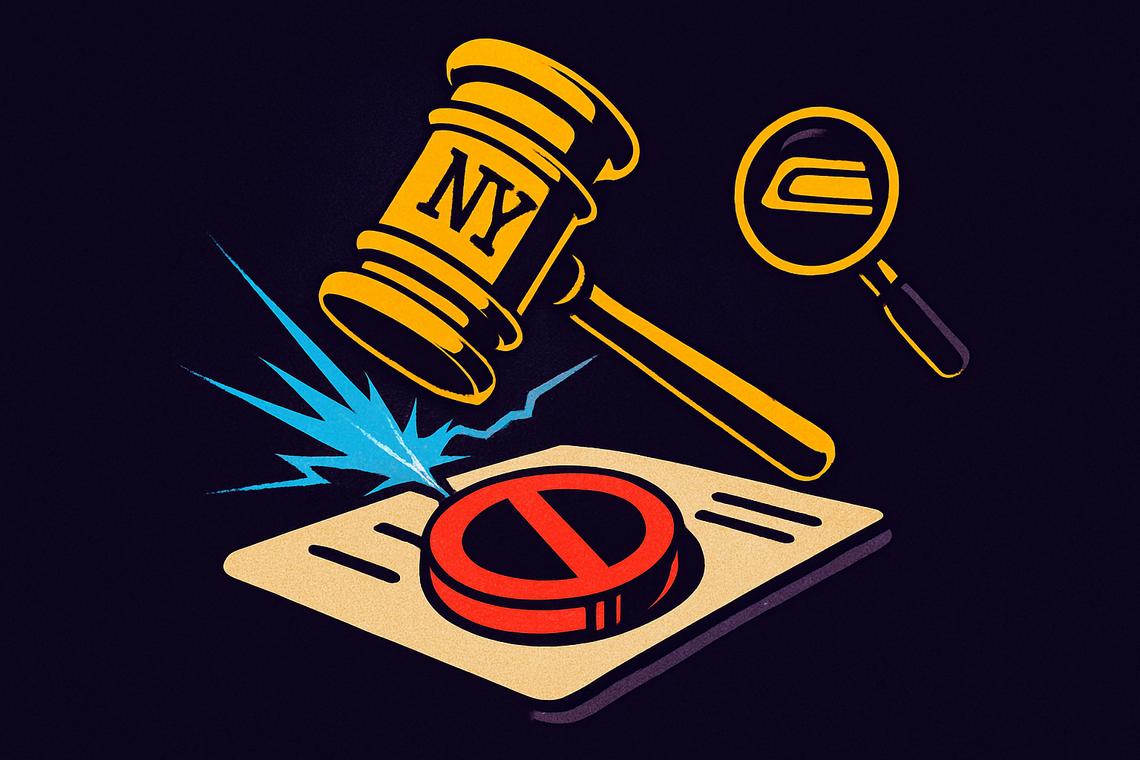
New York has drawn a hard line against prediction markets — and Kalshi is the latest target. The state filed a lawsuit against the federally licensed platform on July 31, alleging it operates an unlicensed gambling business in violation of New York law, in what amounts to one of the most aggressive state-level challenges yet to the booming prediction market sector. The Kalshi New York lawsuit lands at a moment when the company was riding significant momentum, making the legal threat all the more consequential.
Key takeaways
- New York Attorney General Letitia James filed suit against Kalshi in New York Supreme Court, accusing it of running an unlicensed gambling operation.
- The lawsuit seeks to bar Kalshi from operating in New York, plus civil penalties equal to three times the company’s gains and $100,000 per unauthorized wager offer.
- Kalshi allegedly allowed users aged 18 to 20 to place wagers, which falls below New York’s minimum age of 21 for mobile sports betting.
- The suit follows an October cease-and-desist order from the New York State Gaming Commission that Kalshi did not comply with.
- A federal judge denied Kalshi’s bids to block New York regulators on July 7 and again on July 27, leaving the company with limited legal cover.
New York Sues Kalshi for Unlicensed Gambling
The petition, filed in a state court in Manhattan, accuses Kalshi of failing to obtain a New York State Gaming Commission license before allowing users to trade contracts based on the predicted outcomes of sports, elections, and cultural events. Attorney General Letitia James was blunt in her characterization of the platform.
“New York’s gambling laws protect children from underage betting and help combat gambling addiction,” James said. “No matter what they call themselves, prediction markets like Kalshi are gambling platforms, plain and simple.”
Governor Kathy Hochul reinforced that framing, stating that Kalshi had chosen to ignore New York’s gaming laws — laws designed to protect consumers, prevent problem gambling, and ensure every company competes on equal terms. “This choice has consequences,” she said.
Allegations of Illegal Betting on Event Contracts
At the heart of the case is how New York characterizes Kalshi’s core product. The attorney general’s office argues that event contracts — where users wager on outcomes like who wins the Super Bowl, a presidential election, or a reality TV show like “Big Brother” — are gambling by another name. People are staking money on events whose outcomes they have no control over, the state argues, which places Kalshi squarely within the scope of New York gambling law.
Notably, James had filed similar petitions in April against two other prediction market operators, Coinbase Financial Markets and Gemini Titan, describing all three companies’ event contracts as “quintessentially” gambling. The Kalshi case fits into a broader state strategy of treating the prediction market sector as an unlicensed extension of the gambling industry.
Underage Wagering Violations
The lawsuit also zeroes in on an age verification issue with significant legal weight. According to the petition, Kalshi permitted users aged 18 to 20 to place wagers on its platform. Under New York law, the minimum age for mobile sports betting is 21 — a threshold licensed sportsbooks are required to enforce. The lawsuit also flags Kalshi markets involving New York college teams, another category explicitly prohibited for licensed operators in the state.
This particular allegation matters beyond the legal technicality. Courts and regulators often treat underage access as evidence of systemic compliance failures, and it gives New York an argument that resonates beyond the abstract federal-versus-state jurisdiction debate.
Legal Remedies Sought in the Lawsuit
Barring Kalshi’s Operations in New York
The immediate ask is straightforward: the state wants Kalshi stopped. The petition requests a court order barring the company from operating an unlicensed gambling business within New York. It also seeks a full accounting of customer bets, losses, and company profits — a level of financial transparency that would expose the scale of Kalshi’s New York-based activity.
Penalties and Restitution Details
The financial exposure is substantial. New York is seeking civil penalties equal to three times Kalshi’s gains from the alleged unlawful activity, plus $100,000 for each unauthorized or attempted wager offer. The lawsuit also demands restitution to customers and the forfeiture of illegal gains. Given the volume of trades a prediction market platform processes, even a partial accounting could produce a very large number.
Regulatory and Judicial Context
Cease-and-Desist Order and Federal Court Actions
This lawsuit did not appear out of nowhere. The New York State Gaming Commission issued a cease-and-desist order against Kalshi in October — a warning the company effectively refused to comply with. Kalshi had in fact preemptively sued New York last October to block enforcement, a legal strategy that has so far not worked in its favor.
A federal judge denied Kalshi’s bid to block state regulators on July 7, and then rejected a further request for an injunction pending appeal on July 27. U.S. District Judge Analisa Torres found that New York’s interests — preventing gambling addiction, preserving sports integrity, and avoiding a proliferation of unregulated contracts — “heavily” outweighed Kalshi’s arguments about federal preemption and the operational difficulties enforcement would create.
Adding another layer of urgency, less than one hour before New York filed the lawsuit, the Commodity Futures Trading Commission (CFTC) filed an “emergency” motion in Manhattan federal court to stop New York’s enforcement activity, calling it “overreach” that would irreparably harm the agency and the markets it regulates. The CFTC has claimed exclusive oversight over prediction markets and has challenged regulatory activity in at least nine states, including New York, which it sued in April.
Broader Challenges Facing Prediction Markets
The regulatory picture nationally is genuinely mixed. In Minnesota, Kalshi and rival Polymarket secured a temporary win when the U.S. District Court for the District of Minnesota ruled that the state’s law banning prediction markets likely conflicts with the Commodity Exchange Act, granting a preliminary injunction in their favor. But at least four other states — Massachusetts, Michigan, Nevada, and Washington — have won court orders restricting Kalshi’s activities.
What this patchwork reveals is that the prediction market industry is fighting a multi-front legal war with no consistent outcome. Federal preemption arguments that succeed in one district fail in another. The CFTC’s intervention complicates the picture further, creating a three-way standoff between federal regulators, state attorneys general, and the platforms themselves.
Kalshi’s User Growth and Market Valuation
The timing of this legal escalation is striking given Kalshi’s recent commercial momentum. The platform added 3 million users during the World Cup, more than doubling its user base from the 2 million it reported at the start of May, according to CNBC. The company had also targeted a $40 billion valuation during a June funding round — a figure that reflects how seriously investors have taken the sector’s growth potential since prediction markets gained mainstream attention during the 2024 U.S. presidential election.
That commercial trajectory now sits in direct tension with mounting legal pressure. Kalshi is not just facing a single state’s lawsuit; it is operating in an environment where its legal status is actively contested across the country, its federal ally in the CFTC is fighting its own jurisdictional battles, and courts are reaching conflicting conclusions. For investors who priced in that $40 billion target, the New York lawsuit — backed by the state’s full enforcement machinery and a damaging underage wagering allegation — introduces a variable that growth metrics alone cannot resolve.
Kalshi had not provided a comment by the time of publication.
FAQ
Why did New York sue Kalshi?
New York sued Kalshi alleging it operates an unlicensed gambling business offering illegal bets on sports, elections, and culture, without obtaining the required New York State Gaming Commission license.
What penalties does New York seek from Kalshi?
The lawsuit seeks to bar Kalshi from operating in New York and demands civil penalties equal to three times the company’s gains from the alleged unlawful activity, plus $100,000 per unauthorized or attempted wager offer, along with restitution to customers and forfeiture of illegal gains.
Does the lawsuit claim Kalshi allowed underage wagering?
Yes. The lawsuit alleges Kalshi permitted users aged 18 to 20 to place wagers on its platform, which is prohibited under New York law, where the minimum age for mobile sports betting is 21.
Has Kalshi responded to the lawsuit?
Kalshi had not provided a comment by the time of publication. The company did issue a statement saying “States can’t just shut down a federally licensed exchange,” in response to the broader New York enforcement push.
Article produced with the assistance of artificial intelligence and reviewed by the editorial team.








 English (US) ·