
 8 hours ago
30
8 hours ago
30
Algeria booked its ticket to the Round of 32 at the 2026 FIFA World Cup after a wild 3-3 draw against Austria at GEHA Field at Arrowhead Stadium in Kansas City. The result sent both teams through from Group J, but it’s the crypto angle surrounding this tournament that deserves attention.
FIFA named Kraken as its official crypto exchange supporter for the 2026 World Cup on June 9, 2026. Meanwhile, prediction markets like Polymarket saw heavy trading activity around the Algeria-Austria match. And here’s the irony: Algeria itself has banned crypto ownership, trading, and mining outright. The country advancing in a tournament increasingly intertwined with digital assets is the kind of contradiction that makes this World Cup fascinating for the crypto world.
The match and what the prediction markets said
Going into the June 27/28 fixture, Polymarket’s pre-match implied probabilities gave Algeria a 28% chance of winning, a 34% chance of a draw, and a 38% chance of an Austria victory. The draw outcome, which is ultimately what happened, sat right in the middle of the probability distribution.
Algeria finished third in Group J, slotting in behind Argentina but ahead of Jordan. Under the expanded 48-team format for 2026, third-place finishers can still advance to the knockout rounds. Algeria’s Round of 32 opponent will be determined by how all third-placed teams across the tournament’s groups are ranked against one another.
That expanded format is worth understanding. Previous World Cups featured 32 teams in groups of four, where only the top two advanced. The 48-team structure uses groups of three, and the best third-place finishers earn additional knockout round berths.
FIFA and Kraken: crypto goes mainstream in sports
The Kraken sponsorship deal represents one of the most prominent intersections of traditional sports and cryptocurrency to date. FIFA, the most powerful governing body in global sports, choosing a crypto exchange as an official tournament supporter sends a clear signal about how seriously the industry is being taken at the institutional level.
Prediction markets add another layer. Polymarket’s trading volume around World Cup matches demonstrates that crypto-native platforms are finding organic product-market fit with sporting events.
Algeria’s crypto ban creates a strange paradox
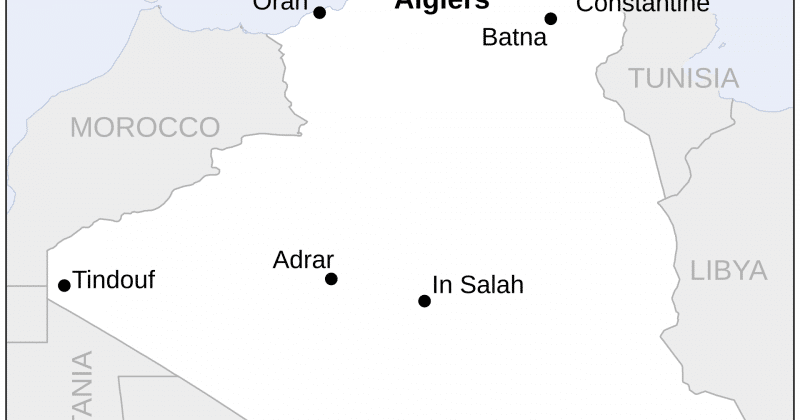
Algeria maintains one of the stricter anti-crypto regimes in the world. The country expanded its 2018 financial law to enforce a comprehensive ban on cryptocurrency ownership, trading, and mining. Penalties can include up to one year in prison.
No fan tokens exist for the Algerian national team on platforms like Chiliz. Algerian fans can’t legally participate in the Polymarket trading activity surrounding their own team’s matches. The country’s regulatory stance sits at the far end of the global spectrum, directly opposing the direction FIFA itself is moving with partnerships like the Kraken deal.
What this means for investors
Second, the Kraken-FIFA partnership could set a precedent for how exchanges approach brand-building. If the sponsorship drives measurable user acquisition, expect competitors like Coinbase, Binance, and OKX to pursue similar deals with major sports properties.
Third, Algeria’s regulatory posture is a reminder that global crypto adoption remains deeply fragmented. Countries with restrictive frameworks limit their citizens’ ability to participate in growing markets, from fan tokens to prediction platforms to simple exchange usage.
The risk side is straightforward. Sports sponsorships are expensive, and their ROI is notoriously difficult to measure. Prediction markets also face ongoing regulatory scrutiny in multiple jurisdictions.
Disclosure: This article was edited by Editorial Team. For more information on how we create and review content, see our Editorial Policy.


 English (US) ·