
 6 hours ago
41
6 hours ago
41
The tiny fiber-optic cables that shuttle data between servers in AI data centers just became a geopolitical flashpoint. Applied Optoelectronics (AAOI) rocketed roughly 17% after reports that the FCC, under the Trump administration, has drafted a rule banning imports of new Chinese-made optical transceivers destined for AI data centers.
AAOI wasn’t alone. Coherent (COHR) climbed 11-13%, Lumentum (LITE) gained 6-11%, and even Corning picked up about 8%. The common thread: all of them are domestic manufacturers who stand to benefit if Chinese competitors get locked out of the US market.
What the FCC is actually proposing
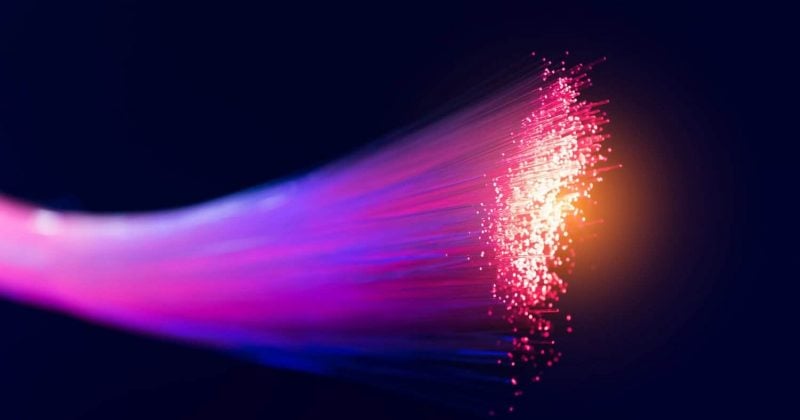
Optical transceivers are the components that convert electrical signals into light pulses and back again, enabling high-speed data transmission across fiber-optic cables. They are, however, essential to every hyperscale data center powering AI workloads, cloud computing, and, yes, crypto mining operations.
The FCC’s draft rule would block imports of new Chinese-made transceivers for use in AI data centers. The stated rationale centers on concerns about potential data theft and supply chain disruptions from foreign suppliers. Previously authorized models would reportedly be exempt, meaning existing deployments wouldn’t need to be ripped out overnight.
This follows a familiar playbook. The Secure Equipment Act already banned certain Chinese telecommunications equipment on national security grounds. Optical transceivers are the next domino.
The biggest loser in the room is Zhongji Innolight, a Chinese supplier that derives approximately 90% of its revenue from international markets. A US import ban would carve a massive hole in its addressable market. For context, US hyperscalers like Amazon, Google, Microsoft, and Meta are among the world’s largest buyers of these components.
The capacity problem nobody wants to talk about
US manufacturers currently lack the production capacity to fully replace Chinese optical transceiver output for domestic data centers. Scaling manufacturing takes time, capital, and a supply chain that doesn’t exist at the required volume today.
Applied Optoelectronics itself signaled awareness of these shifting dynamics back in 2022, when the company announced plans to divest its Chinese manufacturing facilities as part of a broader strategic realignment.
The capacity gap creates a real tension. Cloud providers need these components in enormous quantities to build out AI infrastructure. If domestic supply can’t keep pace with demand, prices go up. And when infrastructure costs rise for cloud providers, those costs tend to flow downstream to customers.
Why crypto investors should pay attention
Large-scale Bitcoin mining operations and crypto exchanges increasingly rely on the same hyperscale data center infrastructure that this ban targets. Institutional mining firms colocate in facilities that use the exact optical networking components now caught in the regulatory crossfire.
Rising data center costs could also pressure the margins of crypto custodians and infrastructure providers who depend on cloud services from AWS, Google Cloud, or Azure. Companies like Riot Platforms, Marathon Digital, and Core Scientific all depend on data center infrastructure that could see cost inflation from supply chain reshuffling.
There’s also a secondary effect on tokenized AI and decentralized compute networks. Projects like Render, Akash, and io.net that aim to provide distributed GPU and compute resources could see their value proposition strengthened if centralized cloud costs rise due to component restrictions.
The stock moves in AAOI, Coherent, and Lumentum reflect a market betting that domestic optical component makers will capture significant share. Investors pricing in a clean substitution of Chinese supply with domestic production are likely getting ahead of reality by at least several quarters, if not longer.
Disclosure: This article was edited by Editorial Team. For more information on how we create and review content, see our Editorial Policy.






 English (US) ·