
 3 months ago
64
3 months ago
64
- Bitcoin failed to break above $82,000 as leverage risks increased across futures markets
- ETF outflows and weak Coinbase Premium data suggest fading institutional demand
- Traders are closely watching the critical $78K to $79K support zone for Bitcoin’s next move
Bitcoin is entering what many analysts now describe as one of its more fragile short-term setups in recent months. Even though the broader long-term outlook around BTC still leans bullish for many investors, conditions underneath the surface are beginning to show visible signs of stress.
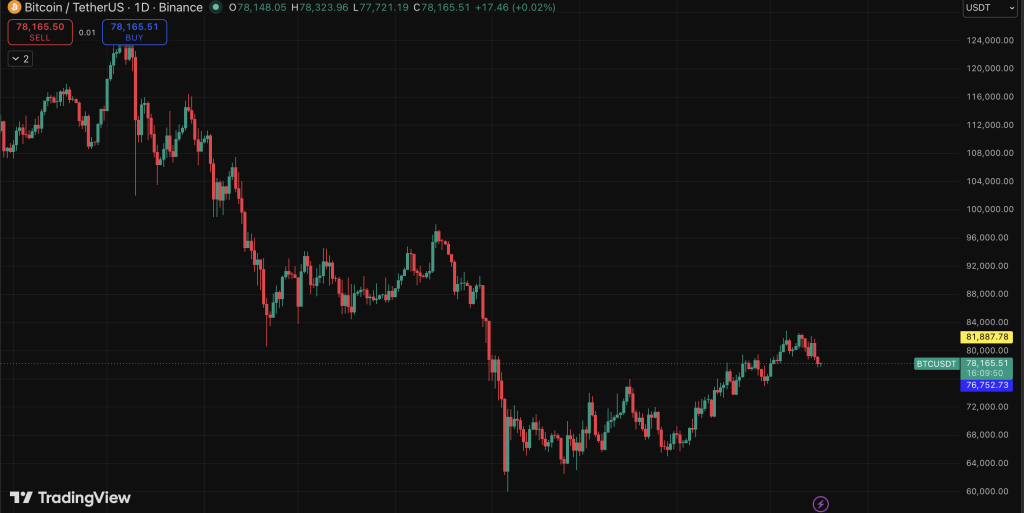
After failing to break cleanly above the important $82,000 resistance zone, Bitcoin pulled back toward the $79,000 region again. But according to several analysts, this isn’t simply about price weakness alone. The bigger concern revolves around how the current rally has been structured.
Right now, the market appears heavily driven by leveraged futures positioning rather than strong spot demand, and that distinction matters a lot during volatile conditions.
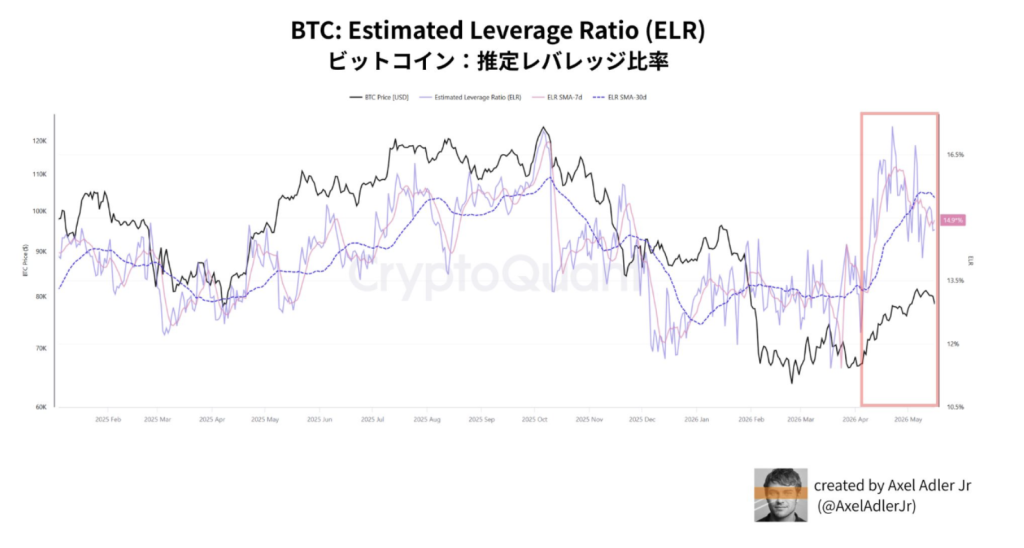
Futures Leverage Continues Climbing Higher
CryptoQuant analyst Axel Adler Jr. recently highlighted growing risk tied to Bitcoin’s Estimated Leverage Ratio, or ELR. The metric reportedly climbed toward 14.9%, reflecting extremely elevated leverage conditions across the futures market.
Usually, healthier Bitcoin rallies are supported by strong spot buying from investors directly purchasing BTC rather than relying heavily on derivatives exposure. The current environment looks different though. Open Interest and Funding Rates have continued rising alongside price action, signaling increasingly crowded long positioning.
That creates a fragile setup because if BTC suddenly moves lower again, leveraged traders could quickly face forced liquidations. Earlier short liquidations helped push Bitcoin toward the $82,000 region, but now long positions appear increasingly vulnerable instead.
In simple terms, too many traders may currently be leaning bullish at the same time.
Institutional Demand Appears to Be Cooling
Another warning sign comes from weakening institutional participation. Coinbase Premium — often used to measure US institutional spot demand — has remained negative throughout much of the recent rally attempt.
That suggests American institutional buyers have not been aggressively supporting price action at current levels. Without strong spot demand from larger players, rallies tend to rely more heavily on speculative leverage, which can make market structures unstable surprisingly fast.
At the same time, US spot Bitcoin ETFs reportedly recorded nearly $1 billion in net outflows during the week. Since ETF demand played a huge role in driving earlier bullish momentum this cycle, the recent slowdown has naturally made traders more cautious.
Macro conditions aren’t helping either. Treasury yields continue climbing as markets increasingly price in a “higher for longer” interest rate environment. The US 10-year yield recently approached 4.6%, while the 30-year yield moved above 5%, adding more pressure to speculative assets like crypto overall.
Long-Term Holders Still Show Strong Conviction
Despite all the short-term concerns though, not every signal around Bitcoin looks bearish. Long-term holders continue accumulating BTC steadily even while volatility increases.
According to current estimates, long-term wallets now control roughly 15.26 million BTC supply. Over the last 30 days alone, more than 316,000 BTC reportedly moved into long-term holder addresses, showing experienced investors still maintain strong conviction underneath the surface.
That kind of accumulation matters because it gradually reduces circulating supply available on the market, potentially helping support prices over longer periods.
There are also signs stablecoin liquidity may still be waiting on the sidelines. Binance reportedly saw improving stablecoin inflows recently, which suggests some investors are preparing capital in case conditions stabilize enough for another bullish move.
The $78K to $79K Zone Becomes Critical
For now, traders are watching the $78,000 to $79,000 region extremely closely. This range overlaps with the Short-Term Holder Realized Price, making it both a technically and psychologically important support area for the market.
If Bitcoin breaks below that zone decisively, liquidation pressure could accelerate very quickly as leveraged positions unwind further. On the other hand, if BTC successfully stabilizes and rebounds from current levels, the market could rebuild momentum surprisingly fast — especially if ETF outflows slow down and institutional spot demand begins returning.
At this stage, Bitcoin’s next major move likely depends on which force wins first: renewed institutional buying or continued leverage unwinding across the derivatives market.
Disclaimer: BlockNews provides independent reporting on crypto, blockchain, and digital finance. All content is for informational purposes only and does not constitute financial advice. Readers should do their own research before making investment decisions. Some articles may use AI tools to assist in drafting, but every piece is reviewed and edited by our editorial team of experienced crypto writers and analysts before publication.








 English (US) ·