
 4 months ago
71
4 months ago
71
- Developers propose freezing 1.7 million BTC to prevent quantum attacks
- BIP-361 outlines phased migration away from vulnerable address types
- Debate grows over whether Bitcoin should ever restrict existing coins
Bitcoin developers are starting to take the quantum threat a lot more seriously, and the latest proposal shows just how far they’re willing to go. BIP-361, introduced by Jameson Lopp and a group of security researchers, lays out a plan that could eventually freeze around 1.7 million BTC sitting in older, vulnerable address formats.
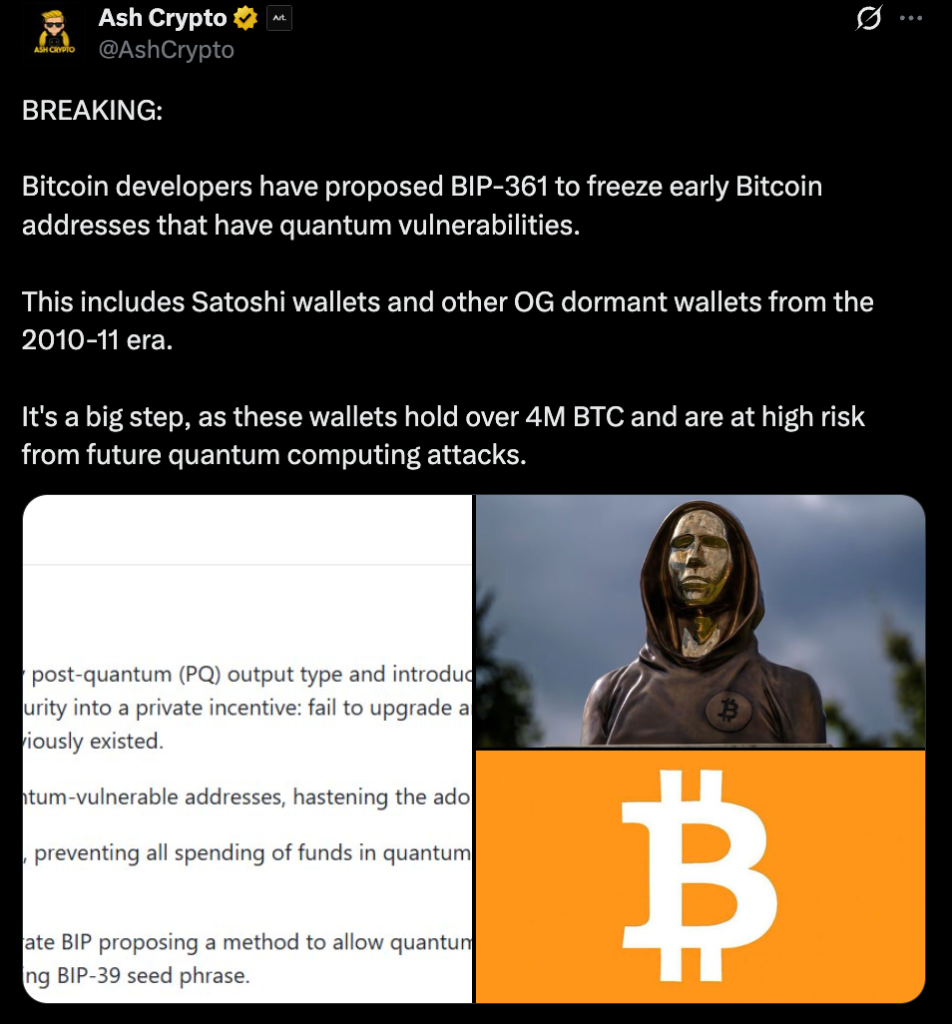
It sounds extreme at first, and maybe it is, but the concern isn’t entirely hypothetical anymore. With quantum computing advancing faster than expected, the idea that private keys could be reverse-engineered from exposed public keys is starting to feel less like science fiction and more like a ticking clock.
What BIP-361 Actually Proposes
The proposal breaks things down into three phases, giving users a window to move their funds before any drastic action kicks in. Phase A would stop new transactions from being sent to older address types after about three years, slowly nudging the network toward safer standards.
Phase B takes things further, invalidating legacy signatures entirely around five years in, which would effectively freeze any coins that haven’t been migrated by then. Phase C offers a kind of safety net, allowing recovery through zero-knowledge proofs for users who still have their seed phrases but missed the earlier deadlines.

Why the Community Is Split
Not everyone is comfortable with this approach, and that’s putting it lightly. Bitcoin has always leaned heavily on the idea that ownership is absolute, if you hold the keys, the coins are yours, no exceptions.
BIP-361 challenges that principle by introducing the possibility of freezing funds, even if it’s done for security reasons. Supporters argue it’s necessary to prevent a future where quantum attackers could drain old wallets, while critics worry it sets a precedent that could be hard to walk back.
A Trade-Off Bitcoin May Have to Face
At its core, the debate comes down to a pretty uncomfortable choice. Either leave vulnerable coins exposed and risk them being stolen by future quantum systems, or proactively lock them down before that happens.
Neither option feels perfect, and that’s probably why this discussion is gaining so much attention. The timeline, with some estimates pointing to 2029 as a potential inflection point, adds urgency, but whether the community can actually reach consensus in time is still very much up in the air.
Disclaimer: BlockNews provides independent reporting on crypto, blockchain, and digital finance. All content is for informational purposes only and does not constitute financial advice. Readers should do their own research before making investment decisions. Some articles may use AI tools to assist in drafting, but every piece is reviewed and edited by our editorial team of experienced crypto writers and analysts before publication.






 English (US) ·