
 3 weeks ago
42
3 weeks ago
42
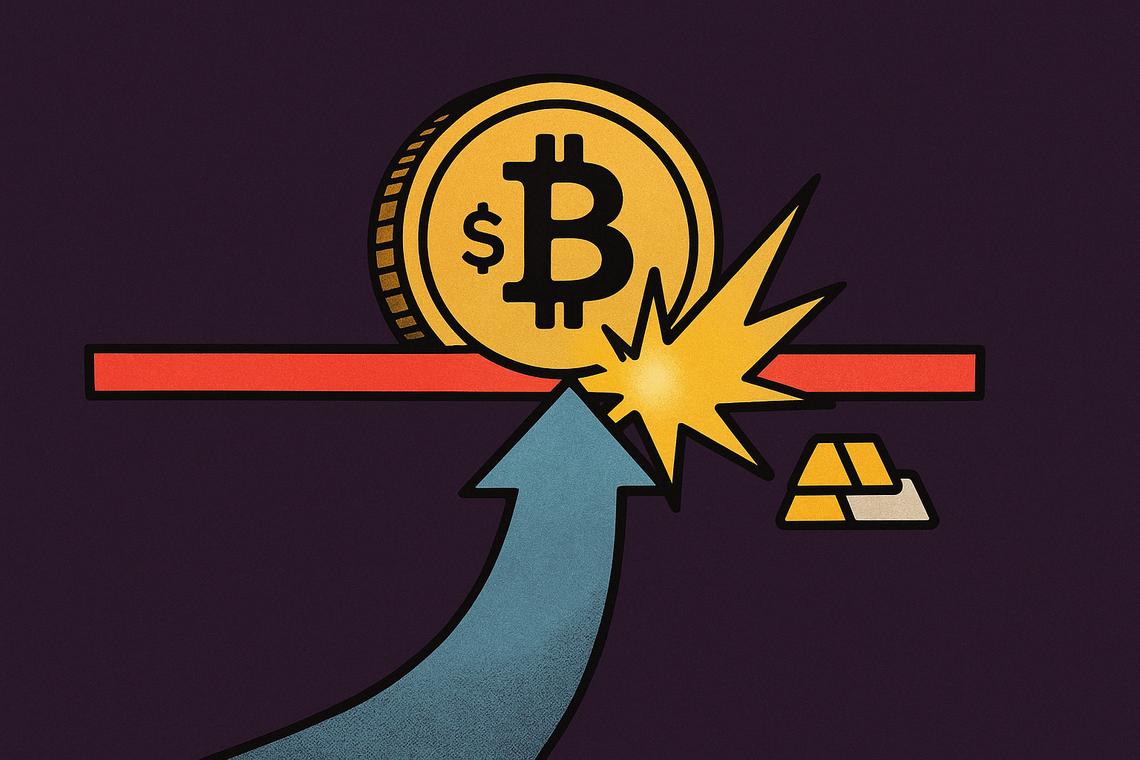
Bitcoin climbing back above $60,000 might look like a straightforward price bounce, but the real story is what’s driving it — and what it says about where markets think the Fed is actually headed. When Federal Reserve Chair Kevin Warsh told the ECB’s annual Sintra forum on July 1 that inflation risks have diminished, the ripple hit everything from crypto to gold almost instantly. The broader question is whether that reaction is justified, or whether markets are getting ahead of themselves on the Fed rate hikes outlook.
Key takeaways
- Bitcoin rose back above $60,000 after Fed Chair Kevin Warsh signaled easing inflation risks at the ECB Sintra forum on July 1.
- Gold surged to $4,179.94 per ounce — on track for its first weekly gain in five weeks — while silver rose 2.3% to $62.43 and platinum gained 2.7%.
- June nonfarm payrolls added only 57,000 jobs, well below the 110,000 forecast, reducing near-term pressure for rate increases.
- Traders priced the probability of a September rate hike at roughly 54%, down from 66% before the payrolls data.
- Despite the softer tone, nine of 18 FOMC officials still expect at least one rate hike before year-end, and the Fed’s median projection sits at 3.8%.
Fed Chair Warsh Signals Easing Inflation Risks Without Clear Rate Guidance
Warsh’s message at Sintra was precise in what it said and even more precise in what it deliberately left unsaid. He acknowledged that inflation risks “have come down” in recent weeks while reaffirming the Fed’s unwavering commitment to its 2% inflation target. On the question of future rate moves, he offered nothing — no timeline, no threshold, no signal of direction.
Warsh’s Comments at the ECB Sintra Forum
That kind of deliberate silence from a central bank chair carries its own message. Markets read the absence of hawkish guidance as permission to price in a more patient Fed. Combined with the softest jobs report in months, that reading gained traction fast.
Warsh also broke from a standard Fed practice by not submitting his own economic projections in the dot plot — the committee’s published map of where individual officials expect interest rates to go. That decision, unusual for a sitting chair, gives him maximum flexibility but also maximum ambiguity. Without his own projection anchoring expectations, investors are left parsing his speeches word by word.
Contrast with the June FOMC’s Hawkish Tone
The Sintra remarks landed against a sharply different backdrop. At the June 17-18 FOMC meeting — Warsh’s first as chair — the Fed held rates steady in the 3.50% to 3.75% range but revised its median federal funds rate projection upward to 3.8%, from a prior estimate of 3.4%. Nine of 18 officials indicated they expected at least one additional rate hike before the end of the year.
That hawkish posture rattled markets immediately. Bitcoin, which had been trading around $66,000 heading into the June meeting, slid into the mid-$60,000s in the aftermath. Gold retreated toward $3,942. The Sintra speech is, in that sense, a partial reversal of that shock — but only partial.
Market and Asset Reactions to Fed Comments and June Payrolls Data
Two data points converged this week to shift market expectations: Warsh’s remarks and a June jobs report that came in dramatically below forecasts. Together, they gave investors a reason to reconsider just how imminent the next rate hike really is.
Bitcoin Rebounds Above $60,000
Bitcoin’s recovery above $60,000 reflects its increasingly tight relationship with macroeconomic signals. The asset is no longer trading purely on crypto-specific catalysts — Federal Reserve monetary policy and labor market data now move it meaningfully. That sensitivity cuts both ways, but in this case the macro wind was at its back.
The price still sits well below the pre-June FOMC level of around $66,000, a gap that matters technically. A sustained move back above that range would carry different implications than a bounce within a broader downtrend.
Gold Surpasses $4,050 and Silver Gains
Precious metals told a similar story, and the numbers were striking. Spot gold rose 1.4% to $4,179.94 per ounce — its highest level since June 23 — and U.S. gold futures for August delivery gained 1.6% to $4,193.20. Gold was on track for a weekly gain of 2.3%, its first in five weeks. Silver climbed 2.3% to $62.43 per ounce, while platinum gained 2.7% to $1,660.05 and palladium added 1.3% to $1,284.40. All three metals reached over one-week highs.
Kelvin Wong, senior market analyst at OANDA, framed the move clearly: “What we’re seeing is a reduction in the pricing of U.S. Federal Reserve rate hikes for the rest of this year, as well as Q1 next year, and that has been primarily driven by a rather lackluster U.S. labor market data.”
Wong also offered a note of caution — “we have not seen a total erasure of rate hike pricing,” he said, adding that prices could still potentially reach the $3,500/oz level if another leg of weakness materializes later in the year.
Adding a structural layer to gold’s resilience, the World Gold Council reported that central banks returned to buying mode in May, with official gold reserves increasing by a net 41 tons during the month.
Declining Market Odds for Near-Term Rate Hikes
The probability shift in rate expectations was measurable and immediate. According to the CME FedWatch Tool, traders priced a roughly 54% chance of a rate hike in September, down from 66% before the payrolls data dropped. That’s a meaningful repricing, though it still leaves the outcome a coin flip at best.
The catalyst on the labor side was hard to ignore. June nonfarm payrolls came in at just 57,000 jobs added — against economist forecasts of 110,000 compiled by Reuters — painting a picture of a cooling labor market that gives the Fed less justification for near-term tightening. Fewer jobs mean less wage pressure, which feeds into lower inflation expectations, which reduces the urgency to hike.
Why the Reaction Makes Sense — and Why It Might Be Premature
The bullish response across Bitcoin, gold, and silver is coherent given the inputs. A weak jobs report plus a Fed chair who conspicuously avoided hawkish language is a reasonable basis for pricing out some rate risk. But the underlying Fed posture has not actually changed.
Half of FOMC officials still project at least one rate hike this year. The committee’s median projection of 3.8% implies that the base case, as it stands, is rates going higher from current levels — not lower. Warsh said inflation risks have diminished, not disappeared, and the Fed’s 2% inflation target remains the anchor. His data-dependent framing leaves him free to pivot in either direction as incoming data shifts the picture, which is precisely why markets may be overweighting a single speech at Sintra.
The deeper implication for Bitcoin specifically is structural. Its correlation with macro indicators like jobs data and Fed commentary has strengthened significantly, meaning that the next payrolls report, the next FOMC statement, or even the next Fed speech carries direct price risk. For investors treating Bitcoin as a hedge against monetary loosening, that sensitivity is the point. For those hoping it trades independently of traditional finance, the evidence increasingly points the other way.
FAQ
What did Fed Chair Kevin Warsh say about inflation risks?
Warsh acknowledged that inflation risks have diminished recently but did not provide any guidance on future interest rate movements. He reaffirmed the Fed’s commitment to its 2% inflation target while speaking at the ECB’s Sintra forum on July 1.
How did Bitcoin and precious metals react to Warsh’s comments?
Bitcoin rose back above $60,000, gold surged to $4,179.94 per ounce for its first weekly gain in five weeks, and silver rose 2.3% to $62.43 per ounce following Warsh’s remarks signaling easing inflation risks.
What was the significance of the June nonfarm payrolls data?
The June nonfarm payrolls report showed only 57,000 jobs added, well below the 110,000 forecast by economists. The weaker-than-expected figure indicated a cooling labor market, reducing pressure on the Fed to raise rates immediately and contributing to the repricing of rate hike expectations.
Are rate hikes still expected despite Warsh’s softer tone?
Yes. Nine of 18 FOMC officials still expect at least one rate hike this year, and the Fed’s median federal funds rate projection stands at 3.8%, up from the prior estimate of 3.4%. The softer tone from Warsh reflects diminished inflation risks, not a change in the committee’s base case for rates.
Article produced with the assistance of artificial intelligence and reviewed by the editorial team.

 English (US) ·