
 3 hours ago
24
3 hours ago
24
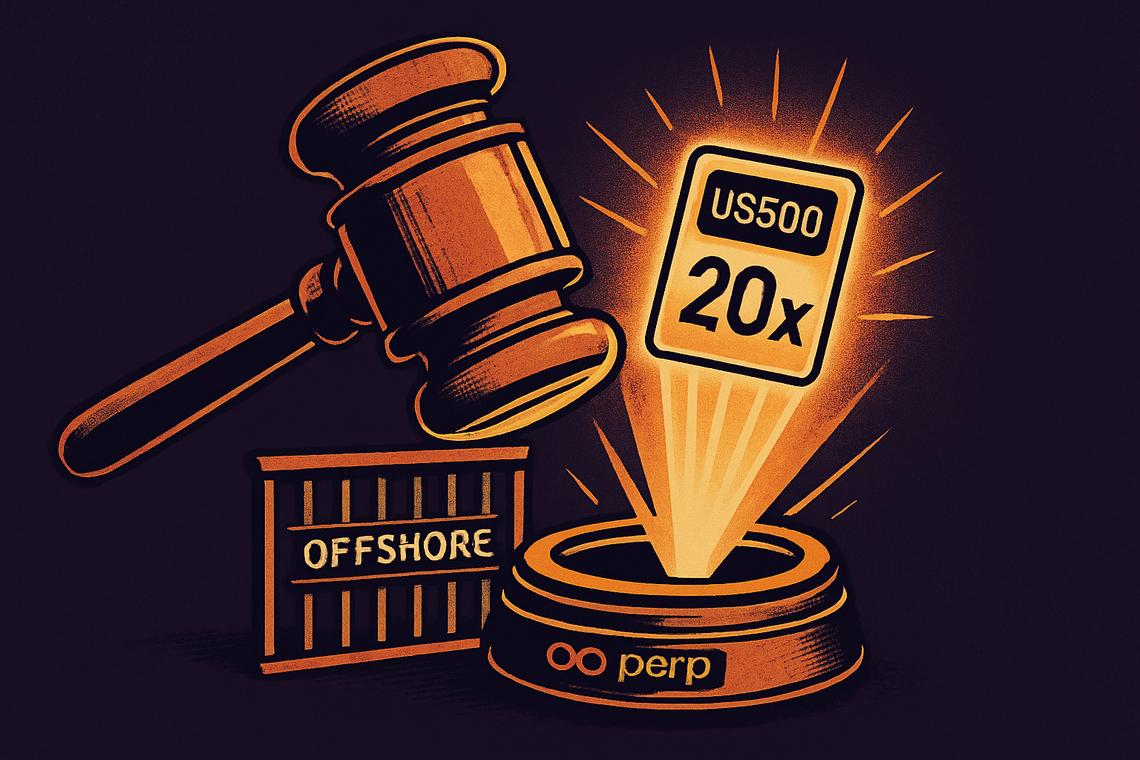
Coinbase Derivatives is about to hand US traders something they’ve never had on a regulated domestic platform: US500 perpetual futures tied directly to the S&P 500, the most closely watched equity benchmark in the world. The contracts go live on August 17, 2026, and they carry up to 20x leverage — meaning a single dollar of margin controls twenty dollars of market exposure.
Key takeaways
- Coinbase Derivatives launches US500 Equity Index Perp-Style Futures on August 17, 2026, tracking the S&P 500.
- Contracts offer up to 20x leverage with no expiration date, using funding rates to keep prices tethered to the underlying index.
- Coinbase Derivatives is regulated by the CFTC, making this among the first perpetual-style equity index futures on a fully regulated US platform.
- The company is working to accept USDC as collateral, pending CFTC approval.
- The launch arrives amid an active legal battle between CME Group and the CFTC over the regulatory classification of perpetual futures.
Coinbase Launches US500 Equity Index Perpetual Futures
The US500 Equity Index Perp-Style Futures contract is not just another product in a growing catalog — it completes Coinbase Derivatives’ push to cover the full spectrum of major US equity benchmarks. The exchange had already rolled out perpetual-style futures on thematic indexes focused on AI, defense, and the Nasdaq-100. Adding an S&P 500-tracking contract expands the offering.
What makes this notable is the structure. Unlike conventional futures, which expire on a fixed date and force traders to roll positions, these contracts have no expiration. Traders can hold indefinitely, with funding rates acting as the mechanism that keeps the contract price anchored to the underlying index. If the futures price drifts above the spot index, long holders pay a funding rate to shorts — and vice versa. It keeps the market honest without requiring a settlement date.
A CFTC-regulated platform entering new territory
The significance of the “CFTC-regulated” tag cannot be overstated here. Perpetual futures have been available to global traders for years through offshore platforms, where non-US exchanges have reported an estimated $60 trillion in perps volume last year, according to CoinDesk. But access to this type of product on a domestically regulated exchange, with the legal protections and oversight that implies, has been largely absent — until the CFTC under Chairman Mike Selig cleared a path for them earlier this year.
That regulatory opening is now being tested in federal court. CME Group, the largest derivatives exchange operator in the US, filed suit against the CFTC and Chairman Selig, arguing that perpetual futures are legally swaps — not futures — and should be regulated accordingly. CME’s position carries real weight: swaps come with five-day margin requirements and different registration obligations, which would fundamentally alter how products like Coinbase’s US500 contract could operate. The outcome of that litigation will shape not just this product, but the entire US perps market.
Features and Leverage of the US500 Futures Contracts
At its core, the contract gives traders leveraged access to the S&P 500 without requiring a brokerage account, expiration management, or dollar-denominated margin in the traditional sense. Up to 20x leverage means a trader posting $1,000 in margin can take on $20,000 worth of index exposure — a ratio that amplifies both gains and losses in equal measure.
For context, traditional regulated equity futures typically offer far lower leverage ratios due to margin requirements set by clearing houses. The 20x ceiling here is a crypto-native standard, more familiar to traders on offshore perpetuals platforms than to participants in conventional commodity futures markets.
How funding rates work in practice
Funding rates are the hidden clock inside perpetual contracts. When bullish sentiment pushes the futures price above the spot index, long traders pay a periodic fee to short traders. During calm markets, these rates stay modest. During periods of extreme sentiment — sharp rallies or panic-driven selloffs — they can spike sharply, making it expensive to maintain a position even when the directional trade is correct.
This is a meaningful structural difference from traditional equity index products, and one that retail traders approaching the contract from a stock-market background may not immediately appreciate.
Regulatory Context and USDC Collateral Integration
Coinbase Derivatives is actively working to allow USDC — the dollar-pegged stablecoin — as collateral for its futures products, pending approval from the CFTC. If that approval comes through, traders would be able to post USDC as margin rather than converting holdings to fiat, removing a friction point that has historically slowed crypto-native traders from engaging with regulated derivatives platforms.
The broader regulatory fight
The CFTC’s current approach to perps regulation is notably unconventional. Rather than issuing formal rulemaking — which would require public comment periods and a more deliberative process — Chairman Selig has proceeded through a policy statement, approving products on a case-by-case basis. His is currently the only seat occupied on what is normally a five-member commission, which means the agency’s perps agenda moves faster but with less institutional balance.
CME Chairman Terry Duffy has publicly framed the dispute as one of legal compliance, arguing that the CFTC has bypassed the established protocol for the law governing swaps. But observers from the crypto and DeFi side read it differently. Jake Chervinsky, CEO of the Hyperliquid Policy Center — a nonprofit backed by a $28 million initiative from the Hyper Foundation — described it to CoinDesk as “an incumbent using regulation to hold off competition.” Prediction markets platform Kalshi, which also received CFTC approval for perps, reportedly crossed $1 billion in trading volume in less than a week after launch.
Risks and Considerations for Investors
The appeal of 20x leverage on a major equity index is straightforward. The risks are just as clear, and they compound in ways that can catch even experienced traders off guard.
High leverage means losses scale at the same rate as gains. A 5% adverse move in the S&P 500 benchmark — well within normal intraday or weekly range — translates to a 100% loss of margin at 20x. There is no buffer, no automatic de-risking, and no expiration date to impose discipline on a losing position.
Funding rate costs during volatile markets
During episodes of extreme market sentiment, funding rates on perpetual contracts can climb sharply. A trader holding a directionally correct position can still lose money if the cost of maintaining that position through a volatile period exceeds the eventual profit. This dynamic is well-documented in crypto perps markets and is equally applicable when the underlying asset is an equity index.
No trading volume data exists yet for the US500 contract — the launch is still ahead on August 17, 2026 — so early liquidity conditions remain an open question. New products on regulated exchanges often see thin order books in the first days, which can widen spreads and increase the cost of entering or exiting positions at the desired price.
What the launch does signal clearly is that the boundary between crypto-native trading infrastructure and traditional equity markets is no longer theoretical. Whether the CME’s lawsuit ultimately forces a regulatory reclassification of perps or not, the product is live, the regulator approved it, and traders now have a CFTC-regulated path to leveraged S&P 500 exposure through a crypto exchange. The legal fight ahead will determine how durable that path turns out to be.
FAQ
What are US500 Equity Index Perp-Style Futures?
They are perpetual futures contracts launched by Coinbase Derivatives that track the S&P 500, allowing leveraged trading without an expiration date. Prices are kept in line with the underlying index through periodic funding rates paid between long and short traders.
When will the US500 Perp-Style Futures launch?
The contracts launch on August 17, 2026.
What leverage is offered on these futures contracts?
Traders can access up to 20x leverage, meaning $1 of margin controls $20 of index exposure.
What risks should traders consider when using these futures?
High leverage can cause rapid and total loss of margin on relatively small adverse moves. Funding rates can also become costly during periods of market volatility, adding an ongoing expense to holding a position regardless of its direction.
Article produced with the assistance of artificial intelligence and reviewed by the editorial team.







 English (US) ·