
 3 months ago
46
3 months ago
46
- Cardano proposes $38.9M in funding for roadmap through 2030
- Leios upgrade aims to significantly boost transaction throughput
- Community vote on May 24 will decide the future direction of development
Cardano is stepping into a different phase now, one where ideas aren’t enough anymore. The narrative around long-term vision is being tested against actual deliverables, tight timelines, and a governance model that, for once, doesn’t give founders the final say. Instead, the community holds that power, which sounds ideal in theory… but also introduces a whole new layer of uncertainty.
In late April 2026, Input Output Global (IOG) rolled out nine treasury proposals, laying out what it wants to build through 2030 and how much it’s asking for to get there. The total comes to about $38.9 million, notably lower than last year’s request. IOG frames this as a shift toward self-sufficiency, suggesting the network is maturing financially, though whether that actually holds up will depend on execution, not just intent.
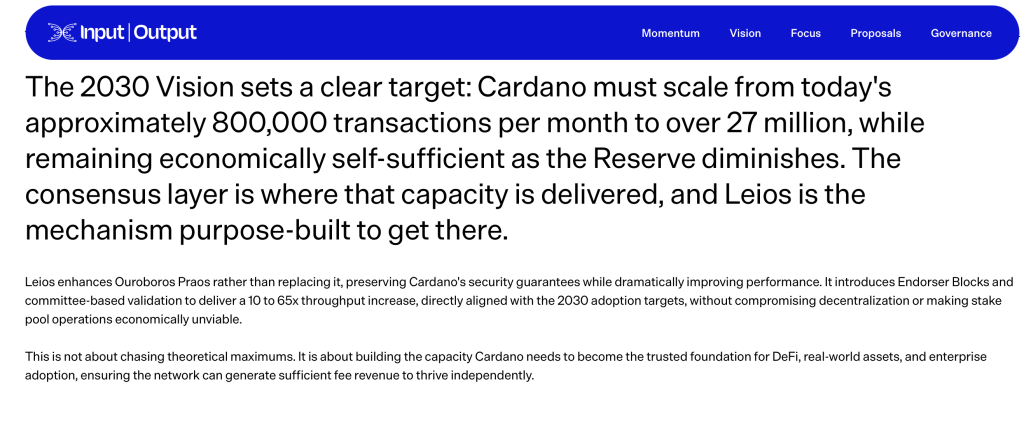
Leios Upgrade Could Change the Game, If It Works
At the center of everything is Ouroboros Leios, a protocol upgrade that aims to rethink how transactions are processed. Right now, Cardano ties transaction validation and block production together, which limits throughput more than people might realize. Leios breaks that link, introducing a two-layer system where transactions can be processed in parallel before being finalized.
If it works as expected, the jump could be significant. We’re talking a move from roughly 10–15 transactions per second to potentially hundreds, even pushing toward 1,000 under normal conditions. Some projections go even higher, though those feel a bit… optimistic. IOG is asking for a sizable chunk of funding specifically for this upgrade, covering node improvements, monitoring tools, and security work, with a testnet planned for June and a mainnet launch targeted before year-end.
It’s Not Just About Speed Anymore
While Leios gets most of the attention, the other proposals fill in some important gaps. Babel Fees, for instance, would let users pay transaction fees using assets other than ADA, which removes a common friction point for newcomers. It’s a small change on paper, but it could make the network more accessible in practice.
Then there’s UTXO HD, a more technical upgrade aimed at keeping node operation manageable on everyday hardware as the blockchain grows. It’s one of those behind-the-scenes changes that doesn’t get headlines but matters a lot for decentralization. And maybe more ambitious, there’s Pogun, a system designed to bring Bitcoin liquidity into Cardano through bridges and lending markets, with a launch timeline set for mid-2026.
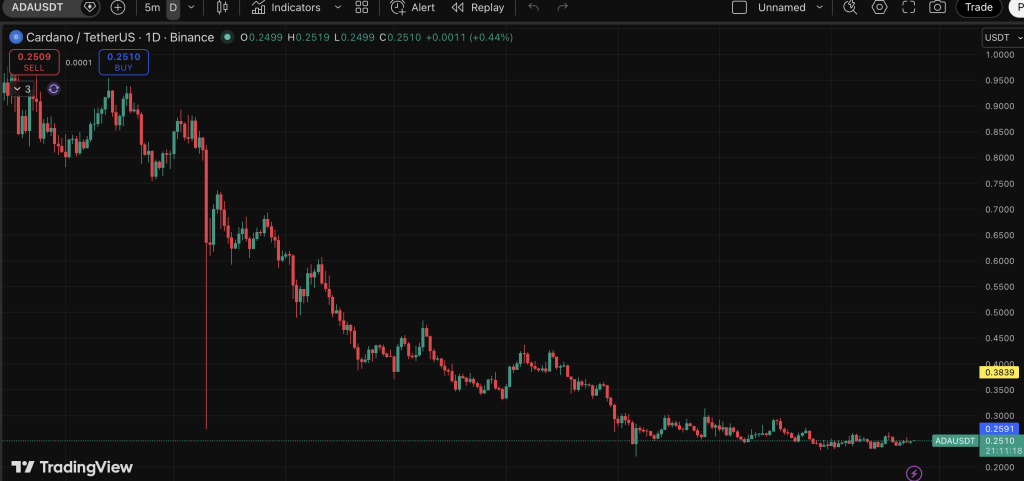
Ecosystem Expands Beyond the Core Chain
Beyond these proposals, Cardano has been quietly expanding its ecosystem in other ways. The recent Van Rossum hard fork upgraded the network’s smart contract engine, improving efficiency and reducing execution overhead, which, while not flashy, lays important groundwork for future upgrades like Leios.
At the same time, the Midnight sidechain went live, focusing on privacy and confidentiality, backed by institutional validators like Google Cloud and others. There’s also a more consumer-facing push, with a Visa debit card launched through EMURGO and Wirex, allowing users to spend ADA and other assets directly, with rewards attached. These moves hint at a broader strategy, not just building infrastructure, but actually driving usage.
Data Shows Interest, But Not Full Commitment
Looking at on-chain data, there are some early signals of accumulation. Wallets holding large amounts of ADA have ticked up, suggesting bigger players are positioning ahead of upcoming developments. But at the same time, DeFi activity on Cardano remains relatively low compared to competitors, with total value locked sitting far below networks like Ethereum or Solana.
That gap raises questions. Is there untapped potential waiting to be activated, or is it a sign that users haven’t fully bought into the ecosystem yet? It’s not entirely clear, and opinions vary depending on who you ask.
A Vote That Could Shape the Next Phase
The immediate focus now shifts to May 24, 2026. That’s when voting closes on all nine proposals, and for the first time, funding decisions aren’t controlled by IOG itself but by the community through its governance system. It’s a meaningful shift, one that puts real weight behind decentralization, though it also means outcomes are less predictable.
What happens next will likely set the tone for Cardano’s next chapter. The June testnet for Leios will be the first real checkpoint, a chance to see if the roadmap is moving from theory into reality. Because at this stage, that’s what matters most, not promises, but proof.
Disclaimer: BlockNews provides independent reporting on crypto, blockchain, and digital finance. All content is for informational purposes only and does not constitute financial advice. Readers should do their own research before making investment decisions. Some articles may use AI tools to assist in drafting, but every piece is reviewed and edited by our editorial team of experienced crypto writers and analysts before publication.






 English (US) ·