
 1 month ago
43
1 month ago
43

Two of Apple’s biggest Chinese suppliers descended on Hong Kong within days of each other, each chasing capital to fund a bet that goes well beyond the devices that made them famous. The story of this Chinese Apple suppliers IPO wave is really a story about what China’s hardware giants think comes after the smartphone.
Key takeaways
- Luxshare Precision is seeking to raise about $3bn via a Hong Kong listing, with banks Citic Securities, Goldman Sachs, and China International Capital Corp leading the deal.
- Lingyi iTech already raised HK$8.3bn ($1.1bn) in Hong Kong, pricing shares at the very top of the range and turning away more than 100 institutional orders.
- Both companies are pivoting from smartphone components toward AI hardware and humanoid robotics, using the proceeds to fund factories, R&D, and acquisitions.
- Hong Kong IPO proceeds are on track to exceed $43bn in 2026, a six-year high, according to Bloomberg Intelligence.
- China’s humanoid robot market is crowded, with more than 150 competing firms and only 23% of buyers reporting satisfaction.
A calculated rush to Hong Kong
Hong Kong’s IPO market is running hot. Bloomberg Intelligence expects listing proceeds to surpass $43bn in 2026, a six-year high, with June alone bringing the heaviest deal flow of any month this year. The timing is not accidental — companies that begin taking investor orders before the end of June avoid having to refile updated financial statements, creating a very real calendar incentive to move fast.
Luxshare Precision moved quickly. The company passed a listing hearing at the Hong Kong Stock Exchange on a Tuesday, just days after China’s securities regulator granted its approval. Both Hong Kong deals priced at steep discounts to mainland shares, with Lingyi’s offer set nearly 50% below its Shenzhen close. Institutional appetite was clearly strong, but investors still demanded a margin of safety before committing.
The broader pattern matters here. As the path to a New York float narrows for mainland Chinese firms, Hong Kong has become the default offshore venue. High-technology debutants are leading the market — AI developer Zhipu is reportedly weighing a multibillion-dollar listing in the city. Luxshare and Lingyi represent a different strand of the same trend: not frontier software companies, but the precision manufacturers that make the hardware real.
Lingyi’s $1.1bn deal and the robot factory taking shape
Lingyi iTech’s Hong Kong offering closed at the top of its price range and attracted nearly 300 institutional orders for its international tranche. The top ten investors alone absorbed more than half of the allocation — a concentration of demand that signals conviction, not casual interest. Cornerstone backers included smartphone maker Honor and Sunny Optical. Lingyi’s shares were set to debut in Hong Kong on June 26, making it the biggest maiden offering in the city since Victory Giant’s $3bn listing in April.
Lingyi’s financials give the ambition some grounding. Revenue rose 16% to 51.4 billion yuan ($7.6bn) in 2025. Its Shenzhen-listed shares doubled over the past year, lifting market value to around $21bn. The company has been controlled by founder Zeng Fangqin since 2006.
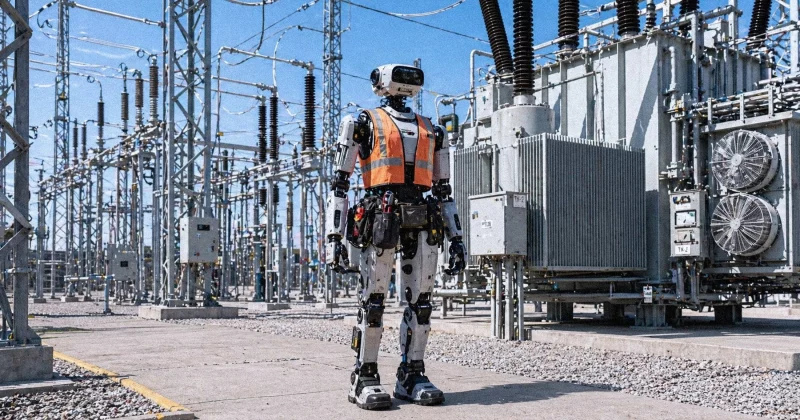
What the proceeds are funding is the more striking part. Lingyi is building a super factory in Beijing with a stated target of producing 500,000 humanoid robots annually by 2030. The logic behind the pivot is industrial rather than speculative: humanoid robots require precision motors, thermal management systems, structural components, and sensors — exactly the categories of parts that Chinese electronics plants already manufacture at scale for smartphones, automobiles, and drones. Retooling for robots is, in that sense, an upgrade of existing capabilities rather than a leap into the unknown. Rivals including Lens Technology and AAC Technologies are following the same path.
Luxshare’s weight and Grace Wang’s ascent
Luxshare Precision is the larger force. Its 2025 revenue reached 332.3 billion yuan ($48.9bn), up 24% year-on-year. Its Shenzhen shares more than doubled over the past year, giving the company a market value above $77bn. The planned Hong Kong listing, seeking around $3bn, would rank among the city’s biggest deals of the year.
The company’s story is inseparable from its founder. Chairwoman and chief executive Grace Wang started on a Shenzhen production line in 1988 and founded Luxshare in 2004. This month Fortune named her among the top ten of its 2026 Most Powerful Women in Business list — the only executive from China to reach that tier. Earlier in the year she topped Forbes China’s ranking of the country’s most successful businesswomen.
Luxshare’s geographic footprint has grown well beyond its Apple roots. The company now operates across Asia, North America, and Europe, with positions in 5G infrastructure, automotive electronics, and smart manufacturing. Its latest sustainability report states that clean energy covers 64% of its energy consumption, that absolute Scope 1 and 2 emissions fell 25% against 2022, and that women hold 37.5% of board seats. The company targets carbon neutrality by 2050 and earned a top CDP climate rating for a second consecutive year. For a contract manufacturer actively courting Western clients and Western capital, that profile is as much a competitive tool as a conscience.
The challenges behind the optimism
The enthusiasm on display this week should not obscure the friction underneath. Both Hong Kong listings priced at discounts to mainland valuations, and the robotics pivot faces a market that remains unproven at the scale these companies are targeting.
China’s humanoid robot segment is already crowded. One recent industry survey identified more than 150 companies competing for a market where only 23% of buyers report satisfaction. A factory engineered to produce half a million robots per year creates value only if buyers exist at prices that make the economics work. The supply chain has proven, repeatedly, that it can manufacture at extraordinary scale. Demand at that scale is a separate and still-unanswered question.
Regulatory history adds another layer of complexity. China’s market regulator previously fined Luxshare and chipmaker Wingtech over a deal-disclosure violation. Both Luxshare and Lingyi have faced scrutiny from Chinese authorities, a reminder that even the most celebrated names in the country’s supply chain operate under close official oversight.
The discount pricing is also worth interpreting carefully. When companies that have doubled in value on their home exchange still need to offer Hong Kong investors a nearly 50% markdown to close a deal, it suggests that offshore capital is engaged but not unconditional. Investors are pricing in the uncertainty that the companies’ own bullish narratives tend to minimize.
What the pivot really signals
Taken together, the Luxshare and Lingyi listings represent something larger than two fundraising rounds. China’s hardware supply chain — the ecosystem that built global consumer electronics over two decades — is actively repositioning itself for the next technology cycle. The capital is real, the factories are being built, and the institutional demand is there. What remains genuinely open is whether the products those factories will make in 2030 will find the customers that justify the bet being placed today.
FAQ
Why are Luxshare and Lingyi raising funds in Hong Kong?
Both companies are raising capital in Hong Kong to fund their strategic shift from producing smartphone components to developing AI hardware and humanoid robots. Hong Kong also offers access to offshore institutional investors at a time when New York listings have become harder for Chinese firms to pursue.
What production goals has Lingyi set for humanoid robots?
Lingyi plans to produce 500,000 humanoid robots annually by 2030, supported by a new super factory currently under construction in Beijing.
What challenges do these companies face in the humanoid robot market?
The market is highly competitive, with more than 150 firms already active in China’s humanoid robotics segment. Customer satisfaction is low — around 23% in a recent survey — and there is significant uncertainty about whether demand will scale to match the large production capacities being built.
Have Luxshare and Lingyi experienced regulatory issues?
Yes. China’s market regulator previously fined Luxshare and chipmaker Wingtech over a deal-disclosure violation. Both companies have faced scrutiny from Chinese authorities, reflecting the tight regulatory environment that governs even the most prominent names in the country’s supply chain.
Article produced with the assistance of artificial intelligence and reviewed by the editorial team.



 English (US) ·