
 3 weeks ago
60
3 weeks ago
60
Key Takeaways
- Brent crude climbed to $92.82 per barrel while WTI reached $86.75, marking three-week peaks
- Crude benchmarks have posted consecutive gains for five trading sessions amid Iran conflict
- Commercial traffic through the Strait of Hormuz continues at significantly reduced levels
- Trump announced plans for unprecedented economic sanctions targeting Tehran
- The United Arab Emirates halted all economic and financial dealings with Iran
Crude oil benchmarks surged to three-week highs during Thursday’s trading session, with Brent crude advancing 1.3% to reach $92.82 per barrel while West Texas Intermediate touched $86.75. Both contracts extended their winning streak to a fifth consecutive session.
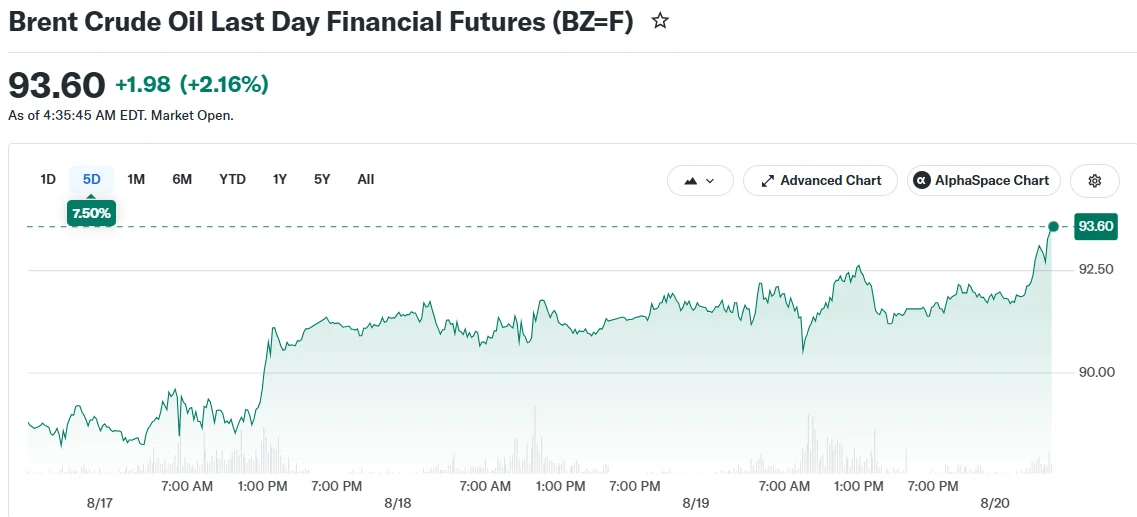 Brent Crude Oil Last Day Financial Futures (BZ=F)
The upward momentum stems from the continuing military confrontation between the United States and Iran, which commenced when American and Israeli forces launched strikes against Iranian targets on February 28. In response, Tehran has effectively choked off access to the Strait of Hormuz, a critical maritime corridor that historically transported approximately 20% of global crude oil supplies.
Latest maritime monitoring data indicates that vessel traffic traversing Hormuz continues to operate at significantly diminished capacity compared to pre-conflict volumes, contradicting Washington’s assertions that the strategic waterway remains operational. Iranian officials have disputed U.S. claims, with neither party showing signs of reaching a diplomatic breakthrough.
“Middle Eastern tensions continue to escalate, creating conditions favorable to additional supply chain interruptions,” noted Giovanni Staunovo, a commodity analyst at UBS. “Reduced petroleum exports from the region are contributing to market tightening once again.”
The United Arab Emirates intensified economic pressure by announcing the suspension of all commercial and financial interactions with Iran effective immediately. This decision highlighted the deteriorating diplomatic relations between two major Gulf region powers.
Trump Unveils Historic Sanctions Package
President Donald Trump ramped up his confrontational approach on Wednesday, proclaiming what he characterized as the “most crushing economic operation ever taken against any country.” He framed the initiative as economic combat of historic proportions and cautioned international partners against maintaining commercial relationships with Tehran.
Trump refrained from providing specific information regarding the scope or mechanisms of the forthcoming economic restrictions. He maintained that American forces retain operational authority over the Strait of Hormuz and suggested diplomatic engagement with Iran might resume “at some point.”
Iranian leadership has rejected these characterizations, asserting that substantive negotiations have not occurred. Tehran continues to insist that the United States honor commitments outlined in a June memorandum of understanding before meaningful discussions can advance. That framework agreement expired this week without extension or renewal.
Hiroyuki Kikukawa, chief market strategist at Nissan Securities Investment, indicated that petroleum markets will probably sustain their incremental upward trajectory given ongoing uncertainties surrounding peace negotiations and escalating tensions involving the UAE, Oman, and Iran.
From a supply perspective, American distillate reserves—encompassing diesel fuel and heating oil—declined for the third consecutive week. Conversely, crude oil inventories unexpectedly increased by 4.4 million barrels.
Strategic petroleum reserve releases by major consumer nations, including the United States, have partially mitigated supply disruptions. Nevertheless, market analysts anticipate that the Middle Eastern security crisis will continue providing upward price support for crude oil throughout the coming months.
The September WTI futures contract concluded trading on Thursday, while the more actively traded October contract settled at $85.52, representing a 1.3% daily gain.
The post Crude Oil Surges to Three-Week Peak Amid Ongoing Iran Conflict and Hormuz Blockade appeared first on Blockonomi.



 English (US) ·