
 1 month ago
46
1 month ago
46
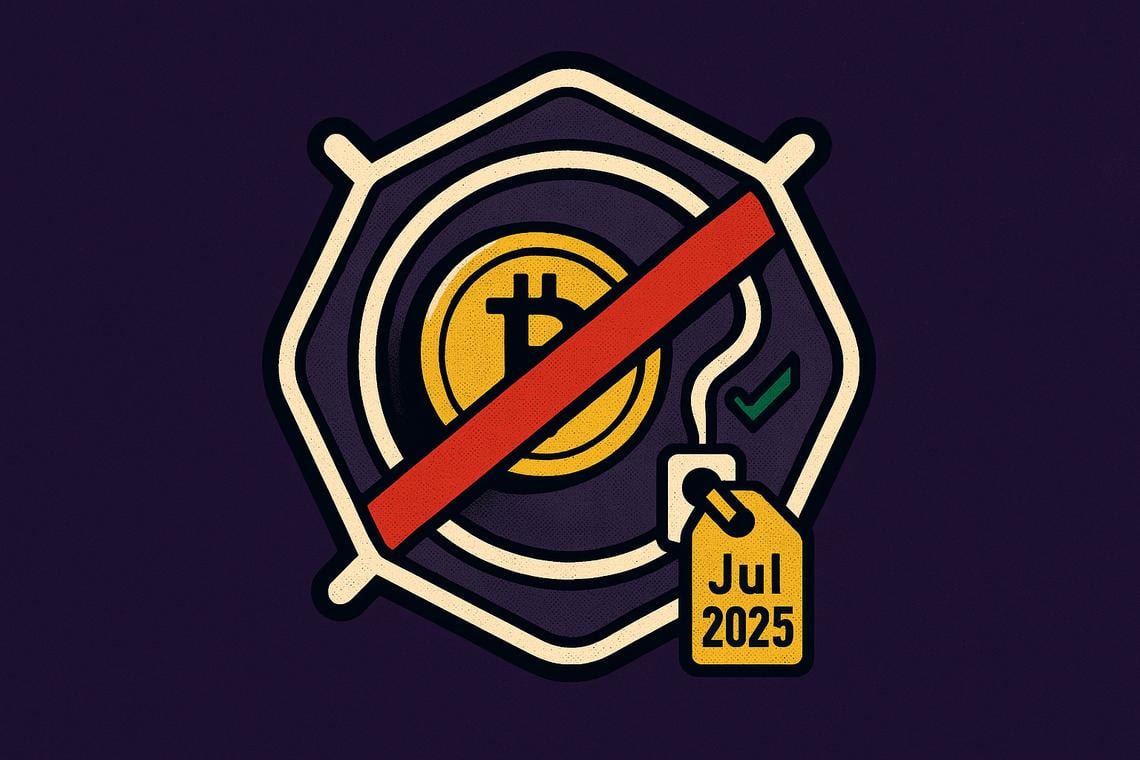
There is a growing gap between what El Salvador says it’s doing with Bitcoin and what its own loan agreement actually permits — and that gap is now too wide to ignore. The country’s El Salvador Bitcoin reserve stands at 7,696 BTC, valued at roughly $460 million as of June 28, 2026, according to BitcoinTreasuries. On paper, that looks like a sovereign accumulation story. In practice, it’s considerably more complicated.
Key takeaways
- El Salvador’s Bitcoin reserve holds 7,696 BTC worth approximately $460M as of June 28, 2026.
- The IMF’s Extended Fund Facility imposes a strict zero ceiling on voluntary public-sector Bitcoin purchases by El Salvador.
- IMF spokesperson Julie Kozack confirmed no new net Bitcoin purchases have been made; the reserve increase from 5,968 BTC reflects wallet consolidation, not fresh market buys.
- President Nayib Bukele continues to publicly promote a one-BTC-per-day accumulation strategy that the IMF says is not occurring in any new-purchase sense.
- El Salvador must exit public involvement in the Chivo wallet by July 2025 and report all public-sector Bitcoin wallets under IMF program deadlines.
El Salvador’s Bitcoin Reserve: The Numbers Behind the Narrative
When BitcoinTreasuries logged El Salvador’s holdings at 5,968 BTC in December 2024, the country had just entered a $1.4 billion IMF Extended Fund Facility. By late June 2026, that number had climbed to 7,696 BTC. On the surface, an increase of roughly 1,728 BTC over eighteen months looks like a country quietly stacking sats regardless of its creditor’s rules.
But the accounting explanation matters more than the headline figure. The IMF’s position, articulated by spokesperson Julie Kozack, is that the reserve growth reflects consolidation of Bitcoin held across multiple government-owned wallets — most notably from a BANDESAL cold-storage address — rather than any net new purchases on the open market. The total BTC controlled across all public-sector wallets, the Fund says, has not actually increased.
That distinction is technically coherent under international public-sector accounting standards, which treat all government-controlled wallets as a single consolidated position. What it does not do is make the public-facing reserve tracker any less misleading to an outside observer who has no visibility into which wallet the coins moved from.
IMF Restrictions on Bitcoin Purchases by El Salvador
The IMF’s Extended Fund Facility includes a continuous quantitative performance criterion with a zero ceiling on voluntary public-sector Bitcoin accumulation. This is not an aspirational guideline — it is a hard loan condition tied to disbursement.
The program also layers in a set of transparency obligations designed to close the opacity gap. El Salvador was required to report all public-sector hot and cold wallet addresses and their corresponding BTC balances across three reporting deadlines: end of March 2025, end of June 2025, and end of December 2025. The government was also required to liquidate the Fidebitcoin trust and publish audited financial reports for all Bitcoin-linked public entities.
Perhaps most symbolically significant, El Salvador must exit its public involvement in the Chivo wallet by July 2025. The Chivo wallet was the state-built infrastructure that made Bitcoin legal tender operable at the retail level when El Salvador adopted BTC in September 2021. Its unwinding marks a formal retreat from the most operationally ambitious part of the original Bitcoin experiment.
The Fund’s stated position is that “efforts will continue” to ensure no additional BTC is accumulated by the public sector — language that signals active monitoring, not a settled compliance verdict.
Tension Between Public Bitcoin Accumulation Claims and IMF Compliance
President Nayib Bukele’s Claimed One-Bitcoin-Per-Day Strategy
President Nayib Bukele has continued to publicly promote a one-BTC-per-day accumulation strategy, a narrative that travels effectively on social media and reinforces El Salvador’s identity as the flagship sovereign Bitcoin experiment. The messaging positions the country as undeterred, stacking Bitcoin while the rest of the world debates whether to allow it.
The political logic is layered. Bitcoin purchases — or the claim of them — function simultaneously as a hedge against dollar dependency, a brand-building exercise for international crypto audiences, and a domestic political signal that Bukele is not bowing to IMF pressure. That combination has real value in a media environment where perception often moves faster than the underlying accounting.
IMF Explanation: Reserve Increases Due to Wallet Consolidation, Not New Purchases
The IMF’s counter-narrative is precise: no new net Bitcoin purchases have been made. The increase in reported holdings is an artifact of how coins already owned by the government were reclassified or moved between wallets — not evidence of fresh sovereign buying. From a financial compliance standpoint, this means El Salvador is not in breach of its loan conditions, at least according to the Fund’s own accounting.
What this leaves unresolved is the Bukele government’s one-BTC-a-day claim. If the claim describes internal wallet movements rather than open-market purchases, it is technically consistent with IMF conditions but substantively misleading as a description of sovereign accumulation. If it describes something else, the IMF’s ongoing scrutiny becomes more consequential. The Fund’s continued emphasis on “efforts to ensure no additional BTC accumulation” suggests the question has not been fully put to rest internally.
Implications of Bitcoin Reserve Management Under IMF Loan Conditions
The structural problem El Salvador faces is one without an easy exit. A sovereign Bitcoin reserve cannot be redeemed like ETF shares. There is no built-in liquidation mechanism, no equivalent of an authorized participant who can arbitrage the position back to market value. The reserve must coexist — simultaneously — with IMF disbursement conditions, public budget targets, and transparency requirements. That is a fundamentally different kind of constraint than a corporate treasury or an ETF sponsor faces.
At its peak valuation near $800 million earlier in 2026, the strategy looked like a winning sovereign bet. The subsequent drawdown compresses that fiscal narrative considerably and adds another layer of pressure to the IMF’s ongoing review. A government that is under a no-purchase agreement and is simultaneously watching its reserve’s dollar value decline has less room to use Bitcoin as a policy signal, even a rhetorical one.
What the El Salvador case illustrates more broadly is the friction between crypto adoption as political identity and crypto adoption as fiscal policy. The country made Bitcoin legal tender, built state infrastructure around it, and turned sovereign BTC holdings into a national brand. The IMF deal did not erase that history, but it introduced a ceiling that makes the next chapter of that story much harder to write — regardless of what the public reserve tracker shows on any given day.
FAQ
Is El Salvador currently buying one Bitcoin daily as claimed by its president?
No. The IMF confirms that no new net Bitcoin purchases have been made. Increases in the reported reserve reflect consolidation of Bitcoin across existing government-owned wallets, not fresh market acquisitions.
What restrictions has the IMF imposed on El Salvador’s Bitcoin purchases?
The IMF’s Extended Fund Facility includes a zero ceiling on voluntary public-sector Bitcoin purchases and requires El Salvador to report all government Bitcoin wallet addresses and balances across multiple deadlines through 2025.
Why do El Salvador’s reported Bitcoin reserves appear to increase despite the IMF ban on new purchases?
The reserve increase — from 5,968 BTC in December 2024 to 7,696 BTC in June 2026 — reflects consolidation of BTC across various government wallets, including from a BANDESAL cold-storage address, rather than new purchases on the open market.
What is the deadline for El Salvador to exit public involvement in the Chivo wallet?
El Salvador must exit its public involvement in the Chivo wallet by July 2025 as a condition of its IMF Extended Fund Facility agreement.
Article produced with the assistance of artificial intelligence and reviewed by the editorial team.




 English (US) ·