
 3 hours ago
7
3 hours ago
7
When one of the world’s largest airlines quietly adds a crypto payment option at checkout, it signals something bigger than a software update. Emirates has officially rolled out Crypto.com Pay on its website and mobile app, giving eligible UAE residents a new way to book flights using digital payments settled in Emirati Dirham — and the move lands squarely in the middle of Dubai’s most ambitious economic transformation yet.
Key takeaways
- Emirates has launched Crypto.com Pay on emirates.com and the Emirates App for eligible UAE residents paying in AED.
- The partnership was formalized in July 2025 with a Memorandum of Understanding; the full integration went live less than a year later.
- Crypto.com’s Dubai entity is the first VASP licensed under the UAE’s Stored Value Facilities framework by the Central Bank of the UAE.
- The launch directly supports Dubai’s Cashless Strategy, which targets 90% digital transactions across government and private sectors by end of 2026.
- Payment flows differ by platform: mobile users are redirected to the Crypto.com app, while desktop users complete payment by scanning a QR code.
Emirates Launches Crypto.com Pay for Flight Bookings
The integration is now live. Customers with a Crypto.com account who book through emirates.com or the Emirates App can select Crypto.com Pay at the checkout stage. Transactions are processed securely and in compliance with UAE regulatory standards, with bookings available only in Emirati Dirham (AED) — meaning the option is currently scoped to eligible UAE residents.
The speed of execution is itself notable. Emirates and Crypto.com signed a Memorandum of Understanding in July 2025 to explore integrating the payment feature into the airline’s digital infrastructure. Getting from that signature to a live product in under a year, as Adnan Kazim, Emirates’ Deputy President and Chief Commercial Officer, acknowledged, reflects both organizational will and a regulatory environment that actively supports this kind of innovation.
How the Payment Flow Works
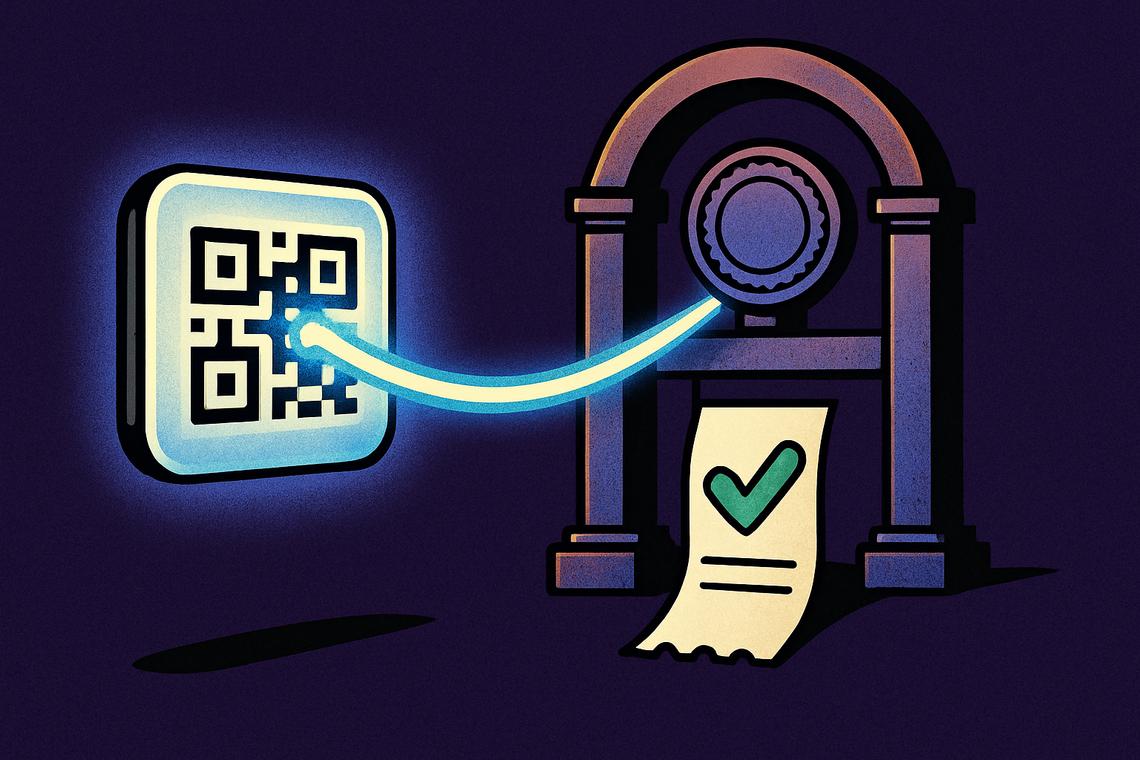
The mechanics differ slightly depending on the device. On mobile, customers booking through the Emirates App are redirected to the Crypto.com app to complete the payment from their wallet, then brought back to the Emirates App to receive their booking confirmation and e-ticket. On desktop, users select Crypto.com Pay at the payment step, scan a QR code displayed on the booking page, and approve the transaction through the Crypto.com app — the confirmation then appears directly on screen.
It’s a smooth enough flow for users already familiar with the Crypto.com ecosystem, though the two-step process on desktop does require a smartphone nearby.
Partnership Origins and the Regulatory Infrastructure Behind It
The Emirates crypto payment partnership isn’t just a bilateral deal between a carrier and a fintech — it’s built on a uniquely solid regulatory base. Crypto.com’s Dubai entity holds the distinction of being the first Virtual Asset Service Provider (VASP) to receive a Stored Value Facilities (SVF) licence from the Central Bank of the UAE. That licence positions the company to operate within the UAE’s formal financial infrastructure, not just as a tech overlay.
That regulatory backbone matters enormously here. The UAE has spent years constructing one of the world’s most detailed and layered crypto regulatory frameworks, with bodies including the Virtual Assets Regulatory Authority (VARA), the Central Bank of the UAE, and the newly formed Capital Market Authority each covering different slices of the digital-asset sector. For a partnership of this scale — connecting a national airline with a major crypto platform — operating under Central Bank licensing rather than purely as a parallel fintech adds a level of institutional credibility that broader consumer adoption demands.
“Partnering with Emirates is a milestone for Crypto.com and our Pay feature,” said Eric Anziani, President and Chief Operating Officer of Crypto.com, pointing to the collaboration as evidence of the UAE’s forward-thinking approach to innovation.
Previous Collaboration with Dubai Finance
The launch also deepens an existing thread of institutional cooperation. Emirates had previously signed a partnership with Dubai Finance to advance digital payments, while Crypto.com had separately partnered with Dubai Finance to enable digital payments for government services. The Emirates crypto payment rollout ties these threads together, positioning the airline as a node in Dubai’s broader cashless infrastructure rather than simply a first-mover experiment.
Strategic Alignment with Dubai’s D33 Economic Agenda
The timing of this launch isn’t accidental. Dubai’s Cashless Strategy under the D33 Economic Agenda sets a target of making 90% of all financial transactions — across both government and private sectors — digital by the end of 2026. With that deadline approaching, high-visibility partnerships like this one serve as proof points for the strategy’s real-world traction.
Emirates is one of Dubai’s most globally recognized institutions. When an airline of that stature embeds a digital payment option into its booking flow, it normalizes the behavior for millions of users. That normalization effect is precisely the kind of private-sector contribution the D33 agenda needs to hit its targets. It’s less about any single transaction volume and more about shifting the baseline expectation of how payments work.
Targeting a Digitally Fluent Generation
Kazim was direct about the demographic logic. The integration reflects the preferences of a younger, digitally fluent generation that manages money and plans travel primarily from their phones — and expects airlines to match that pace. The comment frames this not as a niche fintech experiment but as a mainstream service response to a shifting customer base.
That framing is analytically important. Airlines have long competed on routes, prices, and loyalty programs. Adding digital-native payment options is becoming another dimension of that competition — one where the regulatory environment, not just the technology, determines who moves first and who moves at scale.
The UAE’s crypto framework, which by mid-2026 had matured to include active enforcement against unlicensed operators alongside approvals for established players, creates the conditions where partnerships like this can credibly scale. For Emirates and Crypto.com, the real test will be whether the model — currently scoped to UAE residents paying in AED — expands to other markets and currencies as regulatory equivalents emerge elsewhere.
FAQ
Who is eligible to use Crypto.com Pay on Emirates?
Crypto.com Pay is available to eligible UAE residents for flight bookings priced and settled in Emirati Dirham (AED).
How can customers pay with Crypto.com Pay on Emirates’ platforms?
Mobile users are redirected to the Crypto.com app to complete payment, then brought back to the Emirates App for their booking confirmation. Desktop users select Crypto.com Pay at checkout, scan a QR code with the Crypto.com app, and receive their confirmation on screen once payment is approved.
How does this partnership fit within UAE regulations?
Crypto.com Pay transactions comply with UAE regulatory standards. The integration is operated by Crypto.com’s Dubai entity, which is the first VASP licensed under the Central Bank of the UAE’s Stored Value Facilities framework.
What strategic goals does this launch support?
The launch supports Dubai’s Cashless Strategy under the D33 Economic Agenda, which targets 90% digital transactions across government and private sectors by the end of 2026. It also reflects the evolving payment preferences of digitally fluent consumers.
Article produced with the assistance of artificial intelligence and reviewed by the editorial team.








 English (US) ·