
 2 months ago
52
2 months ago
52
- Ethereum broke out of its $2,200–$2,300 range with a sharp rise in volume and renewed momentum
- Whale accumulation and ETF inflows are tightening supply and supporting the bullish case
- Key resistance sits near $2,375–$2,400, with a breakout or rejection likely to define the next move
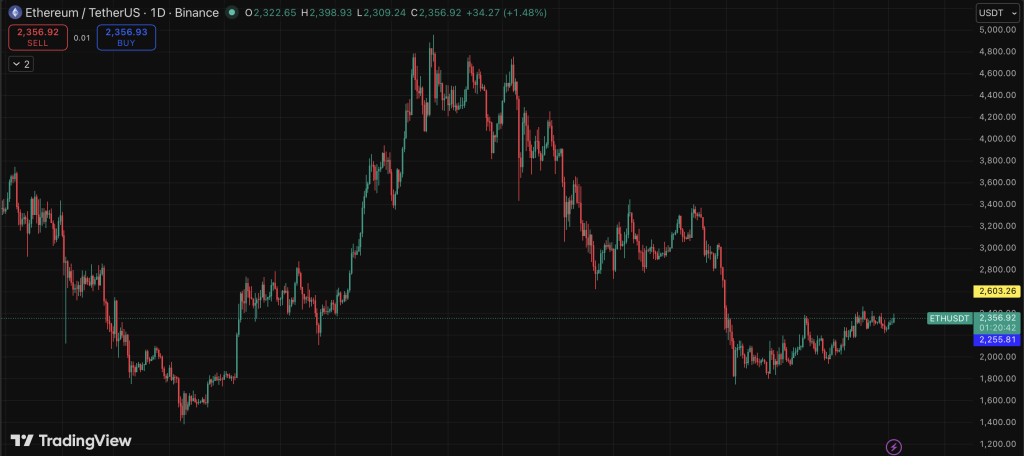
Ethereum finally woke up a bit. After weeks of just drifting sideways, it’s now up around 1%, trading near $2,337, and more importantly… volume has exploded. We’re talking a 170% jump, which is hard to ignore.
For a while, ETH was stuck in that dull $2,200 to $2,300 range, barely moving, almost frustrating to watch. Then suddenly, it broke out, and not in a messy way either. The recent candles look clean, strong, and backed by real demand.
Now though, things get interesting. Price is pushing into a key zone, and the next few moves could decide whether this breakout actually holds.
Resistance Near $2,375 Starts to Matter
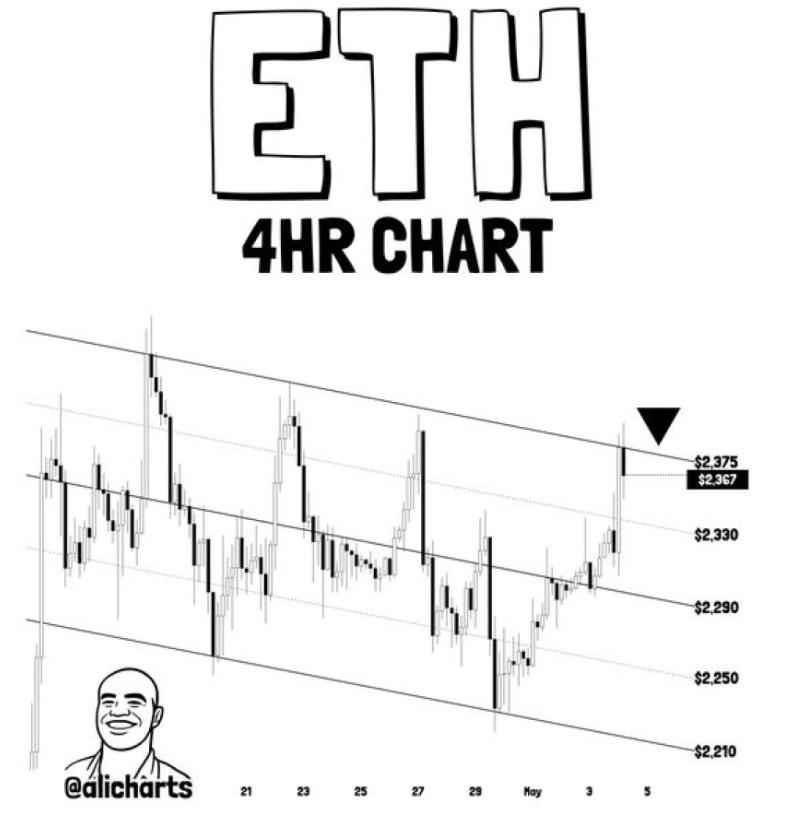
On the shorter timeframe, ETH has been moving inside a rising channel, slowly climbing but staying structured. It’s been a pretty controlled move, bouncing between support and resistance like clockwork.
But that upper boundary, around $2,375, keeps getting in the way. Every time ETH gets close, sellers show up. Not aggressively, but enough to stop momentum from fully breaking through.
And right now, price has pushed straight into that resistance without much pause. That usually leads to a bit of hesitation… maybe a pullback, maybe just consolidation. You can even see it in the wicks, small rejections near the top.
Still, the overall structure isn’t broken. Higher lows are holding, especially around the $2,250–$2,280 area. As long as that zone stays intact, the short-term trend leans bullish, even if resistance slows things down.
Institutional Demand Starts Showing Again
Behind the scenes, there’s a clear reason why ETH is moving. Big money is coming back, slowly but noticeably.
Spot ETFs pulled in over $100 million recently, breaking a streak of outflows. That alone doesn’t guarantee a rally, but it shows renewed interest. On top of that, whale wallets have been active, scooping up over 140,000 ETH in just a few days.
That’s not small. And when exchange reserves drop at the same time, it usually means one thing, supply is tightening.
Derivatives data backs this up too. Funding rates are slightly positive, and open interest has climbed, suggesting traders are positioning for upside… cautiously, but still.
Staking Activity Shows Rotation, Not Panic
There’s also been some movement in Ethereum’s staking system, and at first glance, it might look a bit concerning. A chunk of ETH is exiting, with a queue forming that takes days to clear.
But here’s the part people miss. The entry queue is even bigger.
More ETH is waiting to be staked than unstaked, which tells you this isn’t a mass exit. It’s more like rotation, some participants taking profits, others stepping in. Overall confidence hasn’t really cracked.
The Next Move Could Define the Trend
So now ETH is sitting right below $2,375, staring at it… almost testing how serious that resistance really is.
If it breaks cleanly above $2,400, things could move fast. That level has rejected price multiple times, so clearing it would shift sentiment pretty quickly. With ETF flows and whale buying in the background, that move could have real momentum behind it.
But if it fails here, the pullback likely sends ETH back toward $2,300, maybe even $2,250. That wouldn’t destroy the trend immediately, but it would slow things down again.
For now, Ethereum has done the hard part, breaking out of that boring range. Now it just needs to prove it can stay out.
Disclaimer: BlockNews provides independent reporting on crypto, blockchain, and digital finance. All content is for informational purposes only and does not constitute financial advice. Readers should do their own research before making investment decisions. Some articles may use AI tools to assist in drafting, but every piece is reviewed and edited by our editorial team of experienced crypto writers and analysts before publication.








 English (US) ·