
 2 months ago
62
2 months ago
62
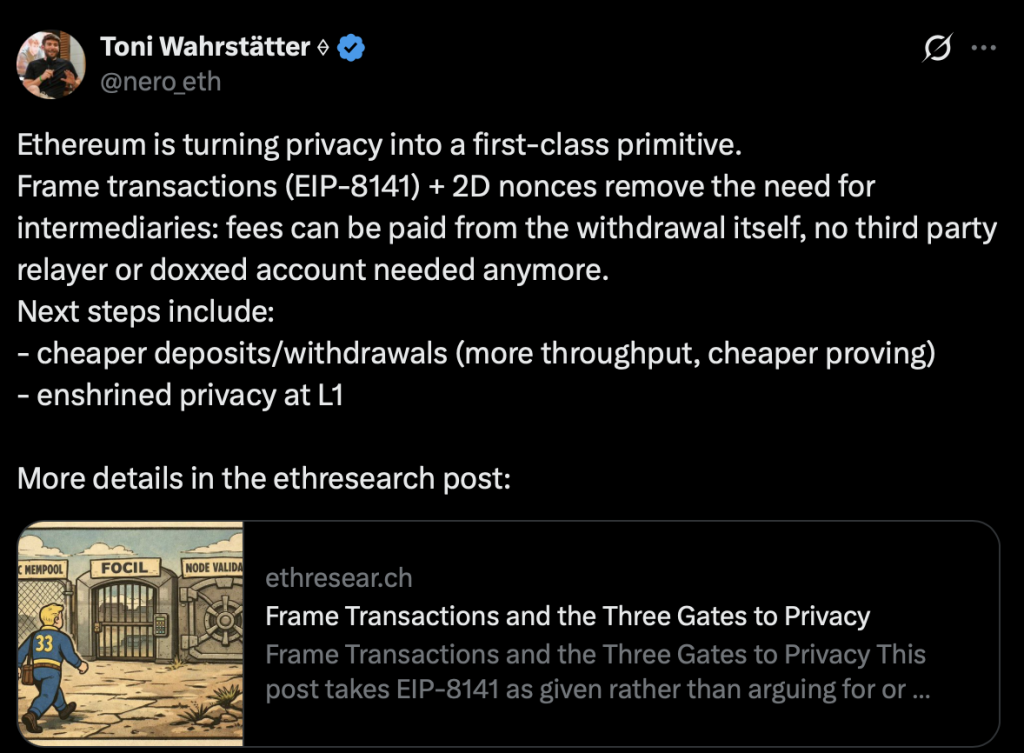
- EIP-8141 introduces frame transactions, allowing users to pay fees directly within transactions without intermediaries
- The proposal adds 2D nonces, enabling more flexible and parallel transaction execution
- The upgrade aims to improve privacy, reduce reliance on third parties, and simplify Ethereum’s user experience
Ethereum developers are quietly working on something that could change how users interact with the network… and honestly, it feels like one of those upgrades that doesn’t look flashy at first, but could matter a lot over time. The proposal, called EIP-8141, is aimed at making transaction fees easier to handle while also improving privacy in a more native, built-in way.
It’s not just a small tweak either. If it goes through, it could reshape how transactions are structured, and maybe even remove some of the friction people deal with today.
Frame Transactions Could Remove the Need for Middlemen
At the center of this proposal is something called “frame transactions.” The idea is pretty simple on the surface, but the impact could be bigger than it sounds. Instead of relying on relayers or external services to handle fees, users would be able to pay fees directly as part of the transaction itself.
That means no separate setup, no extra step just to fund a wallet for gas. The fee gets handled inside the process, almost automatically.
And yeah, that reduces the need for intermediaries. Right now, a lot of users depend on third-party tools or services to get transactions through smoothly. With frame transactions, that layer starts to fade away a bit, giving users more direct control… which is kind of the whole point of decentralization anyway.
2D Nonces Add Flexibility to How Transactions Work
Another piece of the proposal, and maybe a slightly more technical one, is the introduction of “2D nonces.” Normally, Ethereum transactions follow a strict order. One after another, in a single line. That works, but it can get messy, especially with more complex interactions.
With 2D nonces, that structure opens up. Instead of one linear sequence, users could run multiple streams of transactions at the same time. Not completely chaotic, but definitely more flexible.
For things like DeFi strategies or contract-heavy workflows, this could make a noticeable difference. Fewer failed transactions, less friction when multiple actions are happening together… it just smooths things out, at least in theory.
Privacy Improves as External Dependence Shrinks
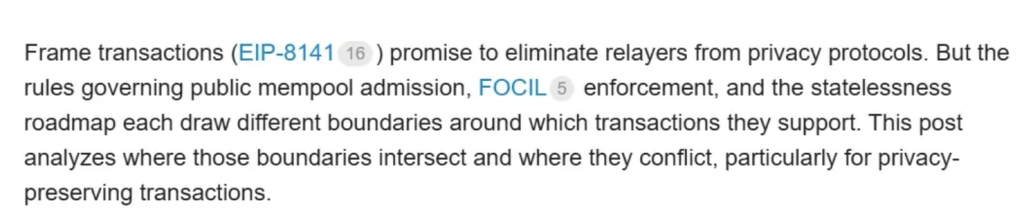
There’s also a privacy angle here, and it’s not being hidden. By cutting out intermediaries, transactions become less exposed to outside entities. Right now, when relayers or third parties are involved, there’s always some level of dependency.
Removing that layer doesn’t magically make everything private, but it does reduce unnecessary exposure. And in crypto, even small improvements in privacy tend to matter.
At the same time, simplifying how fees work could lower the barrier for new users. Let’s be honest, dealing with gas fees, wallets, balances… it’s not exactly beginner-friendly. This proposal tries to clean that up a bit.
A Step Toward Native Privacy on Ethereum
Zooming out, EIP-8141 looks like part of a bigger direction Ethereum is heading toward. Instead of relying on external tools for privacy or efficiency, developers are slowly trying to build those features directly into the protocol.
That includes improving transaction throughput, reducing costs, and making privacy more standardized across the network. It’s not happening overnight, obviously, but the intent is clear.
If things like this continue to roll out, Ethereum could end up feeling a lot more seamless to use, while still keeping its decentralized core intact.
For now though, it’s still a proposal. But one worth watching, because the small structural changes often end up being the ones that matter most later on.
Disclaimer: BlockNews provides independent reporting on crypto, blockchain, and digital finance. All content is for informational purposes only and does not constitute financial advice. Readers should do their own research before making investment decisions. Some articles may use AI tools to assist in drafting, but every piece is reviewed and edited by our editorial team of experienced crypto writers and analysts before publication.








 English (US) ·