
 3 months ago
59
3 months ago
59
- 12 major European banks partner with Fireblocks for euro stablecoin
- MiCA-compliant token targets launch in H2 2026
- Euro stablecoins remain under 1% of global supply, leaving huge upside
Europe’s biggest banks just made a move that feels… overdue. A 12-bank consortium called Qivalis has selected Fireblocks to build the infrastructure behind a euro-backed stablecoin, aiming for a launch in the second half of 2026.
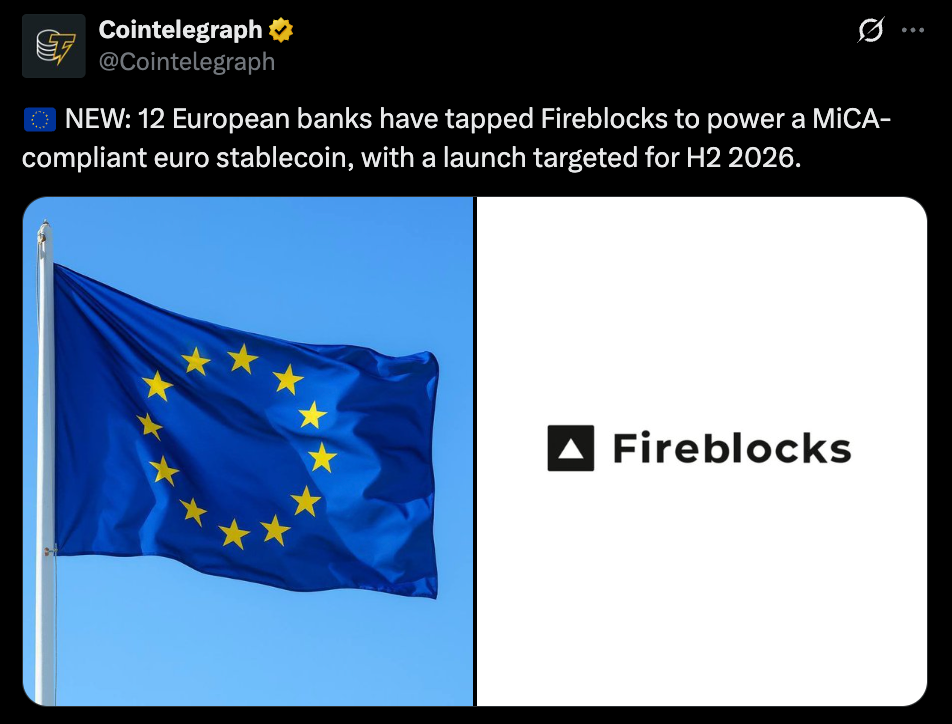
And this isn’t some experimental pilot with a few niche players. We’re talking about institutions like BNP Paribas, ING, BBVA, and UniCredit, banks that collectively serve tens of millions of users and move serious capital every single day.
What Fireblocks Is Actually Building
Fireblocks isn’t just providing a wallet or a backend tool, it’s handling the entire stack. That includes issuance, custody, compliance, and lifecycle management, basically everything needed to run a regulated stablecoin at scale.
The token itself will use an ERC-20F standard, designed specifically for permissioned environments. That means built-in identity checks, compliance controls, and reporting features that regulators can actually work with, which, let’s be honest, is exactly what Europe cares about.
Why This Matters More Than It Looks
Right now, euro stablecoins are almost irrelevant in the global picture. Out of trillions in stablecoin volume, euro-based assets account for less than 1%, which is surprisingly low given the size of the European economy.
The dollar has dominated this space for years, but this move suggests Europe is no longer comfortable sitting on the sidelines. When banks of this scale coordinate like this, it usually means they see a structural shift coming, not just a trend.
A Different Approach Than Crypto Startups
What makes this initiative stand out is who’s behind it. This isn’t a startup trying to disrupt the system, it is the system trying to evolve itself.

That comes with trade-offs, of course. The token will likely be more controlled, more compliant, and less permissionless than typical crypto assets. But in exchange, it may gain something crypto projects often struggle with, trust from regulators and institutions.
The Road to Launch Still Has a Gatekeeper
Nothing is fully confirmed yet. The project still needs approval from the Dutch central bank, which means timelines could shift depending on how regulators respond.
But assuming it moves forward, this could mark the first truly large-scale attempt to bring the euro on-chain in a meaningful way. And if it works, it might finally give the dollar some competition in the stablecoin space.
A Shift Worth Watching
For now, this is less about hype and more about infrastructure being quietly built in the background. The kind that doesn’t move markets overnight, but changes how money flows over time.
If Europe gets this right, the impact won’t just be on crypto, it could reshape cross-border payments, digital finance, and how stablecoins are perceived globally. And yeah, that’s a pretty big deal.
Disclaimer: BlockNews provides independent reporting on crypto, blockchain, and digital finance. All content is for informational purposes only and does not constitute financial advice. Readers should do their own research before making investment decisions. Some articles may use AI tools to assist in drafting, but every piece is reviewed and edited by our editorial team of experienced crypto writers and analysts before publication.







 English (US) ·