
 19 hours ago
48
19 hours ago
48
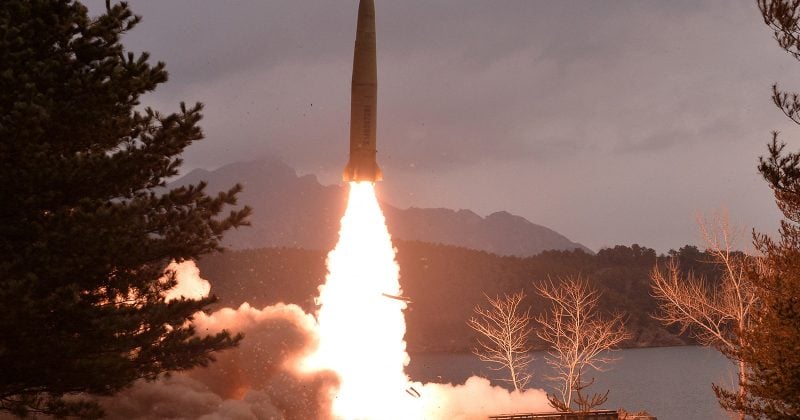
Iran fired another round of missiles from Lorestan province toward what state news agency IRNA described as “enemy targets,” marking yet another escalation in a conflict that has been grinding on since late February. The launches reportedly originated from a region home to the Imam Ali Missile Base, a key site for Iran’s Shahab-3 ballistic missile program.
Here’s the thing: crypto markets didn’t flinch. No notable sell-offs, no flight to stablecoins, no spike in Bitcoin as a safe haven play.
What happened in Lorestan
Lorestan province sits in western Iran and hosts significant military infrastructure. The Imam Ali Missile Base stationed there is associated with the IRGC’s Shahab-3 ballistic missiles, which carry a range of 800 to 1,300 kilometers.
That range puts several regional capitals and military installations well within striking distance. The missiles launched in mid-July 2026 are part of Iran’s broader military response in a war that began on February 28, 2026, when US-Israeli forces launched Operation Epic Fury.
That operation resulted in significant Iranian casualties, including the death of Supreme Leader Ayatollah Ali Khamenei. Since then, Iran has engaged in repeated missile exchanges, adapted its launch tactics, and increasingly leaned on Hezbollah as a proxy force to extend its reach.
Why crypto isn’t reacting, and why that might change
In early 2020, when the US killed Iranian General Qasem Soleimani, Bitcoin briefly spiked as traders tested the “digital gold” thesis. During Russia’s invasion of Ukraine in 2022, crypto saw initial volatility before settling into a pattern driven more by macro rates than frontline movements.
Since the war began in February, crypto has largely traded on its own internal dynamics: protocol upgrades, regulatory developments, and liquidity cycles.
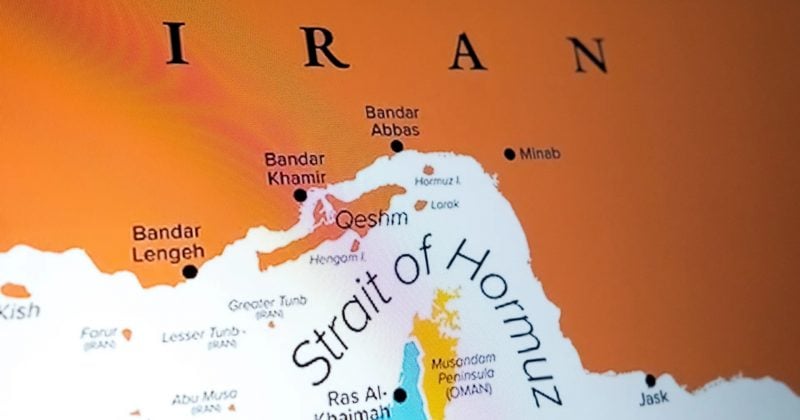
A sustained disruption to oil flows through the Persian Gulf would ripple through every asset class on the planet, crypto included.
The broader war context
The 2026 Iran conflict is now nearly five months old. What started as a targeted US-Israeli operation has evolved into a multi-front confrontation involving ballistic missiles, proxy warfare through Hezbollah, and repeated exchanges that have caused significant casualties on multiple sides.
For traditional markets, the conflict has already driven elevated oil prices and pushed defense stocks higher. Gold has benefited from safe-haven flows.
What investors should actually watch
A disruption to the Strait of Hormuz, through which roughly a fifth of the world’s oil passes, would force a repricing of inflation expectations globally. Bitcoin’s historical performance during acute geopolitical crises has been inconsistent enough that treating it as a reliable hedge is still a leap of faith. What it does tend to respond to is the second-order effects: monetary policy shifts, dollar strength or weakness, and changes in global liquidity conditions that follow major conflicts.
Disclosure: This article was edited by Editorial Team. For more information on how we create and review content, see our Editorial Policy.




 English (US) ·