
 1 month ago
25
1 month ago
25
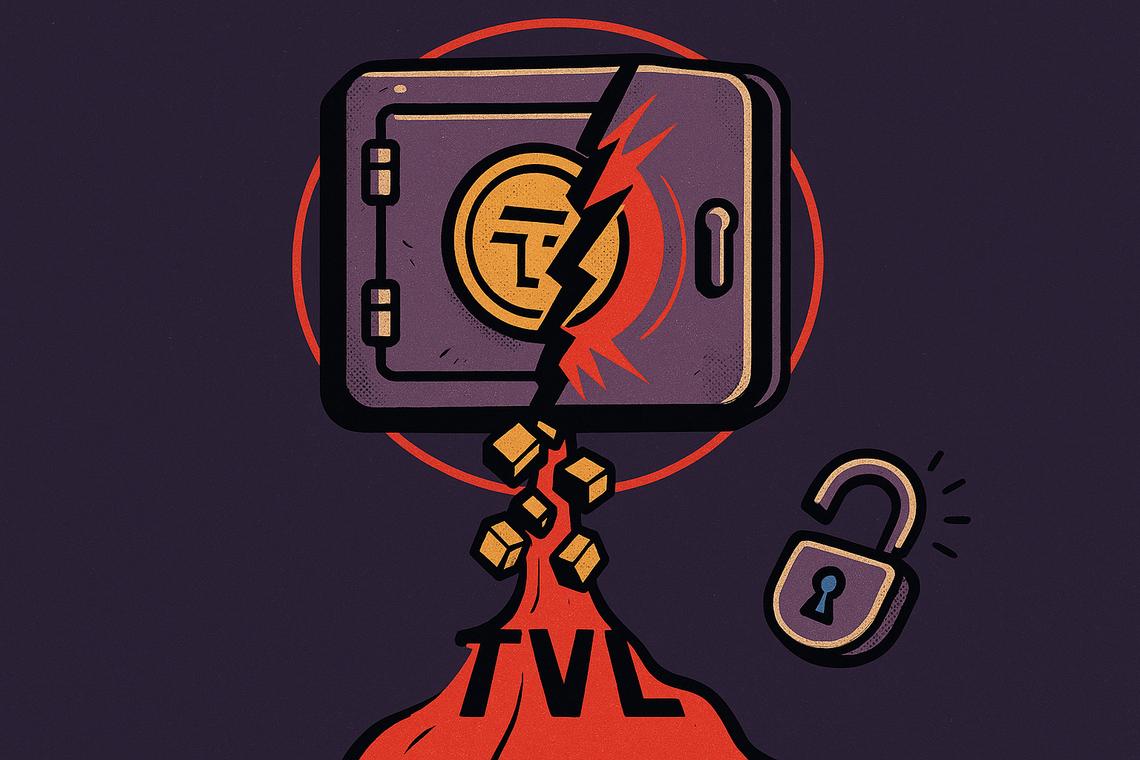
Something uncomfortable has been building inside decentralized finance all year. The DeFi total value locked, long used as the sector’s headline health indicator, has declined every single month of 2026 — sliding from roughly $115 billion in January to about $70 billion, a 39% drop that shows no sign of reversing. Taken together with a wave of high-profile security breaches, the numbers paint a picture of a sector caught between macro headwinds and homegrown vulnerabilities.
Key takeaways
- DeFi TVL has fallen 39% in 2026, from $115 billion to about $70 billion, declining every single month.
- Bitcoin dropped more than 50% from its October 2025 all-time high near $126,000, pulling the broader crypto market down with it.
- DeFi recorded 121 hacks in 2026 with $942 million stolen; Q2 alone saw 85 incidents and roughly $775 million in losses.
- Two April exploits — Drift Protocol ($295M) and KelpDAO ($293M) — accounted for more than half of all 2026 losses.
- TRON and Hyperliquid were the only top-10 chains to grow TVL in 2026, up 5% and 7% respectively.
DeFi TVL’s Unbroken Losing Streak in 2026
The headline figure from CryptoRank’s latest report is stark: not a single month this year has seen DeFi’s total value locked grow. The contraction has been broad-based, touching nearly every major chain, and the cumulative damage now sits at 39% year-to-date.
Chain-by-Chain Damage
Ethereum, which still anchors the DeFi ecosystem, saw its TVL fall 43% to $38.91 billion. That’s a significant erosion for the chain that commands the largest share of decentralized finance activity. Further down the rankings, the picture gets worse. Arbitrum’s TVL sank 55%, while Plasma collapsed by nearly 75% — one of the sharpest contractions among major networks tracked.
Two chains bucked the trend entirely. TRON grew its TVL by roughly 5%, a resilience that analysts largely attribute to its deep integration with Tether’s USDT settlement flows and stablecoin lending activity. Hyperliquid rose about 7%, driven by perpetuals trading volume and the gradual expansion of its HyperEVM ecosystem. In a year defined by capital flight, those two networks represent the clearest case for differentiated positioning.
Bitcoin’s Pullback Sets the Macro Tone
The broader context matters here. Bitcoin hit an all-time high near $126,000 in October 2025, then reversed sharply. By mid-2026, it had shed more than 50% from that peak. That kind of drawdown in the market’s anchor asset inevitably compresses risk appetite across DeFi, as collateral values shrink and yield-seeking capital retreats to safer positions.
Asset manager 21Shares, in its own mid-year market report published June 24, noted that bitcoin’s current drawdown “still looks familiar” relative to historical post-halving patterns — and that the asset has so far avoided trading below its aggregate investor cost basis of $54,000, a level the firm described as evidence of “stickier capital flows” in a more mature market. That macro framing matters for DeFi too: if Bitcoin stabilizes and recovers toward 21Shares’ $100,000 year-end base case, collateral dynamics across lending protocols would improve meaningfully.
For now, though, the weight of that 50%-plus BTC correction has pressed down on every corner of decentralized finance.
Security Breaches Compound the Bleeding
A falling market is one thing. A falling market paired with record-breaking exploit activity is something harder to recover from.
Record Hack Incidents in 2026
According to CryptoRank’s data, DeFi recorded 121 hacks in 2026, resulting in $942 million in total losses. Those numbers alone would be alarming. But the quarterly breakdown makes the picture sharper: Q2 2026 produced 85 separate incidents and approximately $775 million in losses, making it the most active quarter for exploits in the dataset’s history. Nearly 70% of the year’s hack activity, by both count and dollar value, was compressed into a single three-month window.
Two April Exploits Drove Most of the Damage
Within that brutal quarter, two April attacks stood out for their scale. The Drift Protocol breach cost $295 million. Days later, the KelpDAO exploit followed at $293 million. Together, those two incidents accounted for more than half of all 2026 DeFi losses — a concentration of damage that is difficult to ignore when assessing systemic risk.
The KelpDAO hack’s ripple effects were immediate and visible. Aave’s TVL dropped 46% in the aftermath, collapsing from $26.4 billion to $14.3 billion within a matter of days. For one of DeFi’s most established lending protocols to lose nearly half its deposits that quickly illustrates how interconnected the ecosystem remains — and how a single high-profile exploit can trigger a broader confidence crisis that accelerates outflows far beyond the targeted protocol.
CryptoRank noted that “high-profile incidents involving major protocols reinforced concerns around security and may have accelerated capital outflows from DeFi.” That framing understates the dynamic slightly: when users watch $293 million disappear overnight and then see Aave’s deposits halve in response, the rational short-term move is withdrawal, not redeployment.
How 2026 Compares to the Last Cycle
Perspective matters when reading these numbers. The 2021-22 DeFi downturn saw total value locked crash by more than 70% in just seven months, following a late-2021 peak near $177 billion. By that benchmark, the current 39% decline — while painful and unrelenting — remains a considerably milder contraction.
What may be providing that relative floor is the changing composition of DeFi capital itself. The sector now holds a more diverse mix of stablecoins, derivatives, and other asset classes than it did during the 2021 peak, when speculative yield farming dominated. That structural diversification appears to have absorbed some of the downward pressure that would otherwise translate into sharper TVL losses.
The harder question is whether that cushion holds if security incidents continue at Q2’s pace. A second consecutive quarter near 85 hacks and $775 million in losses would almost certainly push the year-end total well past $1.5 billion — a figure that would carry its own narrative weight regardless of how Bitcoin trades in the second half of the year.
FAQ
What has been the trend in DeFi total value locked in 2026?
DeFi total value locked has fallen every month of 2026, dropping 39% from about $115 billion in January to roughly $70 billion by late June.
How have Bitcoin price movements influenced DeFi markets in 2026?
Bitcoin has dropped more than 50% since its all-time high near $126,000 in October 2025, compressing collateral values and risk appetite across the DeFi ecosystem and contributing to the sustained TVL decline.
What were the major causes behind DeFi losses in the first half of 2026?
A record wave of security incidents drove most of the damage: 121 hacks totaling $942 million in losses. Two April exploits — Drift Protocol ($295 million) and KelpDAO ($293 million) — accounted for more than half of the year’s total, with the KelpDAO hack alone triggering a 46% drop in Aave’s TVL.
How does the 2026 DeFi downturn compare to past market cycles?
The current downturn is milder than the 2021-22 cycle, when DeFi TVL dropped more than 70% in seven months from a peak near $177 billion. The 2026 decline of 39% year-to-date, while persistent, reflects a sector with more diversified capital composition than the previous bear market.
Article produced with the assistance of artificial intelligence and reviewed by the editorial team.




 English (US) ·