
 5 months ago
121
5 months ago
121
- XRP’s narrative is shifting from speculation toward regulated settlement ambitions
- Community events now act more like coordination checkpoints than hype rallies
- Institutional distribution and compliance will define XRP’s real adoption path
For years, XRP bulls have argued the asset was built for cross-border settlement. Back then, that pitch often sounded like marketing. The SEC lawsuit in 2020 didn’t just hurt price, it poisoned the entire institutional narrative. Even firms that liked the technology didn’t want the regulatory risk.
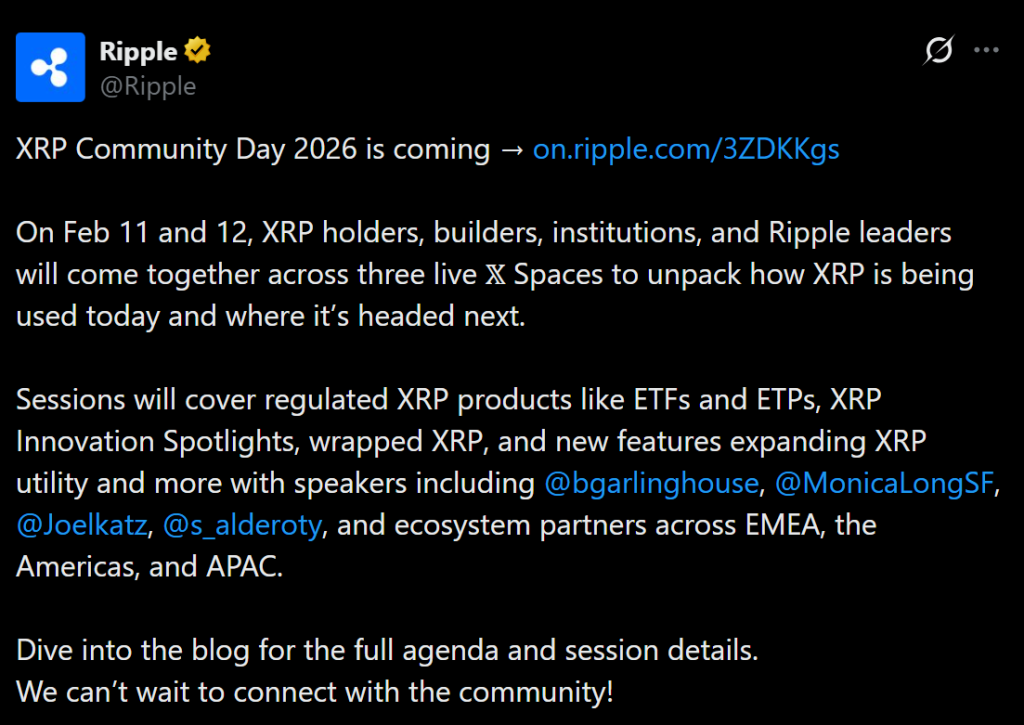
Now the tone is different. With legal clarity improved after the 2025 settlement, XRP’s institutional thesis sounds more credible than it has in a long time. But there’s still a gap between “the case is stronger” and “the market has adopted it.” Saying XRP is institutional-ready is easy. Getting regulated players to actually integrate it is the hard part.
Community Day Is Becoming a Coordination Tool
One subtle change is how XRP ecosystem events function. In earlier cycles, these gatherings were mostly about sentiment, community energy, and sometimes price-driven hype. But now, events like XRP Community Day look more like coordination points.
Builders, issuers, and potential institutional partners use these moments to compare roadmaps, align narratives, and quietly test seriousness. That shift matters because real adoption doesn’t happen from tweets. It happens when organizations decide to allocate resources, integrate infrastructure, and take compliance responsibility. These events are becoming checkpoints where those decisions get nudged forward.
XRP’s Utility Narrative Is Expanding Beyond Payments
The XRP story is no longer only “Swift but faster.” Payments are still central, but the ecosystem now talks more openly about cross-chain liquidity, wrapped XRP, and DeFi-style applications. That expansion is intentional. It’s XRP trying to fit into a more composable world without losing its original focus.

This is where XRP’s path gets tricky. The more it tries to be everything, the more it risks diluting the simplicity that made its original pitch compelling. But at the same time, if it stays too narrow, it risks being outpaced by broader ecosystems that can absorb multiple use cases at once.
Distribution and Regulated Access Are the Real Battleground
Here’s the part that matters more than any technical upgrade. If regulated financial products begin holding or distributing XRP, the demand structure changes completely. Access shifts from niche exchanges and retail-driven cycles to regulated channels where larger capital can move.
That’s why ETF-style distribution and institutional custody infrastructure matter so much. They don’t just create price pumps. They change who can participate, how exposure is acquired, and how long capital tends to stay in the system.
Conclusion
XRP’s story isn’t finished, and it’s not a simple yes-or-no answer. The foundation is stronger now: improved legal clarity, a more serious compliance posture, and a more mature ecosystem narrative. But real adoption will hinge on whether regulated players see XRP as simpler, safer, and cheaper than existing rails.
Until institutions make binding integration decisions, “institutional readiness” remains more belief than fact. The next phase isn’t about hype. It’s about whether XRP can convert credibility into actual infrastructure usage.
Disclaimer: BlockNews provides independent reporting on crypto, blockchain, and digital finance. All content is for informational purposes only and does not constitute financial advice. Readers should do their own research before making investment decisions. Some articles may use AI tools to assist in drafting, but every piece is reviewed and edited by our editorial team of experienced crypto writers and analysts before publication.






 English (US) ·