
 4 months ago
61
4 months ago
61
- Weekly trading cycle concentrates liquidity into short bursts
- Solana’s speed and low fees fuel rapid memecoin speculation
- Early traders dominate gains while late entrants face higher risk
Memescope Monday isn’t something Solana officially launched, but it’s starting to behave like a system of its own. Every week, traders, influencers, and bots all seem to show up at the same time, focusing on newly launched memecoins and pushing volume into a tight window. What began as scattered activity has turned into a predictable rhythm, and that rhythm is shaping how liquidity moves.
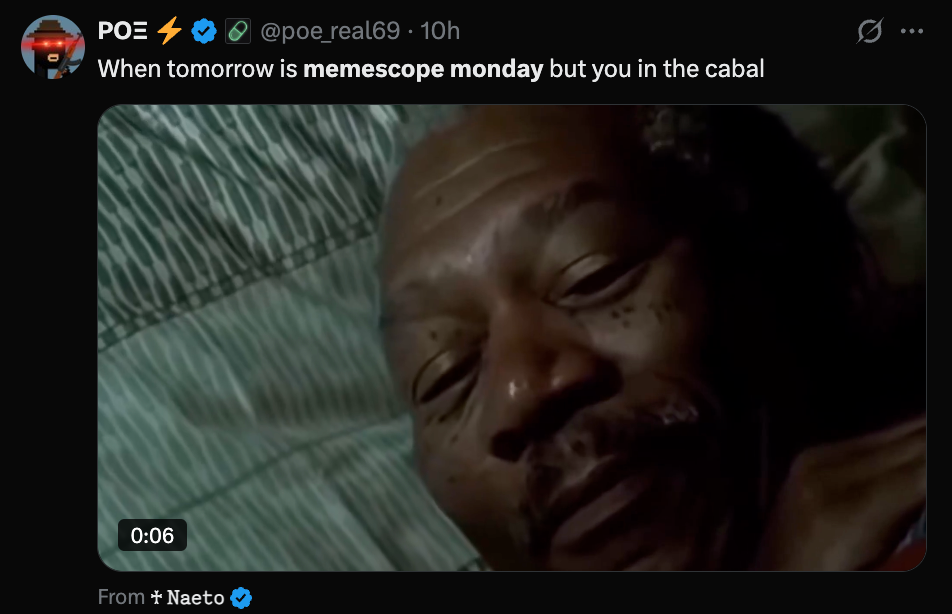
On the surface, it looks like a community-driven trend. Some platforms even add leaderboards or rewards to make it feel more structured. But underneath that, it’s really a coordinated liquidity event. Attention spikes, volume concentrates, prices move fast… then just as quickly, it fades.
Liquidity Is Being Compressed Into One Day
This pattern didn’t just appear randomly. It’s a response to something else, slowing organic activity across memecoins. Instead of waiting for narratives to build naturally, traders now compress everything into a specific timeframe.
Monday becomes the reset. New tokens launch, older ones get recycled, and capital rotates quickly between them. When liquidity is scattered, it’s hard to generate momentum. But when everyone shows up at once, even low-quality tokens can move sharply, at least for a moment.
Solana Makes This Possible
This entire cycle depends heavily on infrastructure, and Solana fits the model almost perfectly. Transactions are fast, fees are extremely low, and launching new tokens takes very little effort. Platforms like Pump.fun make it easy to create supply almost instantly.
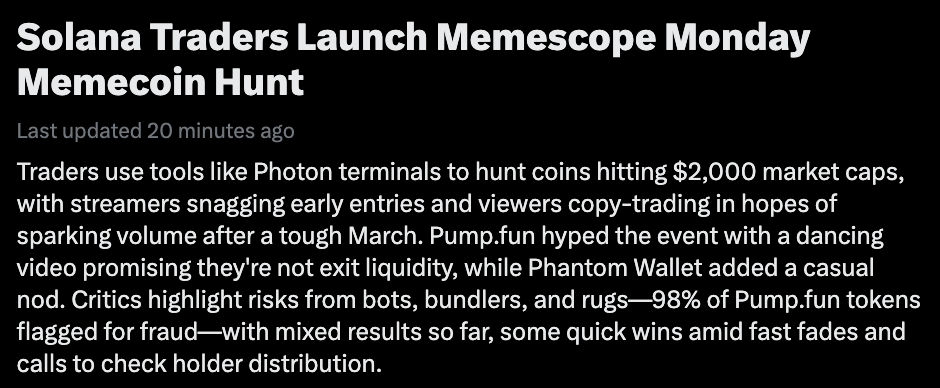
That combination creates a different kind of market. You don’t need long-term conviction or deep research. You need speed, timing, and execution. On slower chains, this behavior would struggle to scale. On Solana, it thrives.
The Weekly Cycle Is Predictable
If you watch closely, the flow repeats itself. Early in the day, experienced traders and bots begin scanning for fresh launches. They enter positions at very low valuations, sometimes just a few thousand dollars.
Then comes the amplification phase. Influencers and social accounts start sharing tokens that are already moving. Retail traders notice the momentum and begin piling in, often after prices have already climbed significantly. Finally, the exit phase kicks in. Early participants sell into that liquidity, prices stall, and then drop. The entire cycle can play out in minutes, sometimes hours, rarely longer.
Bots Create an Uneven Playing Field
A large part of this ecosystem operates beneath the surface. Automated bots monitor launches, snipe liquidity, and execute trades faster than any human realistically can. Some are designed to detect early momentum, others to front-run entries entirely.
That creates a structural imbalance. By the time most users see a token trending, the best positions are already taken. Opportunities still exist, but the edge isn’t distributed evenly, and that changes how outcomes play out.
A Trend That Reflects Broader Market Behavior
Memescope Monday isn’t just about memecoins, it reflects how retail behavior is evolving. Holding assets long-term is becoming less common, while rapid rotation is becoming the norm. Attention moves quickly, and capital follows just as fast.
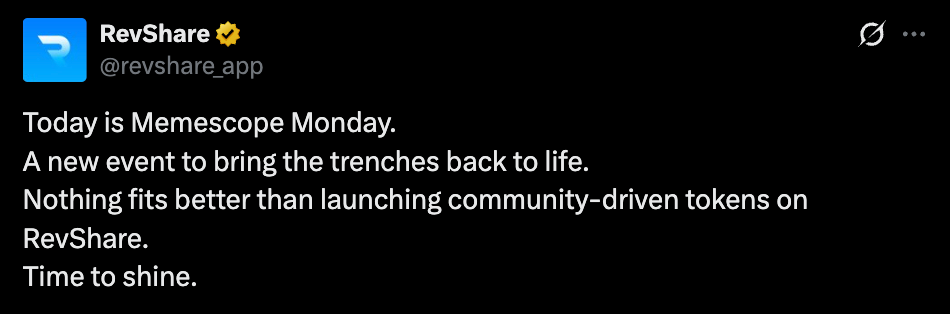
This weekly cycle packages that behavior into something repeatable. It’s chaotic, but not random. There’s structure underneath it, even if it doesn’t look that way at first.
More Than a Trend, It’s a Market Pattern
At a glance, it feels like a shared opportunity, something anyone can jump into. But in practice, it behaves more like a competitive environment where timing matters more than fundamentals. Many tokens launched during these cycles fade quickly, and some don’t last beyond the initial hype.
Memescope Monday isn’t a feature of Solana, it’s a pattern that emerged because the environment allowed it. And whether people realize it or not, it’s starting to reshape how participation in crypto actually works.
Disclaimer: BlockNews provides independent reporting on crypto, blockchain, and digital finance. All content is for informational purposes only and does not constitute financial advice. Readers should do their own research before making investment decisions. Some articles may use AI tools to assist in drafting, but every piece is reviewed and edited by our editorial team of experienced crypto writers and analysts before publication.





 English (US) ·