
 1 hour ago
19
1 hour ago
19
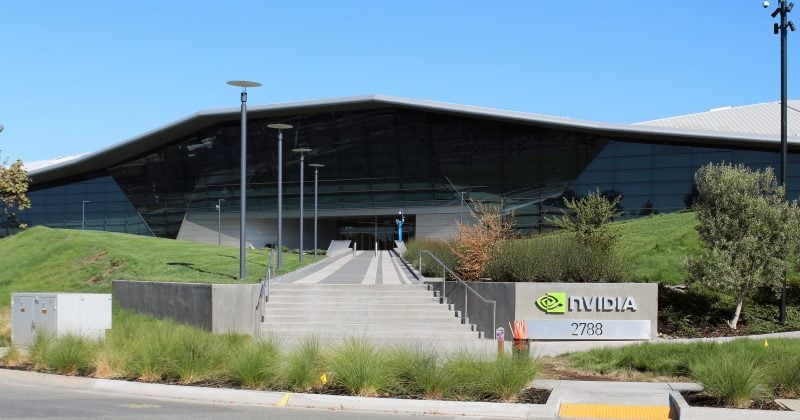
A seven-month-old Paris startup just pulled in more seed funding than most companies raise across their entire venture lifecycle. Gradium, a voice AI company that spun out of the Kyutai research lab, has extended its seed round to over $100 million after adding roughly $30 million in fresh capital, with Nvidia joining as a new backer.
What Gradium actually does
Gradium builds ultra-low-latency voice technology. Think speech-to-text, text-to-speech, voice cloning, and real-time translation models, all designed for developers building voice interfaces into consumer apps.
The company is led by CEO Neil Zeghidour and positions itself as a direct competitor to ElevenLabs, Deepgram, OpenAI’s voice products, and Mistral. It launched from stealth with production-ready models after just three months of development.
The initial $70 million seed round closed on December 2, 2025, led by FirstMark Capital and Eurazeo. DST Global, Eric Schmidt, and Xavier Niel also participated. The company emerged from the Kyutai lab, which itself was backed by Niel. Gradium did not disclose its valuation.
Why crypto investors should care about Nvidia’s AI bets
Every dollar Nvidia invests in AI infrastructure companies reinforces a specific thesis: that GPU compute demand is going to keep climbing, and that Nvidia intends to be embedded in every layer of the stack, not just as a hardware vendor but as a strategic investor.
That thesis has direct consequences for crypto mining economics. Nvidia GPUs remain central to mining operations for several proof-of-work chains and are critical infrastructure for the growing number of decentralized AI compute networks like Render, Akash, and io.net.
During the 2023-2024 AI boom, GPU shortages driven by data center demand from hyperscalers pushed up costs for crypto miners and decentralized compute providers alike.
The broader capital flow picture
Gradium’s $100 million seed round is part of a larger trend reshaping tech investing throughout 2025 and into 2026. AI infrastructure companies are absorbing enormous amounts of venture capital, often at stages that would have been unthinkable a few years ago.
FirstMark Capital, Eurazeo, DST Global, and Eric Schmidt are not niche AI funds. They are generalist and growth-stage investors who could just as easily be writing checks into crypto infrastructure.
Nvidia’s involvement adds another dimension. By backing Gradium, Nvidia likely ensures that the startup will build its infrastructure on Nvidia GPUs, creating a flywheel effect that makes it harder for alternative compute providers, including decentralized ones, to compete on price or performance.
Disclosure: This article was edited by Editorial Team. For more information on how we create and review content, see our Editorial Policy.







 English (US) ·