
 1 month ago
42
1 month ago
42
One company is now worth more than seven entire sectors of the S&P 500. Nvidia’s market capitalization has climbed to roughly $5.4 trillion, giving it an 8% share of the index’s total value and responsibility for nearly 20% of its year-to-date gains.
To put that in perspective: the S&P 500 has 11 sectors. Nvidia, a single stock, is bigger than seven of them.
The numbers behind Nvidia’s dominance
Nvidia’s current weighting in the S&P 500 represents the highest single-stock concentration since records began in 1981. In 2023, Nvidia was trading below a $1 trillion market cap. Three years later, the company has more than quintupled that figure, riding an unrelenting wave of demand for its AI-focused chips.
The company now sits as the largest in the world by market capitalization. Not just in tech. Not just in the US. Globally.
Why concentration this extreme matters
When one stock accounts for 8% of an index that contains 500 companies, the math starts to feel a little off. The average stock in the index should, by simple division, represent 0.2% of its value. Nvidia commands 40 times that average weight.
For passive investors, this creates a hidden risk. Every dollar flowing into an S&P 500 index fund automatically allocates eight cents to Nvidia. That’s not a conscious investment decision. It’s a structural byproduct of market-cap weighting, and it means millions of retirement accounts are more exposed to a single chipmaker than most people realize.
The AI trade and what investors should watch
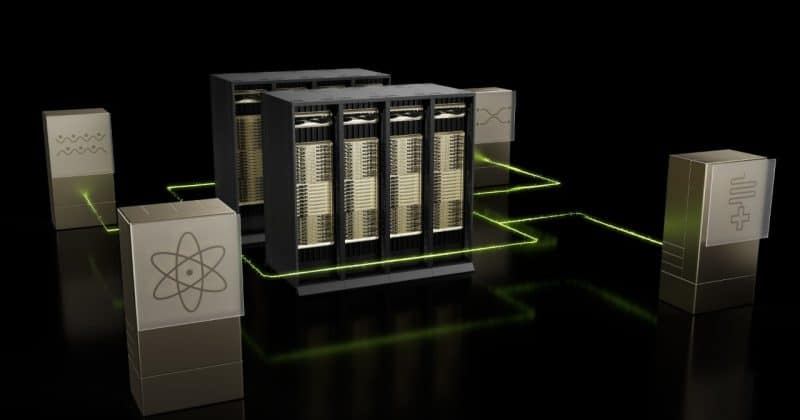
Nvidia’s ascent is inseparable from the AI infrastructure boom. The company’s GPUs have become the de facto building blocks for training and running large language models, and the capital expenditure cycle from hyperscalers like Microsoft, Google, and Amazon shows no sign of slowing.
The bull case is straightforward: AI compute demand is growing faster than supply, Nvidia controls the most advanced chips in the market, and its CUDA software ecosystem creates meaningful switching costs. Every major cloud provider is buying Nvidia hardware in volume, and the data center revenue line has been the engine behind the stock’s climb from sub-$1 trillion to $5.4 trillion.
There’s also the competitive landscape to consider. AMD continues to push its MI-series accelerators, and custom silicon efforts from Google (TPUs), Amazon (Trainium), and others represent a longer-term threat to Nvidia’s market share.
The practical takeaway for anyone with money in the market: if you own an S&P 500 index fund, you already have significant Nvidia exposure whether you intended to or not. Understanding that concentration, and deciding whether you’re comfortable with it, is no longer optional portfolio management. It’s table stakes.
Disclosure: This article was edited by Editorial Team. For more information on how we create and review content, see our Editorial Policy.





 English (US) ·