
 2 months ago
49
2 months ago
49
- Polygon enables private USDC and USDT transfers using zero-knowledge proofs
- Transactions remain compliant through KYT screening before execution
- Move targets institutional adoption by solving blockchain transparency issues
Polygon just addressed one of crypto’s most uncomfortable truths, public blockchains aren’t exactly built for privacy. Every transaction exposes the sender, receiver, and amount, which might be fine for retail users, but for institutions, that’s… a dealbreaker more often than not.
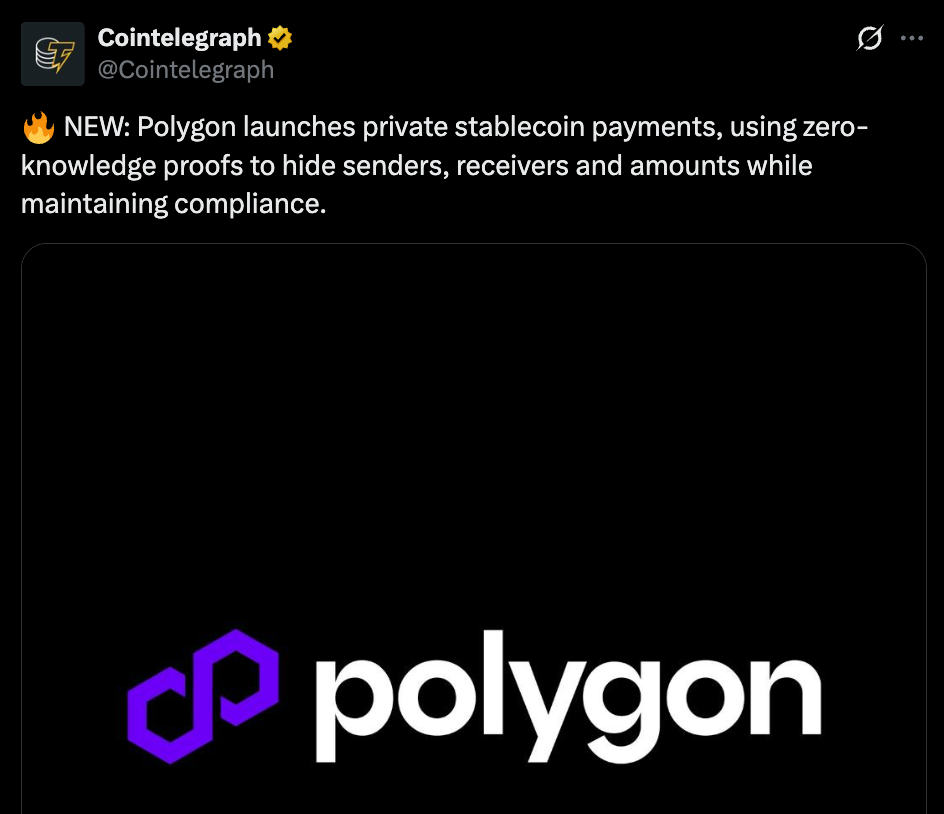
Now, with private stablecoin payments rolling out, that gap is starting to close.
Privacy Without Breaking Compliance
The system, built with Hinkal Protocol, uses zero-knowledge proofs to hide transaction details while still verifying that everything is valid. So the transaction happens, it’s confirmed on-chain, but the sensitive details aren’t visible to the public.
What’s important here is that compliance hasn’t been removed, it’s just been repositioned. Every transaction still goes through Know Your Transaction screening before it’s executed, meaning regulators can still track risk, even if the market can’t see everything.
Why This Actually Matters for Institutions
For companies handling large payments, transparency isn’t always a feature, it’s often a liability. Paying vendors, moving treasury funds, or managing liquidity on a fully public ledger exposes too much information to competitors and observers.
That’s been one of the biggest reasons institutions have hesitated to fully embrace blockchain-based payments, not speed, not cost, but visibility.

A Different Kind of Privacy Model
This isn’t the same as older privacy tools that aimed to obscure activity entirely. Polygon’s approach is more controlled, hiding information from the public while still allowing oversight where it matters.
It’s a middle ground, one that tries to balance privacy with regulation, instead of choosing one over the other.
The Bigger Play for Adoption
Polygon’s stablecoin ecosystem has already grown, with billions in market value, and this move feels like a direct attempt to attract more serious capital. If institutions were waiting for a version of blockchain payments that doesn’t broadcast their activity to the world, this might be it.
The infrastructure is starting to look ready. The real question now is whether institutions, after years of hesitation, actually decide to step in.
Disclaimer: BlockNews provides independent reporting on crypto, blockchain, and digital finance. All content is for informational purposes only and does not constitute financial advice. Readers should do their own research before making investment decisions. Some articles may use AI tools to assist in drafting, but every piece is reviewed and edited by our editorial team of experienced crypto writers and analysts before publication.








 English (US) ·