
 1 hour ago
10
1 hour ago
10
Somewhere between a Pentagon briefing and a poker table, Polymarket traders are placing real money on how many countries the US military will strike in 2026. The 12-country scenario is the long shot of the bunch, trading at roughly 3% probability with about $41,000 in volume. The smart money is clustering around 8 to 9 countries.
The market asking whether the US will strike 9 countries sits at approximately 35% probability. Its close cousin, the 8-country market, hovers between 34% and 36%. These are live contracts on the Polygon blockchain, settled in USDC, with real traders adjusting positions as military headlines roll in.
Half a billion dollars riding on conflict
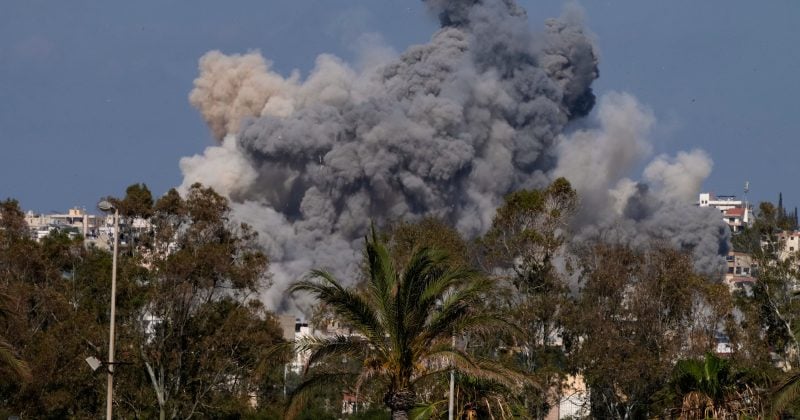
Markets related to US-Iran military strikes have accumulated more than $529 million in cumulative trading volume in 2026. That surge traces back to US strikes on Iranian soil earlier in February, which sent traders scrambling to reprice every conflict-adjacent contract on the platform.
Individual markets asking which country gets struck next have generated anywhere from $4 million to over $15 million in volume each.
Here’s the thing about how these contracts resolve. Polymarket’s rules are narrowly defined. Only strikes that materially impact foreign ground territory or official diplomatic sites count toward the tally. If the US hits a vessel at sea, intercepts something in foreign airspace, or targets a port without affecting land, it doesn’t register. That distinction matters more than it might seem, because military operations frequently involve naval and aerial actions that would be excluded under these criteria.
The ethics of betting on bombs
There’s also the question of information asymmetry. Defense contractors, intelligence analysts, government officials, and journalists all have varying degrees of insight into military planning. While insider trading laws govern traditional financial markets, prediction markets operate in a regulatory gray area where the rules around material non-public information are far less clear. A defense department staffer with advance knowledge of strike authorization could theoretically trade on Polymarket with minimal legal risk, depending on jurisdiction.
Proponents counter that these markets provide genuine forecasting value. Academic research has consistently shown that prediction markets aggregate information more efficiently than polls, pundit panels, or expert surveys. If the 9-country market trades at 35%, that’s arguably a more honest assessment of US military trajectory than any cable news segment will give you.
What this means for crypto investors
The explosion of geopolitical prediction markets on Polymarket has implications that extend well beyond the platform itself. The sheer volume — over $529 million on Iran-related markets alone — represents meaningful demand for USDC on the Polygon network.
For traders, these markets offer direct exposure to geopolitical risk without the messiness of defense stocks, oil futures, or currency pairs. If you believe US military engagement will expand in 2026, you can express that view in a single contract rather than constructing a multi-leg trade across asset classes.
The risk profile is worth considering carefully. These markets are binary or categorical, meaning you either win or lose. There’s no dividend, no yield, no residual value. A 3% contract on 12 countries means you’re getting roughly 33-to-1 odds if it hits, but you’re almost certainly losing your stake.
Disclosure: This article was edited by Editorial Team. For more information on how we create and review content, see our Editorial Policy.







 English (US) ·