
 2 hours ago
18
2 hours ago
18
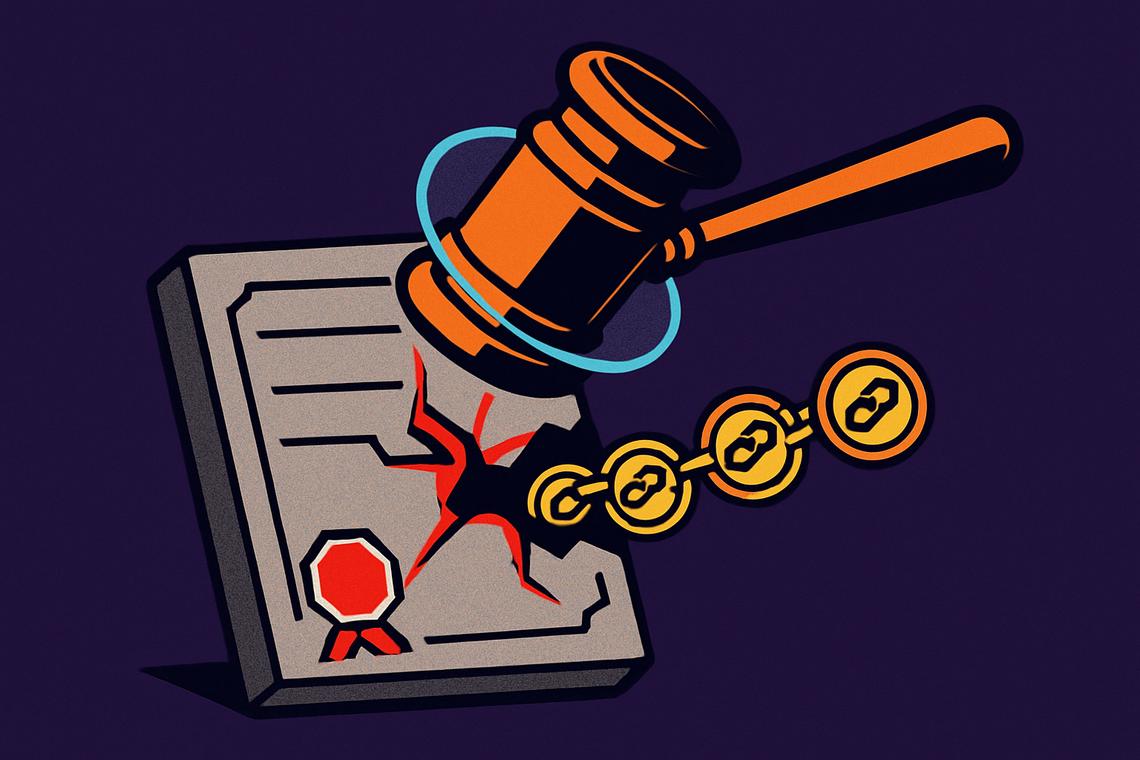
Robinhood’s chief executive is telling Washington it’s time to stop treating tokenized stocks like a side experiment and start building real rules for them. Vlad Tenev argues that Robinhood tokenized stocks already prove the technology works, and he wants U.S. regulators to catch up before American investors get left on the sidelines of a market that’s already moving fast overseas.
Key takeaways
- Robinhood CEO Vlad Tenev called on August 18 for U.S. regulators to build a legal framework for tokenized stocks, warning that America risks falling behind global markets.
- Robinhood already offers more than 2,000 stock tokens to eligible customers in the EU and EEA, backed 1:1 by real shares.
- Robinhood Chain, the company’s Ethereum Layer 2 network, had processed more than 100 million transactions as of April and has amassed roughly 500,000 holders of tokenized equities, according to Crypto Briefing.
- Onchain tokenized equity trading volume hit about $9 billion in 2026, up more than 800% year to date, while The Block reports tokenized stocks’ RWA market share tripled to 15% over the same period.
- The SEC is reportedly preparing an “innovation exemption” that could let approved platforms trade tokenized U.S. stocks 24/7, though no final framework has been announced, according to crypto.news.
Robinhood CEO Calls for U.S. Tokenized Stocks Framework
Tenev’s message is blunt: the U.S. needs legal clarity for tokenized stocks now, not years from now, or it risks watching other markets build the future of ownership around American companies while U.S. investors get none of the benefits. He made the case publicly on August 18, framing the moment as the start of a much bigger shift in how markets function.
Tokenization Supercycle and Market Opportunity
Tenev described the current moment as the early stage of a “tokenization supercycle,” a phrase he used to argue that blockchain-based ownership will eventually touch nearly every corner of finance. His pitch isn’t just about crypto-native assets — it’s about using blockchain rails to power conventional markets, from equities to ETFs. “It would be a strange outcome if the rest of the world could build the future of ownership around American assets while Americans themselves were left behind,” Tenev said.
Regulatory Barriers in U.S. Securities Laws
The obstacle isn’t technical — it’s legal. U.S. securities laws were written for centralized exchanges, brokers and clearinghouses, and putting a stock on a blockchain doesn’t erase those requirements. Robinhood’s own tokenized shares are backed 1:1 by real stocks, but token holders don’t directly own the underlying shares, a distinction that sits at the heart of the regulatory debate.
There are signs the SEC is starting to move. According to crypto.news, the agency is developing a limited “innovation exemption” that could give select platforms temporary relief to test tokenized securities trading around the clock, even on weekends and holidays. SEC Chair Paul Atkins has backed using exemptive authority to bring more activity onchain without stripping tokenized stocks of federal securities oversight, and Commissioner Hester Peirce confirmed in March that staff were drafting a narrower exemption for “limited trading of certain tokenized securities.”
No eligibility criteria, timeline, or final rule has been published, so current law still applies in full. Custody verification, shareholder rights, market surveillance, and how blockchain settlement would interact with the Depository Trust Company’s existing systems remain open questions the SEC has yet to resolve. Two transfer-agent groups have also asked the SEC to separate issuer-backed tokens from unaffiliated third-party products that may not carry the same ownership or voting rights.
Robinhood’s Tokenized Stocks and Blockchain Innovations
Robinhood isn’t waiting for Washington to make the first move — it’s already running a live tokenized stock business abroad and building the infrastructure to scale it. That gap between what’s operating in Europe and what’s legally possible in the U.S. is exactly the tension Tenev is trying to force into the open.
Product Offering in Europe and Backing by Real Stocks
Across the European Union and European Economic Area, Robinhood makes available in excess of 2,000 stock tokens to customers who meet eligibility requirements, giving users blockchain-based exposure to U.S. stocks and ETFs. Each token is backed 1:1 by real shares held by the company, though holders don’t have direct legal ownership of the underlying equity — the same structural distinction regulators are now scrutinizing in the U.S.
Robinhood Chain and Ethereum Layer 2 Infrastructure
On the infrastructure side, Robinhood launched a public testnet for Robinhood Chain, an Ethereum Layer 2 network purpose-built for financial applications, which had processed more than 100 million transactions as of April. According to Crypto Briefing, Robinhood Chain has gathered roughly 500,000 holders of tokenized equities, putting it neck and neck with BNB Chain. Popular tokenized names on the chain include GameStop and Nvidia, both of which already carry heavy retail interest in traditional markets, with individual tokens clearing daily volumes between $500,000 and over $1 million.
Benefits of Tokenized Stocks for Trading and Settlement
The appeal of tokenized stocks comes down to speed and access — features that traditional market plumbing simply wasn’t built to offer. Tenev has framed this as the practical payoff regulators should weigh alongside the ownership questions.
Real-Time Settlement and 24/7 Trading Potential
Tenev pointed directly to the 2021 GameStop trading frenzy, when Robinhood restricted purchases after clearinghouse collateral demands spiked. He argues that real-time, blockchain-based settlement would reduce that kind of pressure by shrinking the gap between when a trade is placed and when it actually clears. U.S. stock settlement currently runs on a one-business-day cycle known as T+1, and Tenev believes tokenization could push that timeline even shorter while lowering collateral requirements in the process.
Solving Traditional Market Challenges
Beyond settlement, Tenev sees tokenization fixing two long-standing friction points. Robinhood already offers 24/5 stock trading in the U.S., but blockchain infrastructure could turn 24/7 trading into a built-in feature rather than a workaround. Asset transfers are the second issue — moving holdings between traditional brokers can take days, while tokens on compatible blockchain wallets can move in a fraction of that time. This is precisely the kind of round-the-clock access the SEC’s proposed innovation exemption is reportedly designed to test, though only for approved platforms under defined conditions.
Market Growth and Future Outlook for Tokenized Equities
The numbers suggest this isn’t a niche experiment anymore — tokenized equities are growing faster than almost any other corner of the real-world asset market, and the growth is broad-based rather than tied to a single platform.
Onchain Tokenized Equity Trading Growth
Onchain tokenized equity trading volume hit roughly $9 billion in 2026, up more than 800% year to date. Separately, The Block reported that tokenized stocks’ share of the broader real-world asset market has tripled since the start of the year to 15%, with total market capitalization around $2.8 billion. Three players — Ondo Finance, Binance’s bStock, and xStocks — now account for about 77% of that market, led by Ondo at $957 million. Holder growth tells a similar story: tokenized stocks reached 1.4 million holders industry-wide, a 448% jump in six months, according to Crypto Briefing, driven largely by the surge on BNB Chain and Robinhood Chain.
Implications of Adoption for Market Infrastructure
Regulated players are already testing pieces of this future inside the existing system. The SEC granted DTCC a no-action letter in December 2025 to run a defined tokenization service for three years covering Russell 1000 stocks, major index ETFs, and U.S. Treasuries, and the depository has since pulled in more than 100 partners for the effort. Nasdaq won SEC approval in March 2026 for a pilot letting select participants trade certain tokenized equities alongside conventional shares under the same rights and pricing, and NYSE has filed its own rule changes to enable tokenized trading. Whether the SEC’s innovation exemption ultimately opens the door to the kind of 24/7, blockchain-native trading Tenev is pushing for — or keeps tokenized stocks confined to narrow, tightly supervised pilots — will shape how much of that $9 billion in volume eventually touches everyday American investors rather than just markets abroad.
FAQ
What are tokenized stocks?
Tokenized stocks are blockchain-based versions of traditional equities backed 1:1 by real stocks, but holders do not directly own those underlying shares.
Why is Robinhood’s CEO pushing for tokenized stocks regulation in the U.S.?
Vlad Tenev is urging regulators to create a framework that allows tokenized stocks so the U.S. doesn’t fall behind global markets, and so features like real-time settlement and 24/7 trading can become available to American investors.
What are the benefits of tokenized stocks over traditional stock trading?
Tokenized stocks allow real-time settlement, round-the-clock trading, and faster asset transfers, addressing settlement delays and limited trading hours that exist in traditional markets.
What is Robinhood Chain?
Robinhood Chain is an Ethereum Layer 2 network built by Robinhood for financial applications. Its public testnet processed more than 100 million transactions as of April, and has gathered roughly 500,000 holders of tokenized equities.
Article produced with the assistance of artificial intelligence and reviewed by the editorial team.




 English (US) ·