
 1 hour ago
13
1 hour ago
13
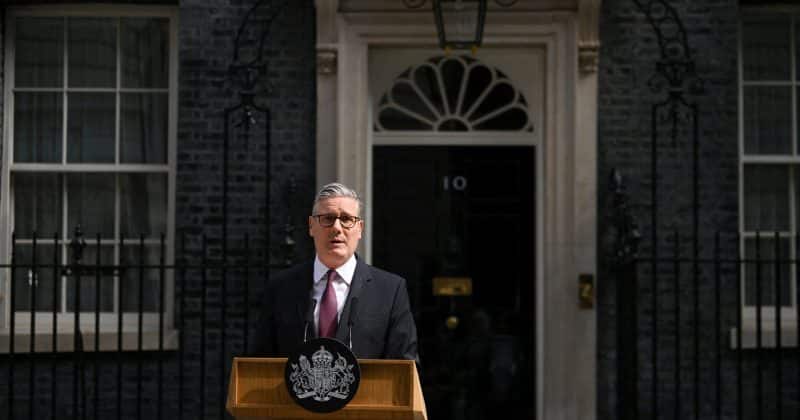
Sir Keir Starmer announced his resignation as both Prime Minister and leader of the Labour Party on June 22, 2026, ending months of escalating internal rebellion that he ultimately could not survive. He delivered the news outside 10 Downing Street after informing King Charles III of his decision.
Starmer will remain in office until a successor is chosen, with the Labour leadership election expected to wrap up before Parliament returns in September 2026. When that new leader takes over, Britain will have cycled through seven prime ministers in roughly a decade.
The revolt that ended a premiership
The final blow came from an unlikely direction: a by-election in Makerfield. Manchester Mayor Andy Burnham won the seat with 54.8% of the vote, a result that energized the party’s internal opposition and made Starmer’s position nearly impossible to defend.
In the aftermath of Burnham’s victory, somewhere between 80 and 90 Labour MPs publicly called for Starmer to either resign or at least lay out a timetable for his departure.
Reports that Starmer was preparing to step down began circulating over the weekend of June 21-22, and by Sunday the resignation was confirmed.
Starmer had previously told his own cabinet that he would not submit to a leadership contest because it would create chaos. He argued that governing stability required him to stay.
A crisis months in the making
The roots of this moment stretch back to at least May 2026, when multiple ministerial resignations signaled that something was deeply wrong inside the government. Then came disappointing local election results that further eroded confidence in Starmer’s leadership.
Starmer’s resignation speech outside Number 10 came after he had informed the King, following constitutional convention.
What this means for UK markets and crypto
The UK’s regulatory framework for digital assets has been developing through institutional channels, primarily the Financial Conduct Authority, rather than through prime ministerial diktat. A change at the top of government doesn’t automatically rewrite the rules.
The leadership contest itself will be worth watching for signals. If the eventual winner comes from Labour’s more interventionist wing, expect tighter regulatory rhetoric around financial services, including crypto. If a more centrist figure prevails, the current trajectory is more likely to hold.
The party expects to have a new leader before September, which means roughly two to three months of political uncertainty.
Disclosure: This article was edited by Editorial Team. For more information on how we create and review content, see our Editorial Policy.





 English (US) ·