
 7 hours ago
8
7 hours ago
8
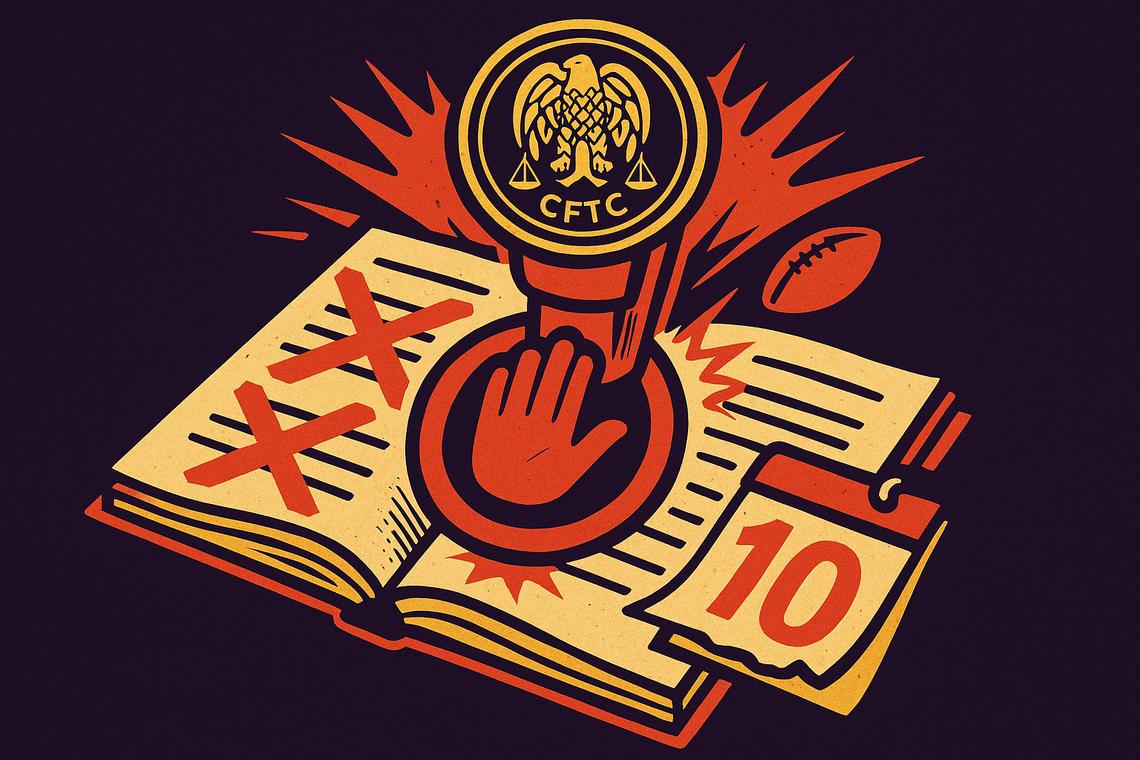
The National Football League is drawing a hard line on sports prediction contracts, pushing federal regulators to do far more than their current proposals allow. In a letter dated July 27 and obtained by prediction markets newsletter The Closing Line, the NFL told Commodity Futures Trading Commission Chair Michael Selig that the agency’s draft framework for event contracts is a step in the right direction — but not nearly enough to protect the integrity of its games or the consumers trading on them.
Key takeaways
- The NFL urged the CFTC to tighten proposed rules on sports prediction contracts, citing risks of manipulation and insider information abuse.
- The league wants a narrower definition of permissible contracts, a ban on margin trading, advertising restrictions, and a minimum participation age of 21.
- The NFL criticized the CFTC’s proposed 10-day review window for self-certified contracts as too short to catch problematic listings.
- Unlike the NHL and MLB, which have partnered with Kalshi and Polymarket, the NFL is actively pressing for tighter oversight of sports-based event contracts.
- CFTC-regulated prediction markets handled over $25 billion in trading volume in 2025, with new contract listings surging from roughly 1,600 to 162,000 daily between April 2025 and April 2026.
NFL demands stronger CFTC rules to protect game integrity
“The NFL’s highest priority is preserving the integrity of our games,” the league wrote in the letter, adding that this integrity is equally vital to the “stable and orderly administration” of event contracts tied to NFL games and to the protection of traders in those markets. The submission arrived as the CFTC closed its public comment period on proposed amendments to Rule 40.11 — a federal framework for reviewing event contracts linked to gaming, war, terrorism, assassination, and other activities identified in the Commodity Exchange Act.
The NFL acknowledged the CFTC’s draft contains useful proposals, but argued it falls short in several specific areas that matter most for sports integrity.
Calls for tighter limits on manipulable sports contracts
The league’s sharpest concerns target contracts that are inherently vulnerable. According to The Closing Line, the NFL wants strict restrictions on any contract that could be influenced by a single participant, that depends heavily on officiating decisions, or where the outcome could become known to insiders before it reaches the public. These are not abstract concerns — they describe categories of bets that could directly incentivize misconduct by players, coaches, or officials.
On market manipulation and insider trading, the NFL also called for explicit rules governing the use of material non-public information. Rather than allowing individual platforms to develop their own monitoring systems, the league recommended mandatory league-specific prohibited bettor lists — a more centralized and enforceable approach to keeping bad actors out of sports-linked markets.
Request to narrow permissible contract definitions to exclude gambling
The NFL pushed the CFTC to draw a cleaner boundary between legitimate event contracts and what the league sees as thinly veiled gambling. “The Commission must refine the proposed definition for contracts based on events that cannot be meaningfully differentiated from activities that are clearly gaming activity,” the letter reportedly said. Awards markets also came under scrutiny — the NFL questioned why contracts tied to honors like “Offensive Player of the Year” should be permitted simply because a voting panel determines the outcome, rather than competitive play.
Criticism of the CFTC’s 10-day self-certification review period
One of the NFL’s most pointed procedural objections concerns timing. The CFTC’s proposal gives exchanges a 10-day review period for newly self-certified contracts before they go live. The NFL argued that window is far too short — and potentially worse, that it could effectively immunize already-listed contracts before regulators have had enough time to assess them properly. The league also reiterated a set of consumer-protection proposals it has raised before: a ban on margin trading for sports event contracts, advertising restrictions, and a minimum participation age of 21.
CFTC advances federal regulatory framework for event contracts
The CFTC, under Chair Selig — a 2025 Trump appointee — has moved in the opposite direction from restriction. The agency has withdrawn a 2024 proposal that would have banned sports and political event contracts, defended its exclusive federal jurisdiction against state-level challenges in court, and is now building a structured regulatory path that treats prediction markets as legitimate derivatives.
Contract-specific submissions replace broad self-certifications
On July 24, the CFTC’s Division of Market Oversight issued its second compliance advisory of the year, warning exchanges against submitting broad, template-style self-certifications that cover large groups of event contracts in a single filing. Instead, designated contract markets must now provide contract-specific terms, settlement methods, data sources, and legal analysis for each individual product they intend to list. The advisory did not eliminate the self-certification process — exchanges can still introduce qualifying event contracts without prior Commission approval — but it significantly raised the bar for what constitutes an acceptable filing.
Proposed Rule 40.11 establishes a three-step review process
The proposed amendments to Rule 40.11 would formalize a three-step review process. Regulators would first determine whether a product qualifies as an event contract, then assess whether its settlement depends on activities covered under the Commodity Exchange Act, and finally apply public-interest factors before deciding whether the contract should proceed. According to legal analysis from Ropes & Gray cited by crypto.news, the proposal would review contracts individually rather than prohibiting entire categories in advance, and would distinguish “games” from “contests” — placing elections and award events outside the proposed gaming definition.
CFTC’s defense against state-level restrictions and litigation
The regulatory picture is further complicated by active litigation. The CFTC has gone to court defending federal jurisdiction over prediction markets against state attempts to restrict them — most recently in a case involving Minnesota. Kalshi and Polymarket have filed similar requests for temporary relief while their own legal challenges proceed. A ruling in Minnesota’s favor could open the door for other states to effectively block federally regulated prediction markets within their borders, fracturing what the CFTC is trying to build as a unified national framework.
This is where the stakes get genuinely significant. If federal oversight prevails, platforms like Kalshi and Polymarket operate under one consistent ruleset nationwide. If states win, the market fragments — and the regulatory clarity the CFTC is trying to provide collapses before it ever fully takes shape.
Contrasting approaches among major sports leagues and market trends
NFL opposes prediction market partnerships unlike NHL and MLB
The NFL’s position stands in sharp contrast to other major American sports leagues. The National Hockey League and Major League Baseball have both entered commercial partnerships with prediction market platforms, including Kalshi and Polymarket, effectively embracing the sector as a revenue and engagement opportunity. The NFL has taken the opposite approach — in March, the league sent letters directly to Kalshi and Polymarket asking them to withdraw several sports contract offerings. Its July 27 letter to the CFTC continues that strategy, using the regulatory process rather than direct commercial pressure to push for change.
Rapid growth in contract listings and trading volumes under CFTC oversight
The scale of what the NFL is trying to slow down is substantial. CFTC data cited in its March rulemaking notice showed registered exchanges listed an average of roughly five event contracts per year between 2006 and 2020. That figure jumped to 131 contracts in 2021, and reached approximately 1,600 new contracts during 2025. More recent testimony referenced in the rulemaking process estimated that CFTC-regulated prediction markets handled more than $25 billion in trading volume during 2025. On one major platform, daily contract listings increased from around 1,600 in April 2025 to roughly 162,000 by April 2026 — a growth rate that illustrates exactly why the NFL sees the current regulatory window as urgent.
The NFL’s push for tighter rules on sports prediction contracts ultimately raises a question the CFTC cannot avoid: at what point does market growth outpace the safeguards designed to contain it? The comment period has closed, but the rulemaking process is still open — and how the agency responds to the NFL’s specific demands, particularly on the review timeline and manipulation thresholds, will signal how seriously it takes sports integrity concerns against the backdrop of a sector that has grown from niche derivatives product to a $25 billion annual market in just a few years.
FAQ
Why is the NFL urging the CFTC to tighten rules on sports prediction contracts?
The NFL wants stronger safeguards to protect game integrity and consumers from risks such as manipulation, insider information abuse, and contracts that effectively function as gambling products rather than legitimate derivatives.
What specific changes does the NFL want in CFTC’s proposed regulations?
The NFL is seeking stricter limits on contracts vulnerable to manipulation or officiation-dependent outcomes, a narrower definition of permissible contracts that excludes de facto gambling activities, a ban on margin trading, advertising restrictions, a minimum participation age of 21, explicit rules on material non-public information, and mandatory league-specific prohibited bettor lists.
How does the NFL’s position differ from other sports leagues regarding prediction markets?
Unlike the NHL and MLB, which have entered commercial partnerships with prediction market platforms including Kalshi and Polymarket, the NFL has consistently opposed many sports-related event contracts and has used both direct outreach to platforms and formal regulatory comment letters to press for tighter oversight.
What is the CFTC’s current approach to regulating event contracts and prediction markets?
The CFTC is building a federal regulatory framework under proposed Rule 40.11 amendments, requiring contract-specific review submissions from exchanges rather than broad self-certifications, and defending federal jurisdiction over prediction markets against state-level restrictions in court. Chair Michael Selig has supported treating qualifying prediction markets as legitimate derivatives subject to federal oversight rather than state gambling laws.
Article produced with the assistance of artificial intelligence and reviewed by the editorial team.







 English (US) ·