
 3 hours ago
20
3 hours ago
20
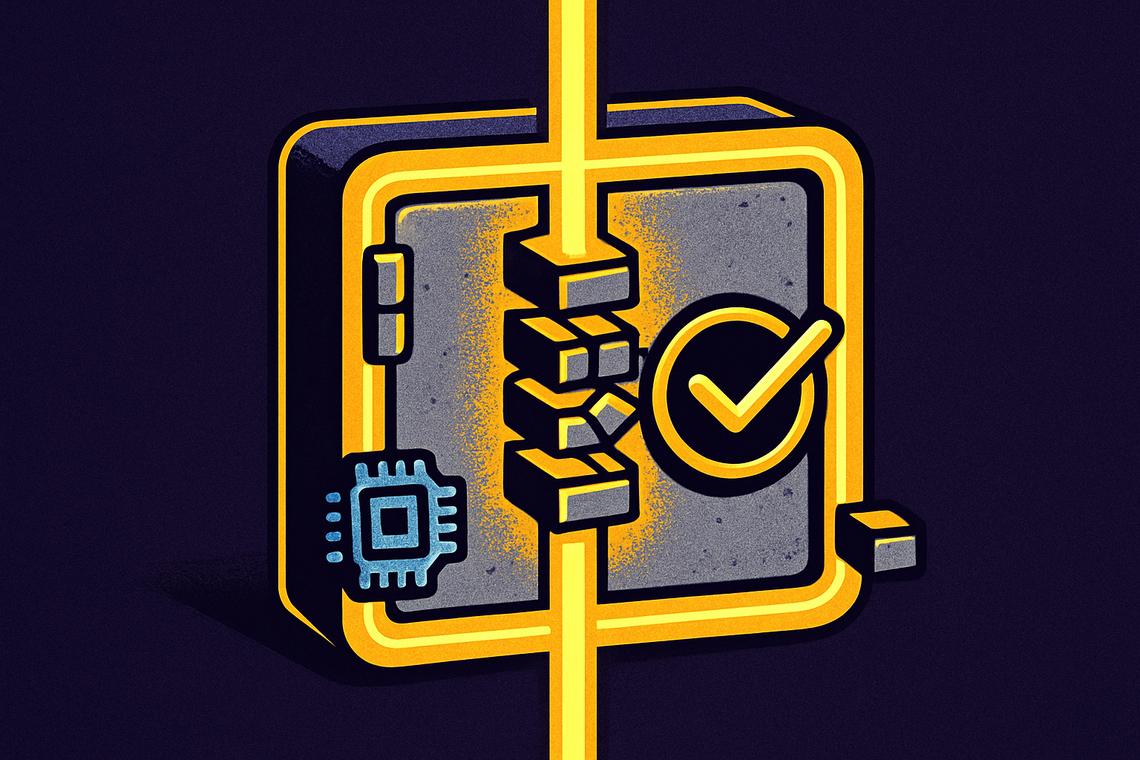
Blockchain networks have spent years promising to become the backbone of autonomous AI systems, but most of that talk has stayed theoretical. At its Basecamp event, Sui Network moved the conversation into demonstrable territory, showing off Sui atomic transactions capable of bundling more than a thousand operations into a single, all-or-nothing action built specifically for AI agents that need to authenticate, fetch data, and settle payments without human oversight at every step.
Key takeaways
- Sui’s Programmable Transaction Blocks (PTBs) can execute up to 1,024 Move function calls atomically in one transaction.
- Transactions on Sui finalize in roughly 400 milliseconds, fast enough for real-time AI decision-making.
- During livestream experiments, Sui hit a peak throughput of 6,086,766 transactions per second, driven by AI agent activity.
- Sui is a launch partner for Google’s Agentic Payments Protocol (AP2), a framework for secure, verifiable AI-driven transactions.
- Future Basecamp events are scheduled in Dubai in May 2025 and Singapore in October 2026, marking a push into major AI and blockchain hubs.
Sui Network Demonstrates Advanced Atomic Transactions
Sui’s atomic transaction model lets a single transaction complete fully or fail entirely, with no in-between state. At Basecamp, the network showed how its Programmable Transaction Blocks can chain together as many as 1,024 Move function calls inside one atomic transaction, effectively letting complex, multi-step operations behave like a single instruction.
That structure matters most when the transaction involves an autonomous decision-maker rather than a person clicking through steps one at a time. An AI agent can authenticate its identity, pull the data it needs, run financial logic, and settle the outcome, all within one continuous action. If any part of that sequence breaks, the whole thing rolls back instead of leaving funds or data stuck in limbo.
It’s a bit like a vending machine that won’t take your money unless it can also guarantee the snack drops. There’s no such thing as a half-finished purchase or a lost transaction sitting in a queue somewhere.
Why This Matters for Autonomous AI
AI agents are increasingly expected to operate without a human approving each move, which creates a problem for most existing blockchain infrastructure. Traditional chains generally aren’t designed to handle the kind of sequential, interdependent logic that autonomous systems require when they’re making decisions and executing transactions on their own. Sui’s atomic transaction design is aimed squarely at closing that gap.
Performance Metrics Highlight Scalability for Real-Time AI
Speed and throughput are what turn atomic execution from a nice idea into something usable at scale, and Sui’s numbers suggest the network is built for exactly that kind of load. Transactions finalize in roughly 400 milliseconds, a window fast enough to fit between two heartbeats, which becomes meaningful when autonomous agents are making split-second calls in financial or data-sensitive settings.
Sub-Second Finalization Time
That sub-second finality is what separates a blockchain suited for real-time AI decision-making from one that simply can’t keep up. Agents negotiating prices, verifying data, or executing trades autonomously don’t have the luxury of waiting several seconds, let alone minutes, for confirmation.
Peak Throughput Achieved in Experiments
The scalability figures from Basecamp are harder to dismiss. In the course of livestream testing, Sui achieved a maximum transaction capacity of 6,086,766 transactions per second, generated specifically by AI agent operations. That number, produced under controlled experimental conditions rather than sustained production traffic, still sets a bar that few competing networks would be able to match under similar circumstances.
Strategic Partnership with Google Expands AI Commerce Capabilities
Sui has secured a position inside what could become a defining piece of infrastructure for AI-driven commerce: Google’s Agentic Payments Protocol, known as AP2. Sui is a launch partner for the framework, which is designed to let AI agents carry out transactions securely and verifiably rather than relying on opaque, unauditable processes.
Launch Partner for Google’s Agentic Payments Protocol
Being named a launch partner puts Sui in an early position within a system that Google is positioning for broader adoption across AI commerce use cases. The practical value for Sui lies in the network effect: if AP2 gains traction among developers building agentic payment systems, Sui’s atomic transaction architecture becomes one of the settlement layers underneath it.
Verifiable and Auditable Records for AI Actions
The case for using Sui in this context rests heavily on verifiability. Autonomous systems need execution environments where any outside party, whether a regulator, a business partner, or another AI agent, can confirm exactly what happened and when. Sui’s on-chain state model paired with its atomic transaction structure is built to provide that kind of shared, auditable record, which is a meaningful requirement as AI-driven commerce moves from pilot projects toward real financial activity.
This is where the broader significance of the announcement sits. If AI agents are going to move money or execute contracts on their own, the infrastructure underneath them needs to be trustworthy enough that a dispute can be resolved by checking the record rather than taking anyone’s word for it. Atomic execution combined with auditability is Sui’s answer to that requirement.
Ecosystem Growth Through Basecamp Events in Dubai and Singapore
Sui’s next moves point toward regions where AI and blockchain regulation are both actively evolving. The forthcoming Basecamp gatherings are planned to take place in Dubai during May 2025 as well as Singapore in October 2026, a sequence that suggests a deliberate push into markets with significant institutional interest in both technologies.
Beyond AI-specific applications, the PTB architecture has relevance for a much wider set of developers. Any workflow that depends on complex, conditional logic executing reliably, think multi-party settlements, conditional lending arrangements, or composable DeFi strategies, benefits from the same atomic guarantees that make the AI use case work in the first place.
What happens next depends largely on adoption speed rather than technical capability. The 6 million-plus TPS figure was achieved through AI agent-driven load in a controlled experiment, and the more relevant question going forward is how quickly third-party developers start building on PTBs for actual AI agent use cases, and whether the Google AP2 partnership turns into measurable transaction volume rather than just a strategic headline.
FAQ
What are Programmable Transaction Blocks (PTBs) in Sui Network?
PTBs let Sui execute up to 1,024 Move function calls atomically in a single transaction, enabling complex multi-step operations to complete fully or roll back entirely.
Why are atomic transactions important for AI agents?
Atomic transactions ensure AI agents can perform authentication, data retrieval, execution of logic, and settlement all in one action, avoiding partial or failed states.
How fast do Sui Network transactions finalize?
Transactions finalize in approximately 400 milliseconds, fast enough for real-time autonomous AI decision making.
What is the significance of the Google partnership for Sui?
Sui is a launch partner for Google’s Agentic Payments Protocol, enabling secure, verifiable AI agent transactions on its blockchain.
Article produced with the assistance of artificial intelligence and reviewed by the editorial team.



 English (US) ·