
 3 months ago
36
3 months ago
36
- NFT market projected to reach $10.31 billion by 2030 with strong growth trajectory
- Enterprise adoption and metaverse integration driving real demand
- Market shakeout removes speculation, leaving stronger infrastructure behind
The NFT market isn’t just recovering, it’s quietly shifting into something a lot more structured, maybe even a bit more serious than before. According to recent projections, the sector is expected to grow from about $4.07 billion today to over $10 billion by 2030, and that kind of expansion doesn’t really happen on hype alone.
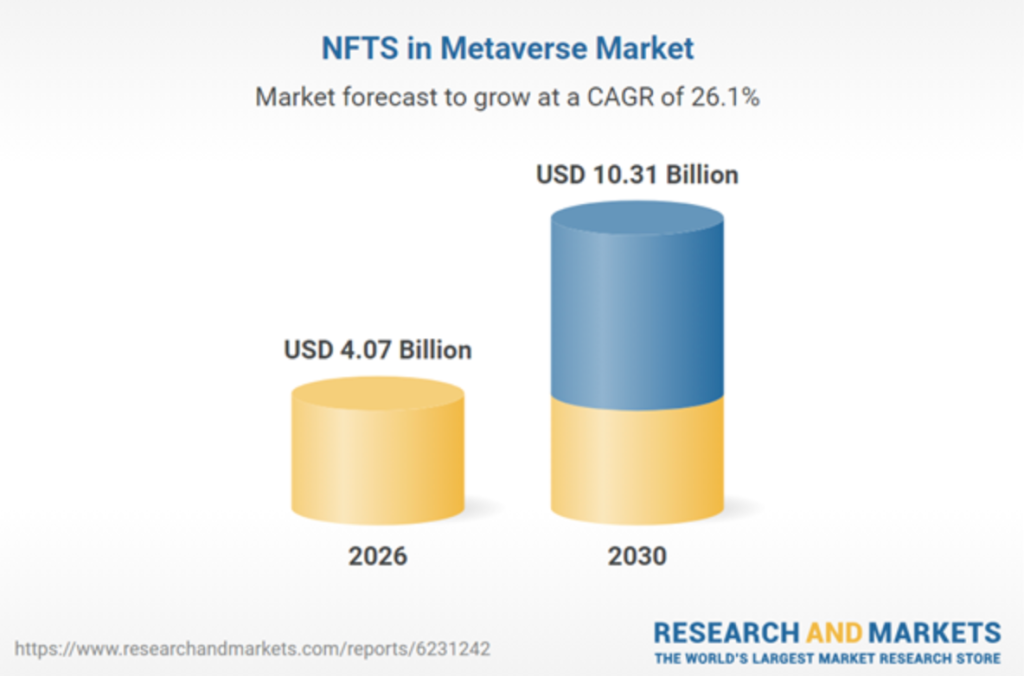
What’s different this time is that the growth is being driven less by retail speculation and more by actual use cases, which feels like a subtle but important change.
From Hype Cycle to Real Infrastructure
Back in 2024, digital art and collectibles alone generated close to $8.8 billion in sales, which shows the demand never really disappeared, it just got buried under noise. Now that the speculative layer has thinned out, what’s left is a clearer picture of where value is actually being built.
Instead of quick flips and short-term trades, the focus is shifting toward ownership infrastructure, things like verifiable assets, persistent identities, and interoperable systems that can function across platforms.
Big Players Build the Next Phase
The involvement of major companies is also changing how this space looks and feels. Yuga Labs pushing forward with Otherside, alongside partnerships tied to large gaming ecosystems, signals a move toward immersive environments where NFTs aren’t just collectibles, but functional assets inside virtual worlds.
At the same time, platforms like Meta, Roblox, and Epic Games are embedding digital ownership deeper into their ecosystems, which brings NFTs into environments with hundreds of millions of users. That scale alone changes the conversation, this isn’t niche anymore, even if it still feels early.
Why This Growth Looks Different
The core drivers behind this projected growth are becoming easier to identify, virtual real estate, marketplace infrastructure, and standards that allow assets to move across different platforms. Enterprises are starting to see NFTs less as speculative tools and more as a way to anchor digital ownership for users.
That kind of shift doesn’t happen overnight, but it builds steadily, and once it takes hold, it tends to stick.
A Market That’s Growing Up
The closure of smaller NFT platforms might look negative at first glance, but it’s more of a consolidation phase than a collapse. Every emerging market goes through this, weaker players fade out, and stronger systems take their place, usually with better funding and clearer direction.
What remains now is a more mature ecosystem, one that’s slowly being shaped by long-term builders rather than short-term traders. If the projections hold, the next few years won’t look like the last cycle at all, they’ll likely feel slower, steadier, and maybe a bit less chaotic, but also more sustainable.
Disclaimer: BlockNews provides independent reporting on crypto, blockchain, and digital finance. All content is for informational purposes only and does not constitute financial advice. Readers should do their own research before making investment decisions. Some articles may use AI tools to assist in drafting, but every piece is reviewed and edited by our editorial team of experienced crypto writers and analysts before publication.







 English (US) ·