
 2 hours ago
9
2 hours ago
9
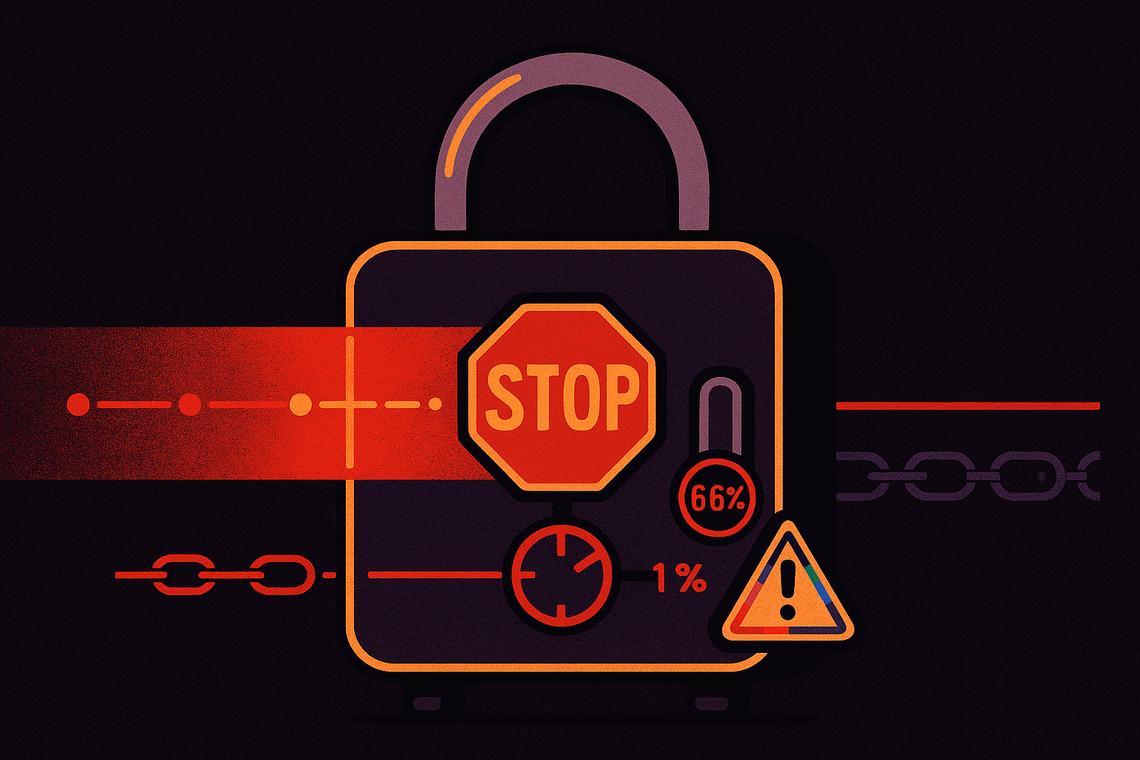
Most DeFi protocols rely on human teams, manual circuit breakers, or external oracles to catch problems before they spiral. THORChain takes a different approach — one where the network itself is the first line of defense. The protocol’s continuous THORChain solvency checks run at all times, across every vault, on every connected blockchain, without waiting for anyone to notice something is wrong.
Key takeaways
- THORChain runs continuous solvency checks on every vault across all connected chains, with each node independently comparing expected versus actual on-chain balances.
- A 1% discrepancy threshold triggers a flag from any individual node; if more than 66% of nodes agree, trading on the affected chain halts automatically.
- The halt is triggered entirely by code — no manual intervention, no external party request required.
- Before signing outbound transactions, nodes simulate the impact on vault balances and refuse to sign if the result would cause insolvency.
- A security alert fires to the THORSec monitoring channel after a halt, escalating the issue to human investigators.
Continuous Solvency Monitoring Across Chains
The foundation of the system is straightforward but powerful. Every node in the THORChain network independently compares what the protocol believes it holds against what is actually sitting in the corresponding on-chain wallet. This happens constantly — not on a scheduled basis, not when triggered by an event, but as an ongoing background process across every vault and every connected chain simultaneously.
The threshold for concern is tight. If the real balance falls more than 1% below the expected balance, that node flags the discrepancy. This isn’t a rough estimate or a lagging indicator — it’s a direct, chain-level comparison that each node runs on its own, independently of the others.
Independent Node Balance Verification
The independence of each node matters more than it might initially seem. Because every node performs its own comparison without relying on a central reporter or aggregator, the system avoids a single point of failure. There is no master process that could be corrupted or delayed. Each node either sees a problem or it doesn’t, and that individual judgment feeds directly into the broader consensus mechanism.
Flagging Threshold and What It Means in Practice
A single node flagging a 1% discrepancy doesn’t immediately stop anything — the design requires broader agreement before action is taken. That agreement threshold is set at more than 66% of nodes flagging the same discrepancy. Once that supermajority is reached, trading on the affected chain halts automatically. The decision is made by the network, not by any individual operator.
Automated Trading Halt via Node Consensus
When the 66% consensus threshold is crossed, the halt executes without human involvement. The system doesn’t send a request to a team member, doesn’t wait for a multisig approval, and doesn’t require anyone to be awake or online. The halt is triggered by code alone.
This architecture makes the response time effectively instantaneous relative to human reaction speeds. The moment node consensus reaches the threshold, trading stops. That’s the design intent: remove the latency and uncertainty that come with human decision-making during a live incident.
Protocol-Driven Halt Triggers
One of the more significant design choices embedded in this system is that the halting mechanism responds exclusively to protocol state. It cannot be triggered by an external party asking to freeze specific funds. There is no backdoor, no governance vote required in the moment, and no admin key that can selectively pause activity based on outside pressure. The system either sees a solvency problem or it doesn’t — and only the former causes a halt.
This distinction matters considerably for the broader DeFi ecosystem. The inability to freeze funds on external request is often framed as a vulnerability in decentralized protocols, particularly by regulators and institutions concerned about illicit finance. THORChain’s architecture essentially makes this a non-option by design — the halt mechanism is structurally incapable of responding to that kind of instruction. That’s a philosophical and technical commitment baked into the protocol itself.
Proactive Insolvency Prevention and Security Alerts
The reactive monitoring layer is only half the picture. THORChain also operates a proactive check that runs before any outbound transaction is signed. Each node simulates the effect of a proposed transaction on vault balances before committing to it. If the simulation shows the transaction would leave the vault insolvent, the node refuses to sign — and the same alert system that handles balance discrepancies fires immediately.
Simulated Transaction Impact Before Signing
This pre-signing simulation is a meaningful safeguard against a specific class of risk: transactions that appear legitimate on their face but would drain a vault below safe operating levels. By running the simulation first, nodes can catch the problem before it becomes irreversible. No single node can be compelled to sign something that its own calculation identifies as dangerous.
Human Investigation via THORSec Monitoring
Automation handles the immediate response, but humans still play a role once the dust settles. After a halt — whether triggered by a balance discrepancy or a refused transaction — a security alert fires to the THORSec monitoring channel, where the team can investigate the underlying cause. The automated layer stops the bleeding; the human layer figures out what happened and what comes next.
The combination is worth noting analytically. Fully automated systems can sometimes halt incorrectly, or fail to halt when edge cases slip past the detection logic. By keeping human investigators in the loop post-incident, the protocol preserves the ability to interpret context that code alone cannot evaluate — without sacrificing the speed advantage of automation in the critical first moments.
For a DeFi ecosystem still absorbing the lessons of repeated high-value exploits, the architecture THORChain has built here represents a concrete attempt to shift the odds. Whether the 66% consensus threshold proves robust enough against adversarial conditions — or whether edge cases eventually test its limits — remains the open question that will determine how the model holds up over time.
FAQ
How does THORChain ensure the solvency of its vaults?
THORChain continuously checks vault solvency across all connected chains by having each node independently compare expected protocol balances with actual on-chain wallet balances. This process runs at all times without requiring any manual trigger.
What happens if a vault’s real balance falls below the expected amount?
If a real balance drops more than 1% below the expected balance, the node flags the discrepancy. If more than 66% of nodes identify the same issue, trading on that chain halts automatically — entirely through code, with no human intervention needed.
Can THORChain halt trading based on external requests?
No. The halting mechanism is driven entirely by the protocol’s internal state. It cannot be activated by outside parties requesting that specific funds be frozen. The system responds only to what it measures directly on-chain.
What actions do nodes take to prevent vault insolvency before signing transactions?
Before signing any outbound transaction, each node simulates the transaction’s effect on vault balances. If the simulation shows the transaction would render the vault insolvent, the node refuses to sign and triggers a security alert to the THORSec monitoring channel for human investigation.
Article produced with the assistance of artificial intelligence and reviewed by the editorial team.






 English (US) ·