
 1 month ago
41
1 month ago
41
- Justin Sun criticized WLFI’s governance proposal, calling it coercive and misleading
- The proposal introduces long-term token lockups and controversial voting conditions
- Ongoing tensions between Sun and WLFI highlight deeper concerns around control and transparency
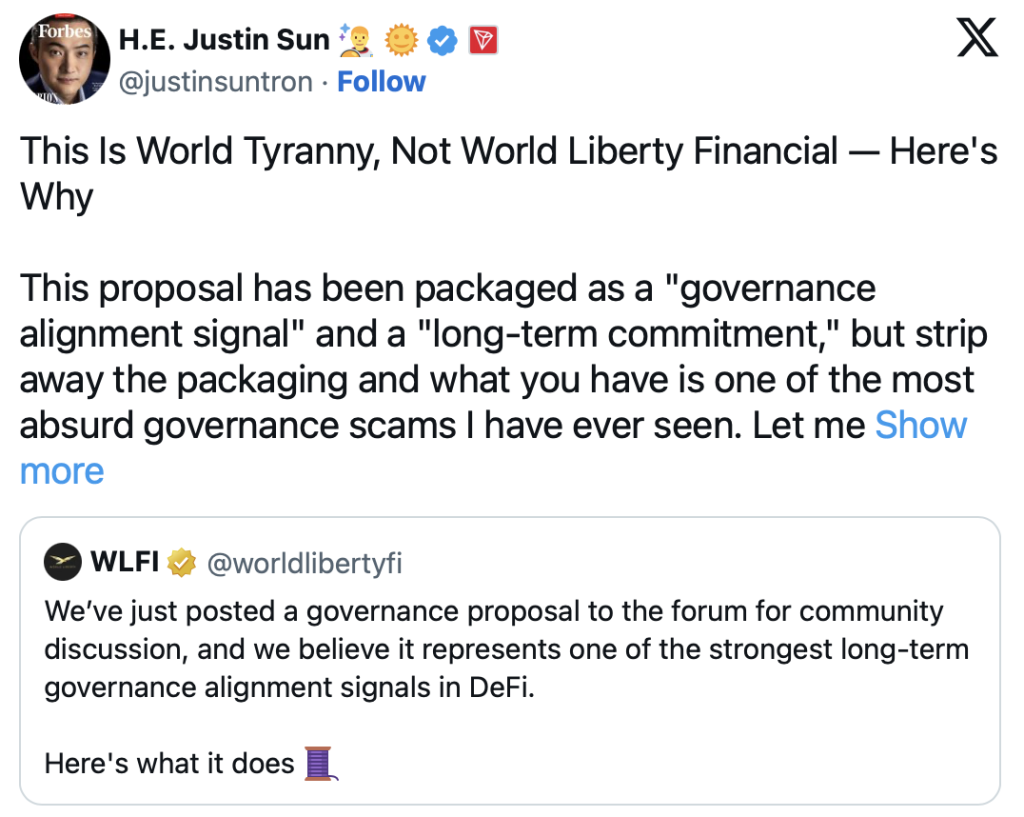
Justin Sun isn’t exactly known for staying quiet—and this time, he’s going straight at a Trump-backed crypto project. The TRON founder recently took to social media to criticize World Liberty Financial (WLFI), even going as far as calling it “World Tyranny,” which… yeah, not subtle at all. The comments came shortly after WLFI introduced a new governance proposal that could significantly reshape how its tokens are structured.
At the center of it is a plan affecting over 62 billion WLFI tokens. On paper, it’s framed as a long-term alignment move, but the reaction—especially from Sun—suggests not everyone is buying that narrative.
Token Lockups Spark Controversy
The proposal outlines a vesting structure that would impact both early supporters and insiders. Those holding around $17 billion worth of WLFI tokens would be moved into a two-year lockup period, followed by a gradual release over the next two years. Meanwhile, advisors, partners, and team members would face an even longer timeline—two years locked, then a three-year linear vest.
It sounds structured, maybe even disciplined, but critics argue it comes with strings attached. Sun, in particular, was quick to push back, saying the whole thing feels less like governance and more like… control wrapped in nicer language.
“This Isn’t Voting,” Sun Says
What really triggered Sun’s response wasn’t just the vesting model—it was how the proposal handles voting. According to him, participants who vote against the proposal risk having their tokens effectively locked indefinitely. That, he argues, crosses a line.
He didn’t mince words either. Calling it “one of the most absurd governance scams” he’s seen, Sun framed the system as coercive rather than democratic. In his view, if the outcome is already tilted before votes are even cast, then the process itself becomes questionable, at best.
Concerns Over Control and Transparency
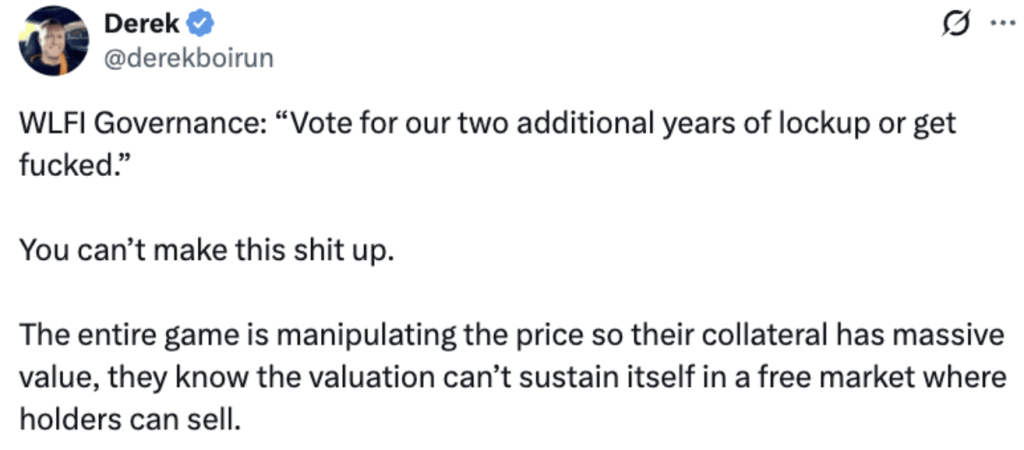
Digging deeper, Sun also pointed out structural concerns around WLFI’s governance setup. He claimed that voting power is unevenly distributed—mentioning his own stake of around 4%—and suggested that certain user groups may be effectively excluded from meaningful participation.
Then there’s the issue of control. Reports indicate that a small group of anonymous multisig holders manage key smart contract decisions, while a single unidentified account holds the authority to block addresses. For critics, that combination raises eyebrows… especially when compared to voters who must verify their identities just to participate.
Feud Escalates as Market Watches Closely
This isn’t happening in isolation either. The tension between Sun and the WLFI team has been building for a while now. In previous exchanges, Sun described the project as a “trap door marketed as an open door,” while WLFI responded with legal threats—clearly not backing down.
Despite all the noise, WLFI’s token hasn’t collapsed. It’s still trading around $0.08066, with a modest uptick over the past day. So while the debate around governance and transparency continues, the market, at least for now, seems to be taking it in stride… or maybe just waiting to see what happens next.
Disclaimer: BlockNews provides independent reporting on crypto, blockchain, and digital finance. All content is for informational purposes only and does not constitute financial advice. Readers should do their own research before making investment decisions. Some articles may use AI tools to assist in drafting, but every piece is reviewed and edited by our editorial team of experienced crypto writers and analysts before publication.






 English (US) ·