
 1 month ago
48
1 month ago
48
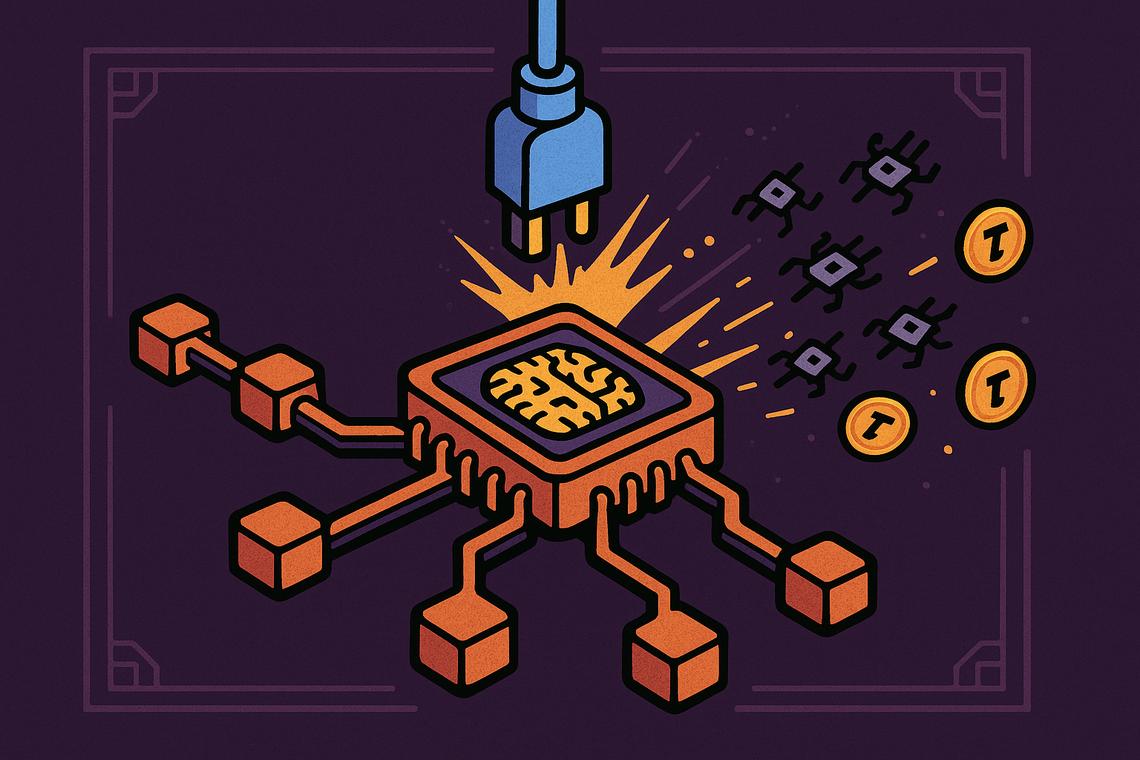
When Yat Siu addressed the SuperAI summit in Singapore, he didn’t offer a cautious corporate forecast. He laid out a vision where Asia leads the AI-blockchain convergence — and backed it with a $10 million check.
Key takeaways
- Yat Siu, cofounder of Animoca Brands, envisions up to 200 billion autonomous AI agents operating on blockchain infrastructure in the future.
- Animoca Brands launched a $10 million fund targeting early-stage agentic AI ventures around June 1, 2025.
- The company has supported over 600 projects across AI and blockchain since pivoting from mobile gaming in 2018.
- Asia’s regulatory environments — spanning Singapore, Hong Kong, Japan, and South Korea — give the region a structural advantage in crypto and AI adoption.
- Early-stage funds like Animoca’s often signal where institutional capital moves 12 to 18 months later.
Asia’s Leadership in AI and Blockchain Fusion
Asia leads the AI-blockchain convergence not simply because of technological edge, but because of how the region treats financial experimentation. Siu’s argument at the June 10–11 SuperAI summit was structural and cultural before it was technical — and the evidence across Asia’s major financial hubs backs him up.
Cultural and Regulatory Advantages in Asia
In Western regulatory circles, crypto still provokes deep institutional resistance. Asia operates differently. Hong Kong has been actively courting crypto firms, positioning itself as a hub for digital asset businesses that face more friction elsewhere. Japan built a regulatory framework for digital assets that predates most Western equivalents. South Korea’s retail crypto trading volumes consistently rival those of economies far larger in raw GDP terms.
The contrast isn’t subtle. Where U.S. regulators have spent years in adversarial tension with the crypto industry, Asian governments have generally moved toward frameworks that enable rather than obstruct. That difference in posture creates a faster lane for adoption.
Key Regional Developments in AI and Crypto
Singapore anchors the broader innovation story. The city-state now hosts events like SuperAI, which draws global attention to Asia as a serious center for frontier technology. That kind of convening power matters — it shapes where talent pools, capital concentrates, and partnerships form.
Taken together, Singapore’s event infrastructure, Hong Kong’s crypto-friendly posture, Japan’s early regulatory clarity, and South Korea’s retail-driven market depth create an ecosystem that the West hasn’t yet matched. Siu’s point at SuperAI was precisely this: when adoption environments are culturally primed for new financial tools, integration accelerates in ways that technology alone cannot explain.
Yat Siu’s Vision of Autonomous AI Agents on Blockchain
The number Siu put on the table — 200 billion autonomous AI agents — is not a conservative estimate. It’s a thesis about the next phase of economic infrastructure.
The Scale and Capabilities of Future AI Agents
These are not conversational bots handling customer service queues. The agents Siu describes would autonomously negotiate, transact, and execute commerce — managing supply chains, settling financial contracts, and handling digital assets without waiting for a human to click approve. The blockchain layer provides the trust infrastructure these agents would need: verifiable, programmable, and resistant to manipulation.
At 200 billion agents, you’re talking about a network that dwarfs the current human population many times over. Even a fraction of that scale operating in financial markets would represent a fundamental shift in how economic activity gets organized.
Economic Implications of AI Autonomy
The implications run deeper than efficiency gains. If autonomous agents can negotiate and execute contracts independently, the need for intermediaries — brokers, clearinghouses, certain classes of financial services — changes structurally. Blockchain rails provide the settlement layer that makes trustless agent-to-agent commerce technically feasible.
This is where Siu’s vision connects directly to Animoca’s investment thesis. Blockchain isn’t just a record-keeping tool in this framework — it becomes the operating environment for machine-driven economic activity. The question of who builds that environment, and under which regulatory conditions, is precisely why Asia’s current positioning matters.
Animoca Brands’ Strategic Investment in Agentic AI
Animoca Brands isn’t positioning this vision from the sidelines. The company put capital behind the thesis before Siu took the stage in Singapore.
The $10 Million Agentic AI Fund Launch
Around June 1, roughly a week before the SuperAI summit, Animoca Brands launched a $10 million fund dedicated to early-stage agentic AI ventures. The fund targets startups building at the intersection of AI autonomy and blockchain infrastructure — the exact territory Siu described as the next major economic layer.
The timing is deliberate. Early-stage funds from strategically positioned firms tend to function as leading indicators. Institutional capital typically follows the signal set by well-networked early movers by 12 to 18 months. Animoca’s move into agentic AI at this scale and moment is worth reading as a directional marker for where serious money flows next.
Company Evolution and Impact in AI and Blockchain
Animoca’s credibility here comes from a documented track record of pivoting early and correctly. The company launched as a mobile gaming outfit in 2014. Around 2018, it made a hard turn into blockchain gaming and NFTs — a move that looked eccentric at the time and prescient within a few years.
Since that pivot, Animoca has financially supported over 600 projects spanning AI and blockchain. That breadth of portfolio exposure gives the company pattern recognition that pure-play investors lack. When a firm with that network launches a focused fund on agentic AI, it’s signaling something about where the next convergence is happening — and it’s signaling it from a region that’s already built the regulatory and cultural conditions to receive it.
FAQ
What is the significance of the 200 billion autonomous AI agents prediction?
Yat Siu envisions a future economic shift where hundreds of billions of AI agents operate autonomously on blockchain, negotiating and executing commerce without human intervention. At that scale, blockchain infrastructure would serve as the foundational trust layer for machine-driven economic activity.
How is Asia positioned to lead in AI-blockchain integration?
Asia’s financial culture is less polarized toward crypto than Western markets, with supportive regulatory environments in Singapore, Hong Kong, Japan, and South Korea facilitating faster adoption. These conditions allow innovation to move from concept to deployment more quickly than in regions where regulatory friction is higher.
What is the purpose of Animoca Brands’ $10 million fund?
The fund targets early-stage startups working at the intersection of AI autonomy and blockchain infrastructure. It is designed to nurture the companies building the foundational layer for agentic AI commerce, and is seen as a leading indicator of broader institutional capital flows in the sector.
How has Animoca Brands evolved over time?
Animoca Brands started as a mobile gaming company in 2014 and pivoted into blockchain gaming and NFTs around 2018. Since that transition, it has supported over 600 projects across AI and blockchain, building one of the most extensive portfolios at the intersection of these technologies.
Article produced with the assistance of artificial intelligence and reviewed by the editorial team.




 English (US) ·