
 4 months ago
71
4 months ago
71
- Debate grows around XRP adoption and whether Ripple’s holdings create institutional concerns
- Schwartz argues banks prioritize efficiency and utility, not issuer benefit
- Stablecoins offer stability but come with limitations compared to decentralized assets like XRP
The conversation around XRP’s valuation is back again, and this time it’s circling around a pretty sensitive point. Can institutions really adopt XRP at scale if doing so potentially boosts the value of an asset heavily tied to Ripple itself? It’s one of those questions that doesn’t go away easily, and lately, it’s been picking up traction again.
Some market participants are starting to look at the bigger picture — not just price, but incentives. If adoption leads to price appreciation, and that appreciation benefits Ripple’s holdings, does that create friction for banks? Or is that concern… maybe overblown.
Schwartz Pushes Back on Institutional Concerns
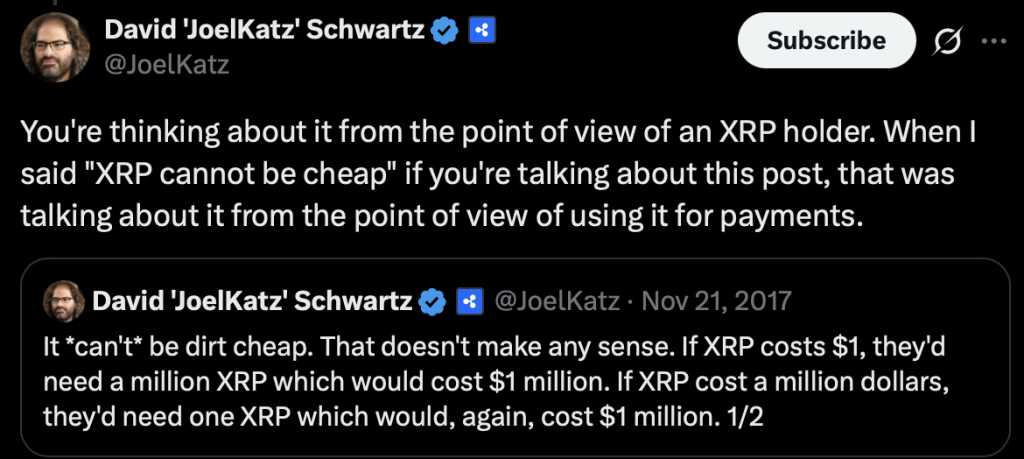
In a discussion on X, David Schwartz stepped in to address exactly that. Responding to Mason Versluis, who raised concerns about how banks might perceive Ripple’s large token reserves, Schwartz didn’t really hesitate in pushing back.
Versluis argued that institutions would likely dig deep before adopting XRP, and might hesitate if the outcome seems to disproportionately benefit Ripple. From that angle, it’s less about the tech and more about optics, risk, and, well… perception.
But Schwartz took a different view. According to him, banks don’t make decisions based on who might benefit indirectly. They focus on whether a system works better — faster settlements, lower costs, improved efficiency. That’s it. Utility comes first, everything else tends to fall into the background.
Stablecoins Enter the Conversation, But Not Without Limits
The discussion didn’t stop there. Another angle came up — what about stablecoins? With their growing presence in payments, some are starting to question whether assets like XRP still have a role to play.
Schwartz acknowledged that stablecoins do their job well. They offer predictability, minimal volatility, and that’s exactly what certain use cases need. But he also pointed out that they come with trade-offs, and not small ones.
Stablecoins are tied to fiat currencies, which can limit flexibility in cross-border systems. Plus, issuers often retain control — meaning funds can be frozen or reversed. That introduces a layer of counterparty risk that simply doesn’t exist in decentralized assets like XRP or Bitcoin. So while stablecoins fit some use cases nicely, they’re not a universal solution… not even close.
Revisiting “XRP Cannot Be Cheap”
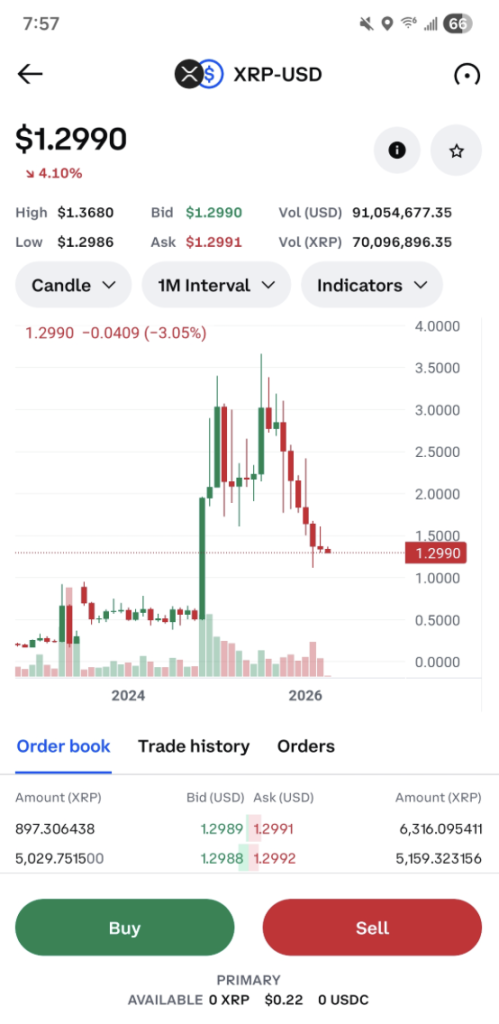
Schwartz also circled back to one of his older, often misunderstood statements — that “XRP cannot be cheap.” It’s been quoted a lot over the years, sometimes in ways that stretch its original meaning.
According to him, the comment wasn’t about price speculation at all. It was about efficiency. If the unit price of XRP is extremely low, then large transactions require moving huge amounts of tokens, which can create friction in settlement systems.
A higher unit value, on the other hand, makes things smoother. Fewer tokens, less complexity, more efficient liquidity movement. So the point wasn’t that XRP must be expensive — just that its design works better when value isn’t too diluted. Subtle difference, but important.
Utility Still Sits at the Center
Stepping back, the whole exchange highlights something that keeps coming up in crypto. There’s this constant tension between narrative and utility. Retail markets often focus on price, speculation, and who benefits… while institutions tend to look at performance, compliance, and real-world function.
Schwartz’s argument stays pretty consistent throughout. XRP isn’t meant to be judged by who holds it or who gains from price increases. It’s a tool — one designed to improve how value moves across systems.
Whether that argument holds up in practice, well, that’s still unfolding. But if institutions do step in at scale, it probably won’t be because of narratives. It’ll be because the system actually works better.
Disclaimer: BlockNews provides independent reporting on crypto, blockchain, and digital finance. All content is for informational purposes only and does not constitute financial advice. Readers should do their own research before making investment decisions. Some articles may use AI tools to assist in drafting, but every piece is reviewed and edited by our editorial team of experienced crypto writers and analysts before publication.







 English (US) ·