
 7 months ago
78
7 months ago
78
- Dow Jones integrating Polymarket data brings prediction markets into mainstream finance media.
- Probabilities shape behavior, not just expectations, especially when money is involved.
- This shift reflects changing attention dynamics, but blurs the line between information and speculation.
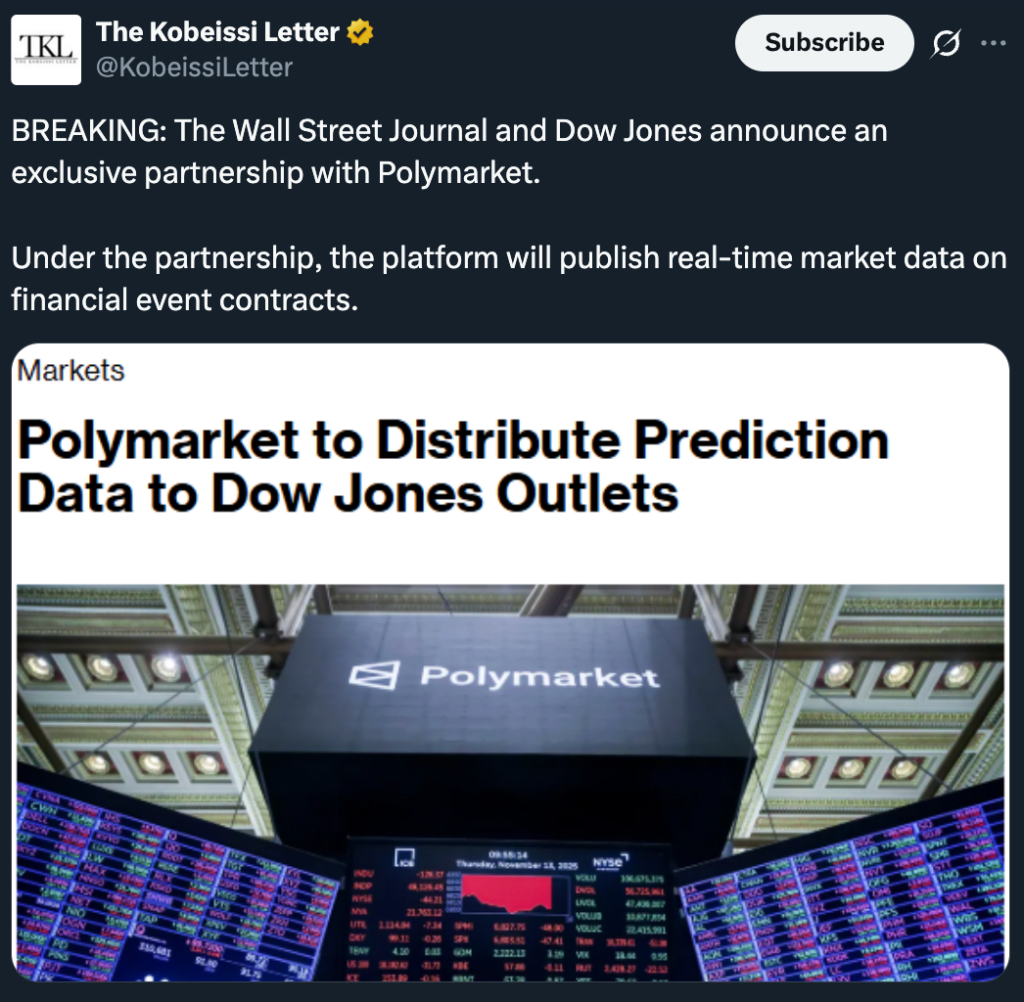
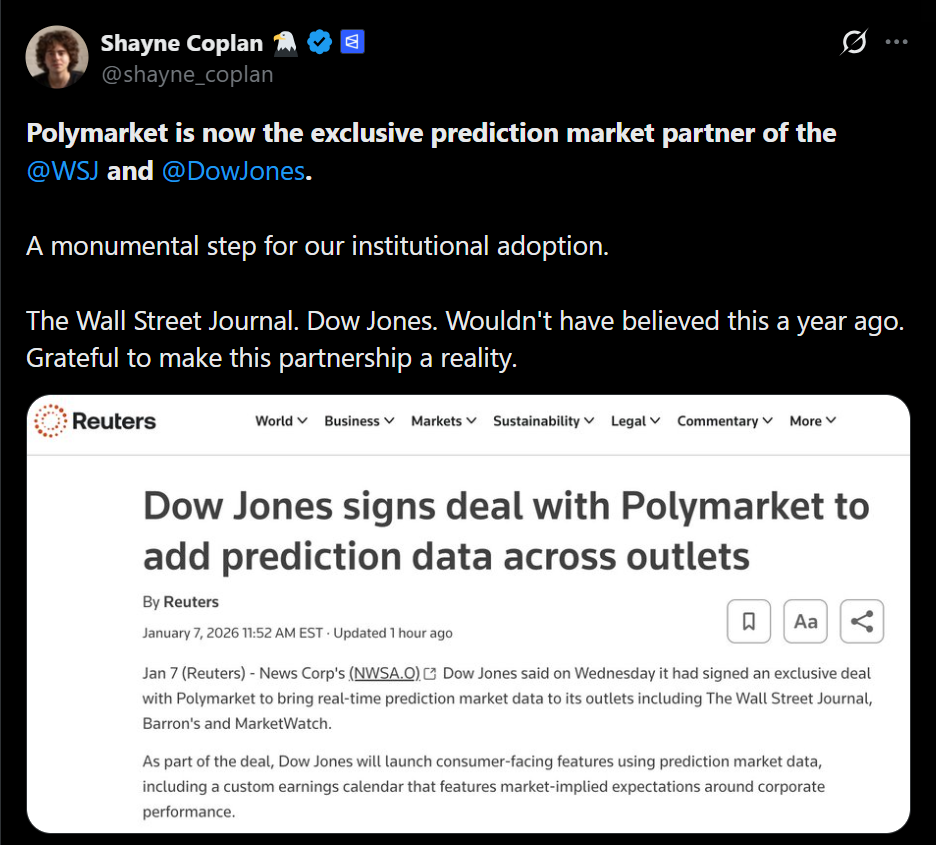
Dow Jones quietly crossed a line this week, and it’s bigger than it looks. By signing an exclusive deal to publish Polymarket prediction data across outlets like The Wall Street Journal, Barron’s, and MarketWatch, traditional financial media just acknowledged something out loud: odds now compete with headlines as a signal. This isn’t a niche crypto experiment anymore. This is probability pricing being embedded directly into the interfaces where investors already make decisions.
Why This Feels Uncomfortable So Fast
The reaction has been swift and uneasy, and not without reason. Prediction markets have long lived in a gray zone, criticized as gambling wrapped in informational language. Regulators have argued that in some cases, these markets resemble unlicensed betting operations. Add in disputes over whether outcomes “count,” accusations of insider advantage, and controversies tied to geopolitics or elections, and you can see why nerves are showing. When Dow Jones frames this as a way to help readers interpret sentiment, critics hear something else entirely — the normalization of wagers as truth.
Probabilities Aren’t Neutral, They’re Incentives
This is where the conversation gets tricky. Prediction markets don’t just reflect expectations, they shape behavior. Once a probability has liquidity behind it, it becomes an incentive engine. People hedge against it. They copy it. They trade around it. Narratives bend toward it. Information leaks faster when money is attached. None of this is magical or conspiratorial, it’s just human behavior reacting to price signals. And when the topic is war, political instability, or economic crisis, those feedback loops can get messy very quickly.
Why Media Is Embracing This Now
The timing isn’t accidental. Attention is fragmented, trust in institutions is thin, and audiences are exhausted by conflicting narratives. A single number, even an imperfect one, feels clean and decisive. For media companies, probabilities are also sticky. They update constantly. They reward refreshing. They keep readers engaged in a way static headlines no longer do. In an attention economy, live markets are hard to resist.
What This Shift Really Signals
Dow Jones partnering with Polymarket doesn’t mean prediction markets are inherently bad or that journalism is dead. But it does signal a reframing of how information is packaged. News is starting to look like a live market, not just a report. That can be useful, especially when sentiment matters. But it also blurs the line between understanding reality and betting on it.
Where This Leaves Us
Odds are not morality. Prices are not truth. They’re signals shaped by incentives, access, and participation. Treating them as one input among many makes sense. Treating them as reality itself is where things get dangerous. If we’re not careful, we won’t just be reading the news anymore. We’ll be living inside a market that never closes.
Disclaimer: BlockNews provides independent reporting on crypto, blockchain, and digital finance. All content is for informational purposes only and does not constitute financial advice. Readers should do their own research before making investment decisions. Some articles may use AI tools to assist in drafting, but every piece is reviewed and edited by our editorial team of experienced crypto writers and analysts before publication.







 English (US) ·