
 9 hours ago
43
9 hours ago
43
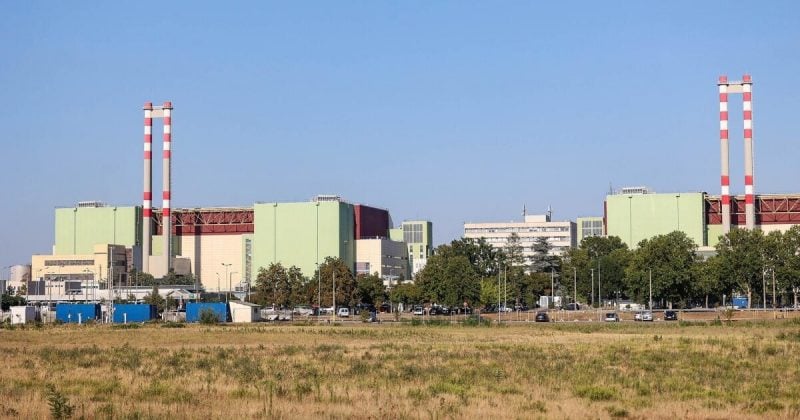
Hungary is about to lose nearly half its electricity supply. The country’s sole nuclear power plant, Paks, is heading toward a complete shutdown for the first time since it began operating in the early 1980s, all because the Danube River is running dry.
Prime Minister Péter Magyar warned that the plant “will be completely shut down” imminently, with the outage potentially stretching on for several weeks. For a facility that normally cranks out around 2 GW of power and covers close to half the nation’s electricity needs, that’s not a minor inconvenience.
What’s actually happening at Paks
Nuclear reactors need water. The Danube River provides the cooling water that keeps Paks’ four Soviet-designed reactors from overheating, and water levels have plummeted to 28 cm below the previous record low set in 2018.
Output has been gradually throttled down as conditions worsened, falling to roughly 240 MW in recent days. That’s about 12% of the facility’s normal capacity.
A full shutdown is expected to commence as early as Sunday, August 2, 2026. The phased capacity reductions began in late July as the drought intensified across the region.
The estimated economic toll of the crisis could land somewhere between $316 million and $632 million.
Why this matters beyond Hungary’s borders
Paks is owned and operated by MVM Paks Nuclear Power Plant Ltd., a subsidiary of Hungary’s state-owned MVM energy group. The four reactors are Soviet-era designs that have undergone multiple lifetime extensions, with licenses stretching into the 2030s.
France dealt with a version of this problem in 2022, when several of its nuclear plants had to curtail output because rivers used for cooling were too warm. The difference is that France has 56 operational reactors and could absorb the hit. Hungary has exactly one nuclear facility, and it’s about to go dark.
What investors should be watching
When you remove roughly 2 GW of baseload nuclear capacity from the grid during peak summer demand, something has to fill the gap. Hungary will need to increase electricity imports from neighboring countries. Natural gas-fired generation could pick up some slack, but at elevated costs.
Disclosure: This article was edited by Editorial Team. For more information on how we create and review content, see our Editorial Policy.








 English (US) ·