
 2 months ago
70
2 months ago
70
Key Takeaways
- Tehran announced an indefinite closure of the Strait of Hormuz amid escalating tensions with U.S. military forces
- Brent crude oil prices jumped 4.4% in immediate market reaction
- European natural gas prices climbed 3.5–4%, reaching their highest point in a month
- Bond yields across the Eurozone remained elevated near multi-week peaks on inflation worries
- Current European gas storage stands at 47%, down from 56% recorded at the same time in the previous year
Tehran’s announcement to seal off the Strait of Hormuz has sent tremors through global energy markets, driving significant increases in both oil and natural gas prices while intensifying inflation anxieties throughout the European continent.
The blockade was announced as indefinite following renewed military confrontations between Tehran and American forces during the weekend. Despite U.S. Central Command’s statements that commercial vessels can still navigate the area, the mere declaration triggered substantial market volatility.
Brent crude experienced a 4.4% surge following the initial reports. As one of the planet’s most strategically important petroleum shipping corridors, any disruption to the Strait of Hormuz creates instant pressure on energy costs globally.
Natural Gas Markets Reach Monthly Peak
Wholesale natural gas prices throughout Europe experienced significant upward movement on Monday. The Dutch benchmark front-month contract increased 3.5% to settle at 50.37 euros per megawatt-hour. Meanwhile, the British equivalent climbed 4%, tracking closely with European prices.
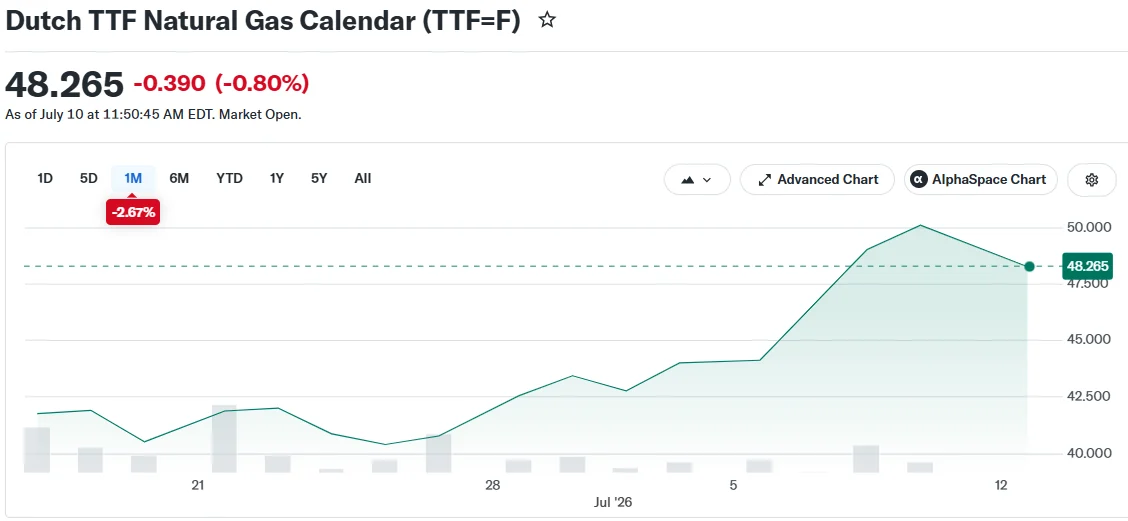 Dutch TTF Natural Gas Calendar (TTF=F)
Approximately one-fifth of global liquefied natural gas trade passes through the Strait of Hormuz, including the majority of Qatar’s LNG shipments. An extended blockade would sever a critical supply artery for European energy consumers.
European nations are presently working to replenish their natural gas reserves in preparation for the 2026/2027 winter heating season. Current storage levels hover around 47% of total capacity, notably lower than the 56% recorded during the corresponding period last year. This shortfall makes Europe considerably more vulnerable to supply disruptions than it was a year ago.
Should Gulf LNG shipments face prolonged interruption, European importers would encounter intensified competition from Asian markets, driving costs even higher across the board.
Government Bond Markets Signal Inflation Concerns
Yields on European government bonds maintained positions near their highest levels in more than a month throughout Monday’s trading. Germany’s benchmark 10-year Bund yield stood at 3.05%, with the 2-year yield positioned at 2.68%.
These elevated figures persisted because surging energy costs typically fuel inflationary pressures, which diminish the attractiveness of fixed-income securities. Last week witnessed the most substantial weekly increase in German bond yields observed in five weeks.
The primary concern among investors is that the European Central Bank might need to halt its interest rate reduction trajectory if energy prices continue fueling inflation. Financial markets have already adjusted expectations, pricing in fewer ECB rate cuts than anticipated just weeks earlier.
ECB Executive Board member Isabel Schnabel is scheduled to deliver remarks later Monday. Schnabel has consistently maintained a more hawkish stance within the ECB’s Governing Council. Any commentary she provides regarding inflation risks stemming from the Gulf crisis could generate additional market movement.
Diplomatic initiatives aimed at de-escalating regional tensions had demonstrated some positive momentum in recent weeks. However, those efforts now appear to have stalled following the latest military confrontations, leaving energy markets in a state of uncertainty with no immediate path toward resolution.
The post Iran Shuts Down Strait of Hormuz: Energy Markets React as Oil and Gas Prices Surge appeared first on Blockonomi.



 English (US) ·