
 2 hours ago
14
2 hours ago
14
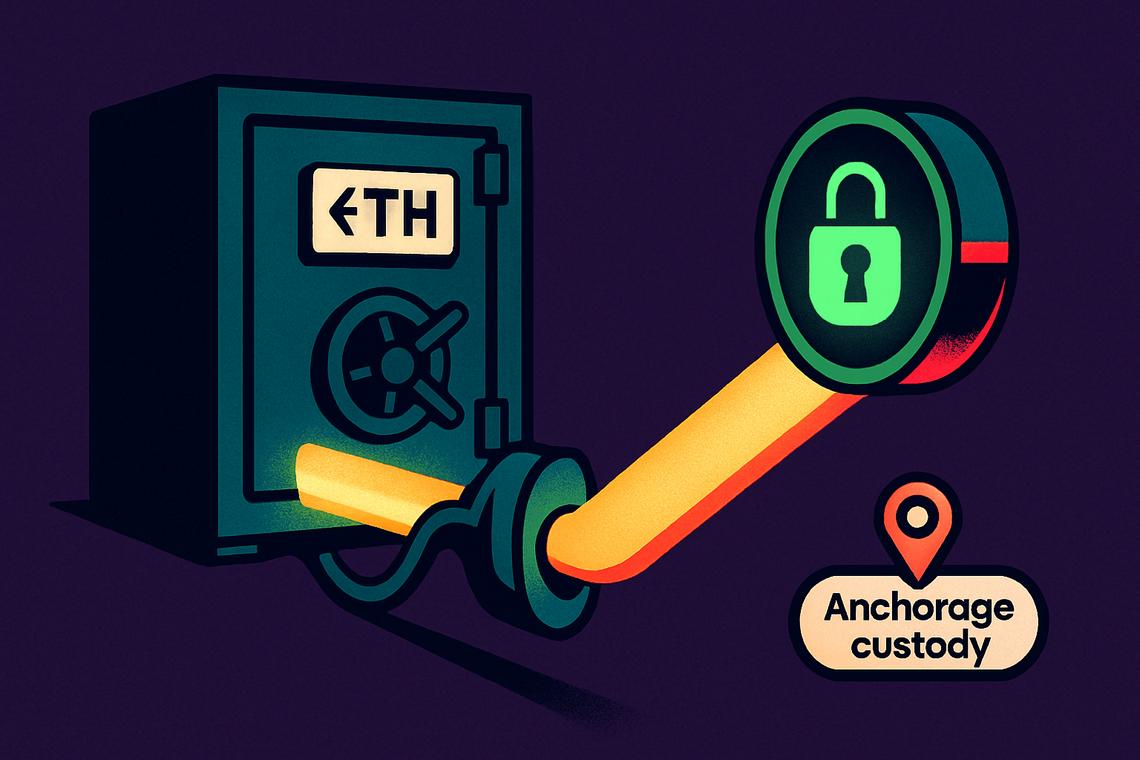
SharpLink is putting a fresh $200 million of Ether to work, and this time it’s routing the money through Lido instead of its usual staking partners. The Ethereum treasury company plans to stake that sum and receive wstETH tokens in return, a move that expands its SharpLink ETH staking strategy just as the firm works through a rough quarter marked by a sharp Ether price drop and a large noncash accounting charge.
Key takeaways
- SharpLink plans to stake $200 million of ETH through Lido, receiving wstETH tokens that will be held in custody by Anchorage Digital.
- The allocation equals roughly 106,000 ETH, about 12% of the company’s 888,938 ETH holdings reported as of Aug. 3.
- Lido controls with $17.9 billion representing the aggregate value secured and 50.6% comprising the monitored liquid-staking TVL, with a supply APY of 2.2%, according to DefiLlama.
- SharpLink reported staking revenue in Q2 2026 but also booked a $76.1 million noncash impairment on its LsETH and weETH holdings.
- CEO Joseph Chalom says Lido’s composability lets SharpLink layer additional yield sources on top of its existing ETH exposure.
SharpLink’s New $200 Million ETH Stake with Lido
SharpLink is adding a new staking route on top of the ones it already runs, and the dollar figures show just how sizable this single move is. Using Kraken’s displayed ETH price of $1,889.84 at the time of the disclosure, the $200 million commitment translates into roughly 106,000 ETH — about 12% of the 888,938 ETH the company reported holding as of Aug. 3.
That’s not a small side bet. It represents a meaningful slice of SharpLink’s total Ether treasury being redirected into a single liquid-staking product, at a moment when the company’s overall Ethereum liquid staking exposure is already under scrutiny following a difficult earnings quarter.
Custody is handled outside the Lido protocol itself. The wstETH tokens generated by the allocation will sit with Anchorage Digital, giving SharpLink an institutional custody layer around the new liquid-staking position rather than leaving the tokens exposed through a self-custody or exchange-based setup.
Diversification of SharpLink’s Ethereum Staking Portfolio
This isn’t SharpLink’s first staking product — it’s an addition to a portfolio that was already almost fully deployed. As of June 28, the company reported 886,725 ETH, split into 632,719 native ETH, plus 181,299 ETH worth of Liquid Collective’s LsETH and 72,707 ETH worth of Ether.fi’s weETH. Each of those products carries different mechanics: native ETH is staked directly on the Ethereum network, LsETH represents staked ETH plus network rewards usable in DeFi, and weETH layers restaking economics through EigenLayer on top of base staking rewards.
Lido’s wstETH works differently again. It’s a fixed-balance wrapped version of stETH, meaning the token’s underlying share system reflects accrued staking rewards over time rather than the token balance itself growing. That design makes it easier to plug into DeFi protocols, which is precisely the appeal SharpLink is pointing to with this Lido wstETH allocation.
Market Position and Staking Returns
Lido is by far the largest liquid-staking provider in the market, and that scale is a big part of why SharpLink chose it for this expansion. At the time the data was pulled, DefiLlama listed Lido with about $17.9 billion in total value locked, representing 50.6% of all tracked liquid-staking TVL. Its tracked supply APY stood at 2.2%.
That 2.2% figure captures the staking return generated by holding wstETH itself — it doesn’t account for any extra yield or risk that would come from deploying the token further into other onchain strategies. In other words, the base return is just the starting point of what SharpLink is aiming for with this position.
Financial Performance and Accounting Implications
The new Lido allocation lands right after a quarter in which staking income and staking-related losses told two very different stories for SharpLink. The company recorded a $76.1 million impairment charge tied to its LsETH and weETH holdings.
SharpLink has stressed that the impairment is noncash and doesn’t reduce the actual number of tokens the company holds. But under the accounting treatment it uses, that charge can’t simply be reversed if the market recovers later — once it’s booked, it stays booked, regardless of what Ether does afterward.
The broader financial picture adds context to why this matters. According to Cointelegraph, SharpLink posted a $394 million net loss for the quarter, up sharply from a $103 million loss a year earlier, driven largely by $321 million in unrealized crypto losses as Ether fell roughly 23% during the period. The company’s stock also slid 3.9% following the results, extending a 30% year-to-date decline. SharpLink still ranks as the second-largest Ether treasury company, holding roughly 863,000 ETH worth about $1.46 billion, behind Bitmine’s 5.54 million ETH position valued near $9.4 billion, according to StrategicEthReserve data.
For a company whose revenue is almost entirely tied to staking, that combination of falling token prices and locked-in impairment accounting makes diversifying across staking providers more than a cosmetic move — it’s a way to spread exposure across different liquid-staking mechanics without changing the underlying ETH position.
Strategic Perspectives from SharpLink Leadership
SharpLink Chief Executive Joseph Chalom framed the Lido allocation as a way to build on top of returns the company already earns, rather than replace them. He said Lido’s composability would allow the company to “layer additional yield sources on top of our ETH exposure and staking returns.”
That distinction matters. Simply holding wstETH reflects Lido’s staking rewards on its own. Any additional DeFi-style return would require SharpLink to actually deploy the token into another onchain strategy — something the company hasn’t detailed yet, but which the wstETH format is specifically built to support.
FAQ
What new staking allocation is SharpLink planning?
SharpLink plans to stake $200 million of ETH through Lido, receiving wstETH tokens held in custody by Anchorage Digital.
How does the $200 million Lido allocation fit into SharpLink’s existing staking portfolio?
It represents about 12% of SharpLink’s total ETH holdings and adds Lido’s wstETH as another liquid staking option complementing its existing native ETH, LsETH, and weETH deployments.
What is Lido’s wstETH token and why is it important for SharpLink?
wstETH is a fixed-balance wrapped version of stETH designed for DeFi use. It reflects staking rewards through its underlying share system and enables further onchain yield layering, which is central to SharpLink’s stated strategy.
What recent financial impacts has SharpLink reported related to staking?
SharpLink recognized a noncash $76.1 million impairment on its LsETH and weETH holdings, part of a quarter that saw the company report a $394 million net loss overall.
Article produced with the assistance of artificial intelligence and reviewed by the editorial team.





 English (US) ·